Spectro-electrochemistry of guaiacol oxidation: tracking intermediates in a membrane-separated cell with in situ attenuated total reflectance-infrared spectroscopy
Sibylle M. K. Schwartmann, Mariangela Biggiero, Sander Deelen, Bettina Baumgartner, Bert M. Weckhuysen

TL;DR
Researchers used a special electrochemical cell and infrared spectroscopy to track the oxidation of guaiacol, a lignin model compound, revealing reaction pathways and reducing unwanted side reactions.
Contribution
A membrane-separated ATR-IR spectro-electrochemical cell was developed to monitor lignin model compound oxidation in real time.
Findings
In situ ATR-IR spectroscopy revealed depletion of guaiacol and formation of oxidized species like quinones and catechols.
Membrane separation suppressed side reactions compared to non-separated control experiments.
The method provides mechanistic insights into lignin oxidation pathways under mild conditions.
Abstract
Lignin, a structurally complex biopolymer, represents a promising renewable feedstock for the production of platform chemicals, including functionalized aromatic molecules. However, efficient lignin valorization remains a major challenge due to its chemical stability, structural heterogeneity, and the propensity of reactive intermediates to undergo recondensation. To overcome these barriers and gain mechanistic insight into lignin oxidation pathways, we have developed a membrane-separated, two-compartment attenuated total reflectance infrared (ATR-IR) spectro-electrochemical cell for the in situ monitoring of the electrochemical oxidation of lignin model compounds. Using guaiacol as a representative model compound of the β-O-4 linkage monomer, we tracked real-time spectral changes during electrochemical oxidation. Characteristic vibrational signatures revealed the depletion of guaiacol…
Genes, proteins, chemicals, diseases, species, mutations and cell lines named across the full text — each resolved to its canonical identifier and authoritative record.
Click any figure to enlarge with its caption.
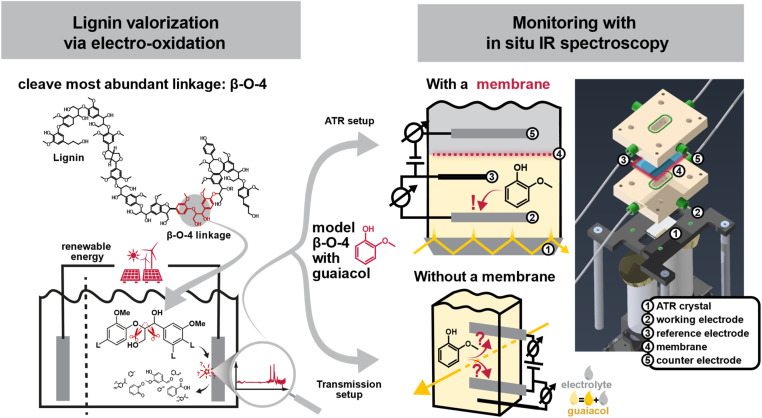 Figure 1
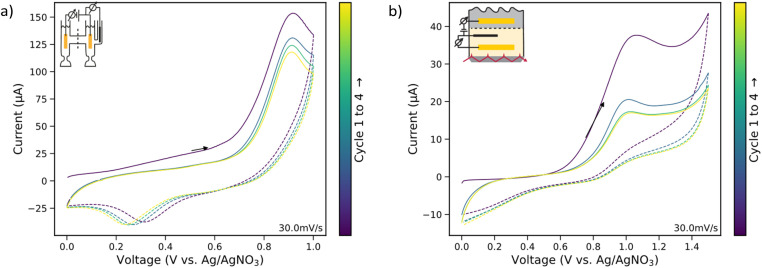 Figure 2
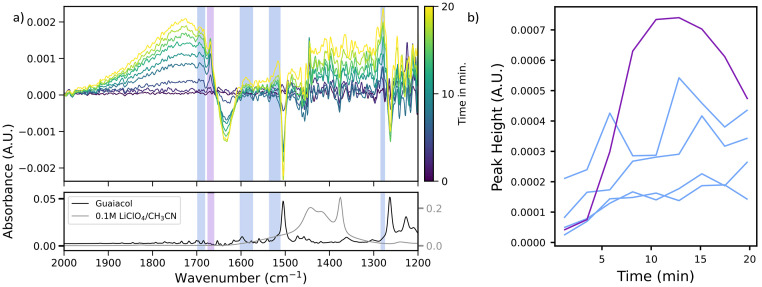 Figure 3
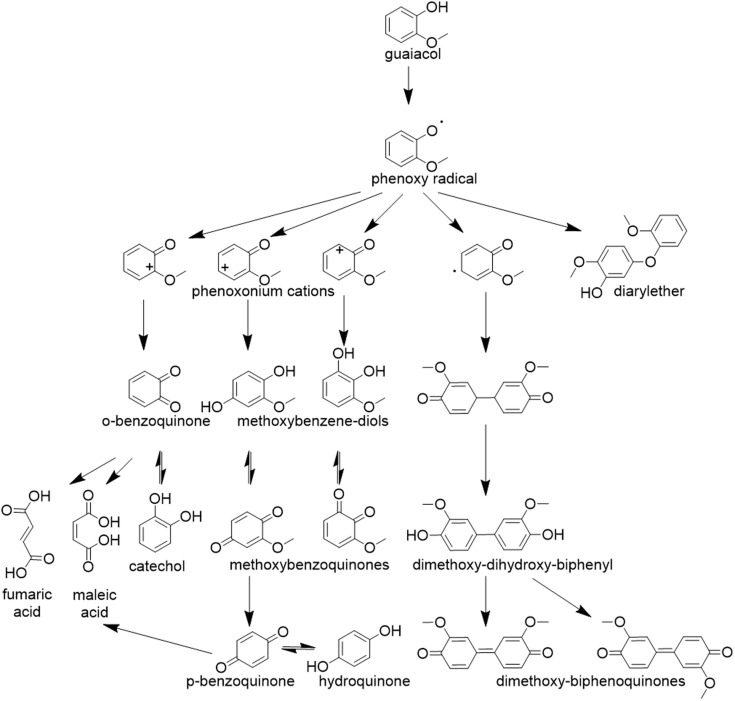 Figure 4
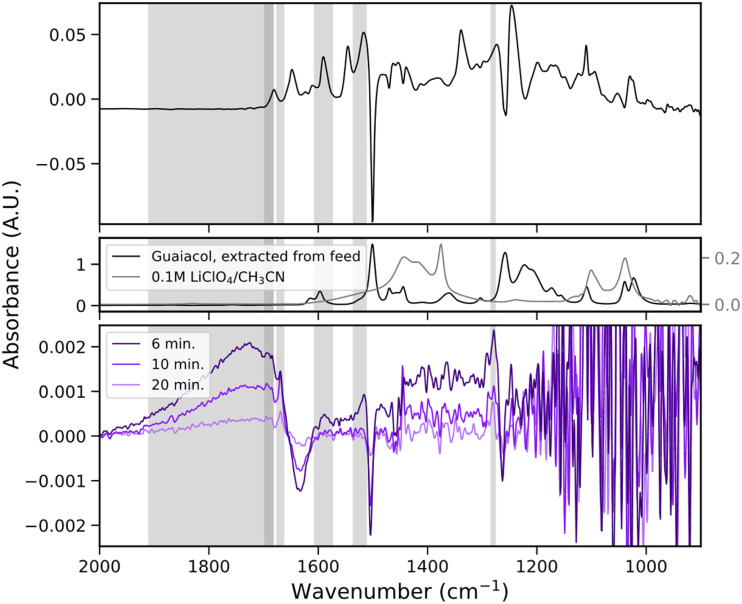 Figure 5
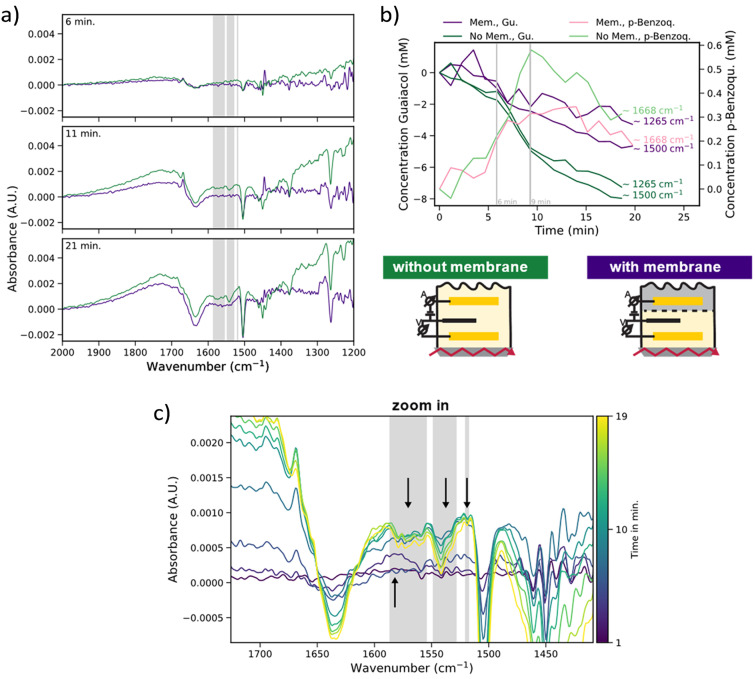 Figure 6
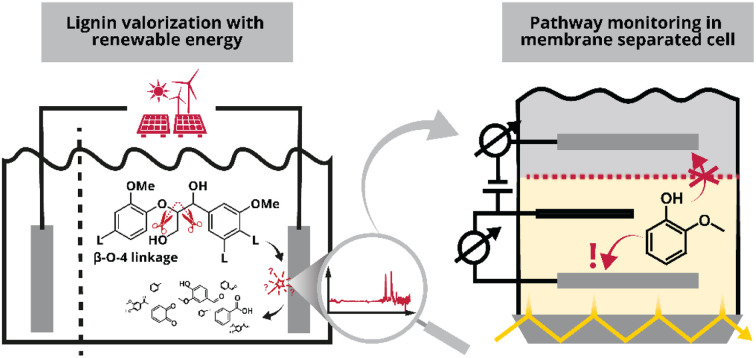 Figure 7
Peer Reviews
No public reviews on file for this paper yet. If you reviewed it on a platform where reviews are public (OpenReview, ICLR, NeurIPS, ICML), you can paste yours below so the community can read it here.
Videos
No videos yet. Explain this paper in a talk, walkthrough, or lecture? Add one.
Taxonomy
TopicsLignin and Wood Chemistry · Biochemical and biochemical processes · Enzyme-mediated dye degradation