Rules of engagement: Determinants of chemokine receptor activation and selectivity by CCL27 and CCL28
Mian Huang, Aura F. Celniker, Rezvan Chitsazi, Douglas P. Dyer, Ariane L. Jansma, Irina Kufareva, Catherina L. Salanga, Tracy M. Handel

TL;DR
This study explores how the N-terminal regions of chemokines CCL27 and CCL28 influence their interactions with receptors CCR10 and CCR3, revealing how these interactions determine their roles in immunity.
Contribution
The study identifies specific N-terminal residues that modulate receptor activation and selectivity, enabling the design of engineered chemokines.
Findings
Deleting two N-terminal residues of CCL27 creates a CCR10 antagonist, showing their importance in receptor pharmacology.
Adding a Phe to CCL27's N terminus produces a CCR10 superagonist by interacting with a unique receptor subpocket.
Swapping N termini between CCL27 and CCL28 reveals that the CCL28 N terminus is a stronger driver of CCR10 signaling.
Abstract
The distinct functional roles of chemokines CCL27 and CCL28 in epithelial immunity of skin and mucosal tissues, respectively, are coordinated by their shared receptor, CCR10, and the CCL28-specific receptor, CCR3. To identify determinants of receptor activation, internalization and binding specificity, we conducted structure-function studies focused on the N termini of these two chemokines. Deletion of two N-terminal residues of CCL27 resulted in a CCR10 antagonist, highlighting the critical roles of these residues in driving receptor pharmacology. Extension with a Phe produced a CCR10 superagonist by occupying a unique subpocket in the receptor. Swapping the CCL28 N terminus onto the CCL27 globular domain (NT28-CCL27) also resulted in a superagonist of CCR10, but the opposite swap (NT27-CCL28) showed equivalent or reduced activity compared to WT CCL28, indicating that the CCL28 N…
Genes, proteins, chemicals, diseases, species, mutations and cell lines named across the full text — each resolved to its canonical identifier and authoritative record.
Click any figure to enlarge with its caption.
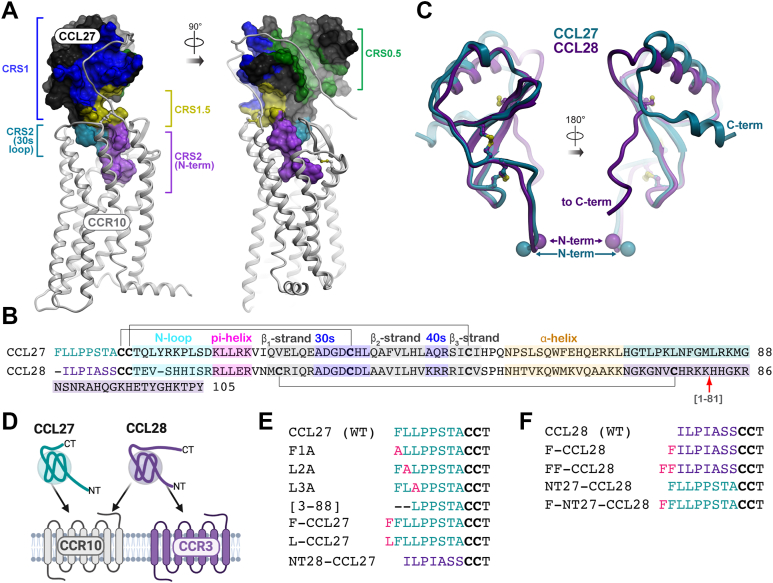 Figure 1
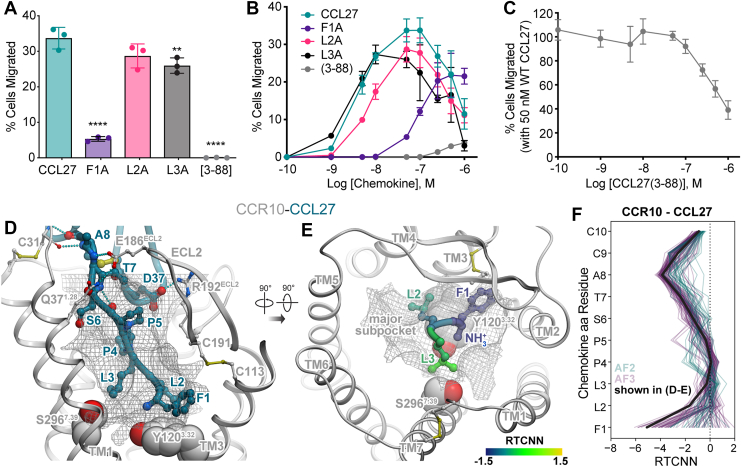 Figure 2
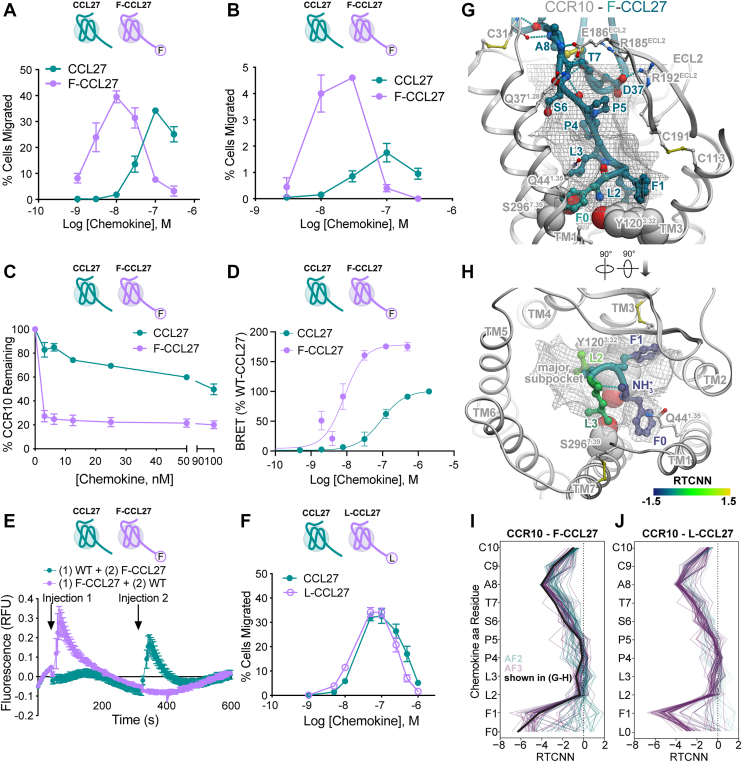 Figure 3
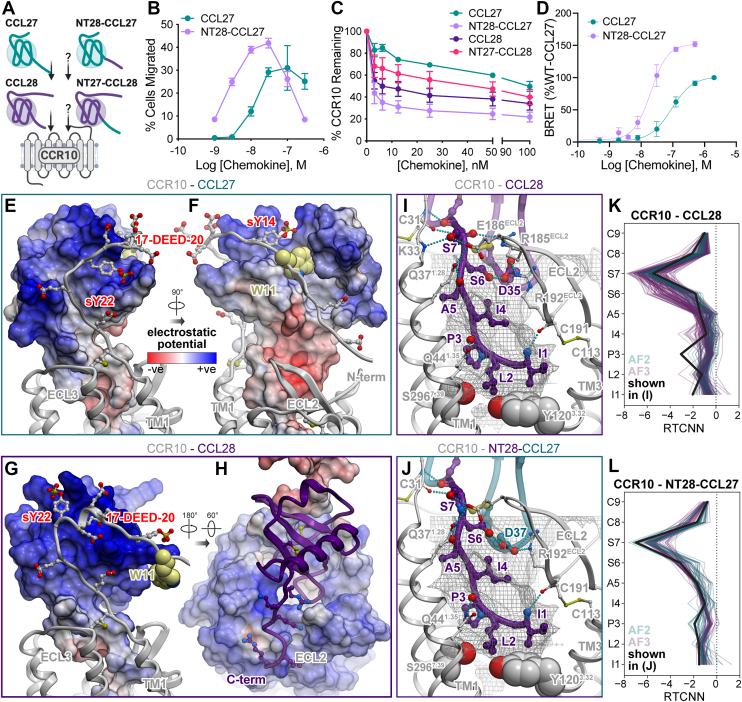 Figure 4
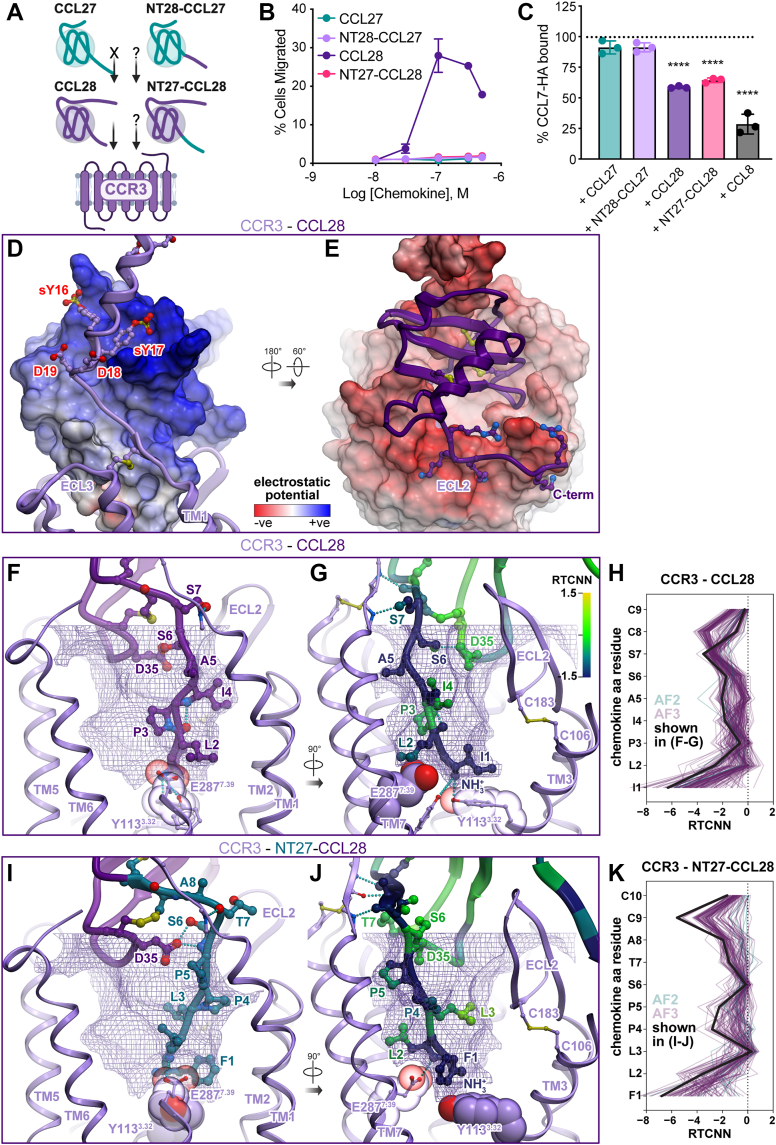 Figure 5
 Figure 6
Peer Reviews
No public reviews on file for this paper yet. If you reviewed it on a platform where reviews are public (OpenReview, ICLR, NeurIPS, ICML), you can paste yours below so the community can read it here.
Videos
No videos yet. Explain this paper in a talk, walkthrough, or lecture? Add one.
Taxonomy
TopicsChemokine receptors and signaling · T-cell and B-cell Immunology · interferon and immune responses