Intrinsically disordered cytoplasmic tail in netrin receptor DCC binds the large ribosomal subunit to inhibit translation
Natasia Paukovich, Elizabeth A. Spear, Andrea MacFadden, Nathan N. Nowling, Morkos A. Henen, Beat Vögeli, Megan E. Filbin

TL;DR
The study shows how the DCC receptor binds to ribosomes to control protein synthesis in neurons, especially when its growth cue is absent.
Contribution
The paper identifies a specific region in DCC that interacts with the 60S ribosomal subunit to inhibit translation.
Findings
The cytoplasmic tail of DCC, specifically residues 1123 to 1158, binds the 60S ribosomal subunit.
This region is intrinsically disordered and facilitates ribosome tethering at the membrane.
Electrostatic interactions with eL5/uL18 on the 60S subunit lead to translational silencing.
Abstract
Transmembrane receptors in neurons act as transducers of extrinsic growth cues by regulating local protein synthesis of specific mRNAs to facilitate axon guidance. In the absence of cues, receptors tether and silence translation at the membrane, but little is known about this receptor-ribosome interaction. Here, we show the direct and specific interaction between the transmembrane receptor Deleted in Colorectal Cancer, DCC, and the 60S subunit that leads to translation inhibition in the absence of DCC’s growth cue, netrin-1. We combined translation assays, equilibrium binding, and NMR spectroscopic approaches and identified the plasma membrane-proximal portion of DCC’s cytoplasmic tail, specifically residues 1123 to 1158, bind the 60S subunit. We show that this region is unstructured, providing evidence for how the subunit is tethered at the membrane. Pinpointing the electrostatic…
Genes, proteins, chemicals, diseases, species, mutations and cell lines named across the full text — each resolved to its canonical identifier and authoritative record.
Click any figure to enlarge with its caption.
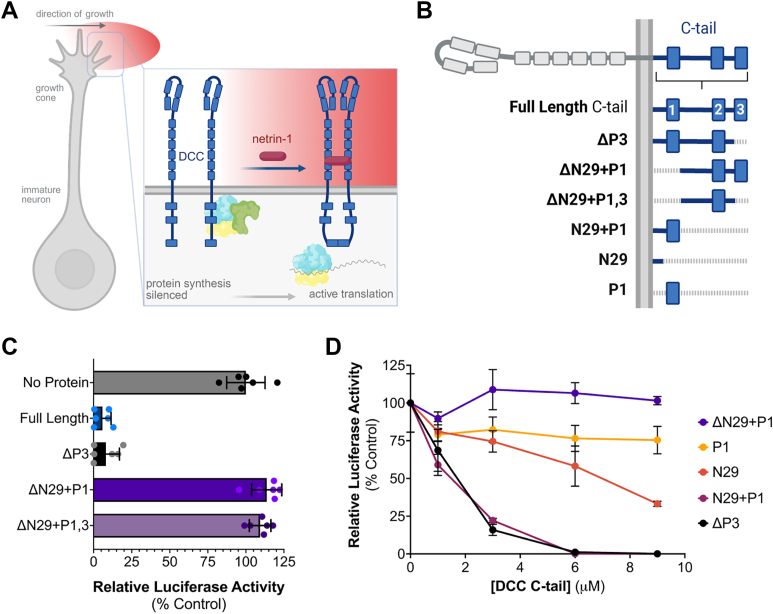 Figure 1
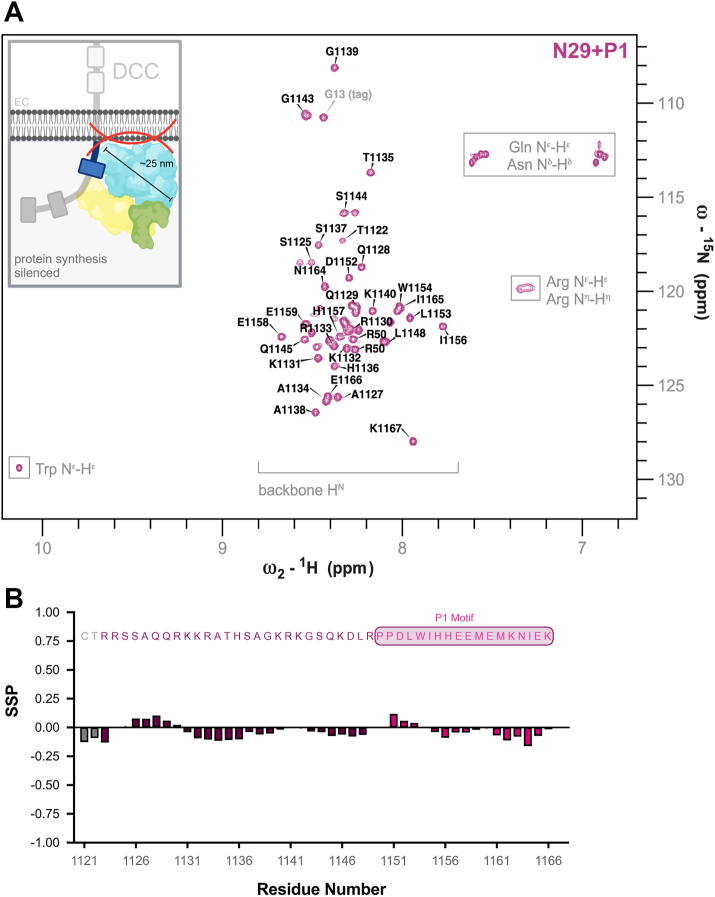 Figure 2
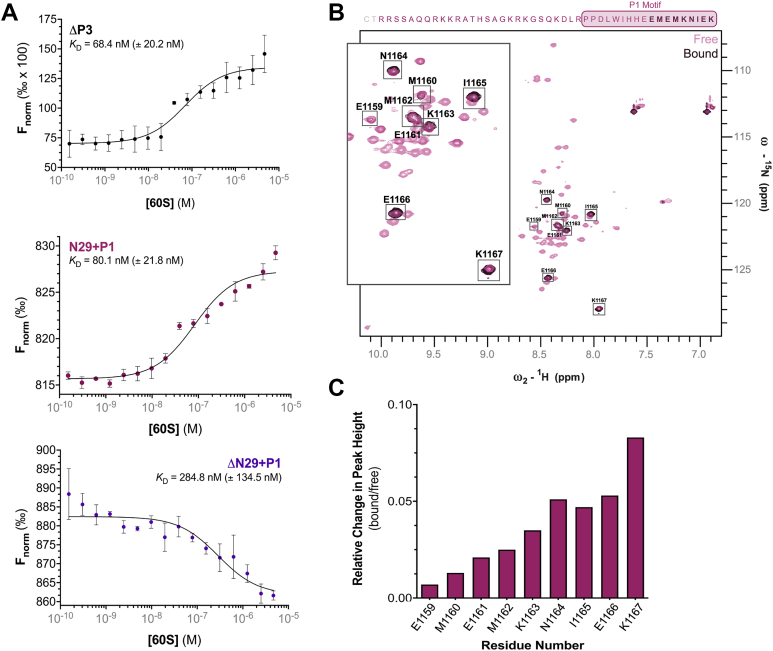 Figure 3
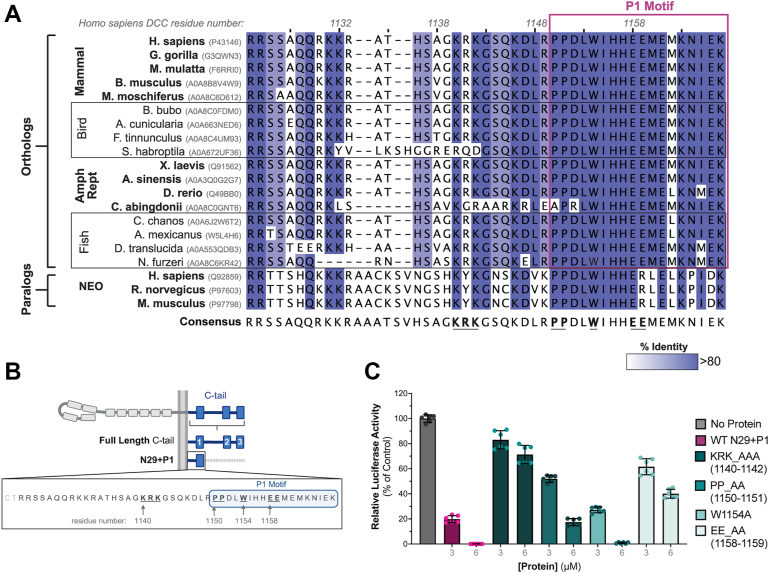 Figure 4
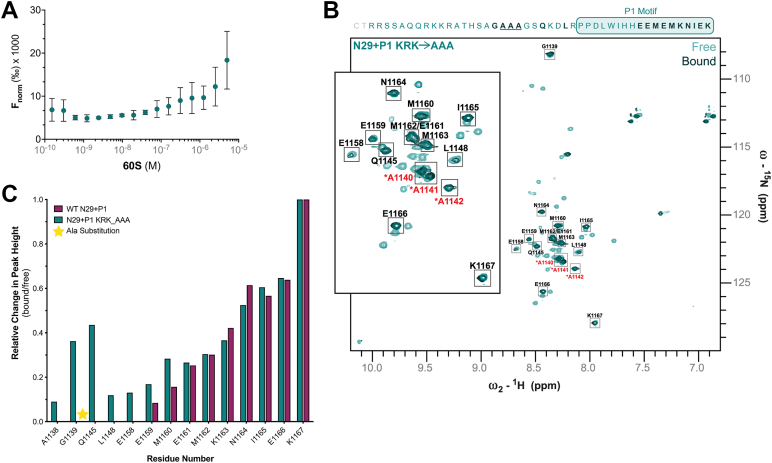 Figure 5
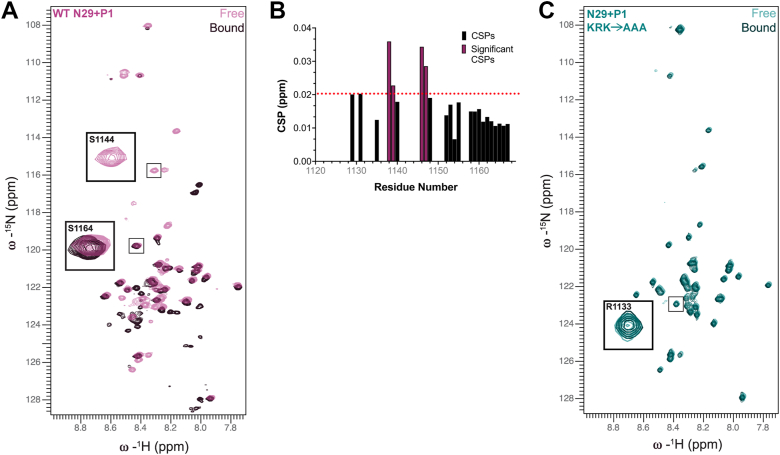 Figure 6
Peer Reviews
No public reviews on file for this paper yet. If you reviewed it on a platform where reviews are public (OpenReview, ICLR, NeurIPS, ICML), you can paste yours below so the community can read it here.
Videos
No videos yet. Explain this paper in a talk, walkthrough, or lecture? Add one.
Taxonomy
TopicsAxon Guidance and Neuronal Signaling · Bioactive Compounds and Antitumor Agents · Neuroscience and Neuropharmacology Research