A CUP HALF FULL: EXPLORING THE KINEMATIC CONSEQUENCES OF VARIATIONS IN THE DRINKING TASK PROTOCOL
Justin HUBER, Stacey SLONE, Ann M. STOWE

TL;DR
This study shows that small changes in how a drinking task is set up can affect measurements of upper limb movement, suggesting the need for standardized protocols in rehabilitation research.
Contribution
The study identifies specific protocol variations in the drinking task that significantly affect kinematic metrics, highlighting the need for standardization.
Findings
Seating position affects movement time and trunk displacement.
Cup starting position influences trunk displacement significantly.
Target definition impacts movement time.
Abstract
Kinematic assessment of the drinking task offers objective metrics of upper limb recovery following neurological injury. The rehabilitation research community’s increased interest has led to consensus standardization efforts. These efforts inherently depend on fidelity of the activity protocol underlying drinking task kinematics. This study’s objective is to investigate whether differences in the drinking task protocol, as observed in prior literature, impact common kinematic metrics. Incomplete block design with repeated-measures. Six neurotypical participants. Seating position, cup start position, and target definition for cup return were varied. Mixed effects linear models analysed the impact of protocol variants on validated kinematic metrics used in stroke rehabilitation research. All considered factors have a significant impact on at least 1 kinematic metric. Seating position…
Genes, proteins, chemicals, diseases, species, mutations and cell lines named across the full text — each resolved to its canonical identifier and authoritative record.
Click any figure to enlarge with its caption.
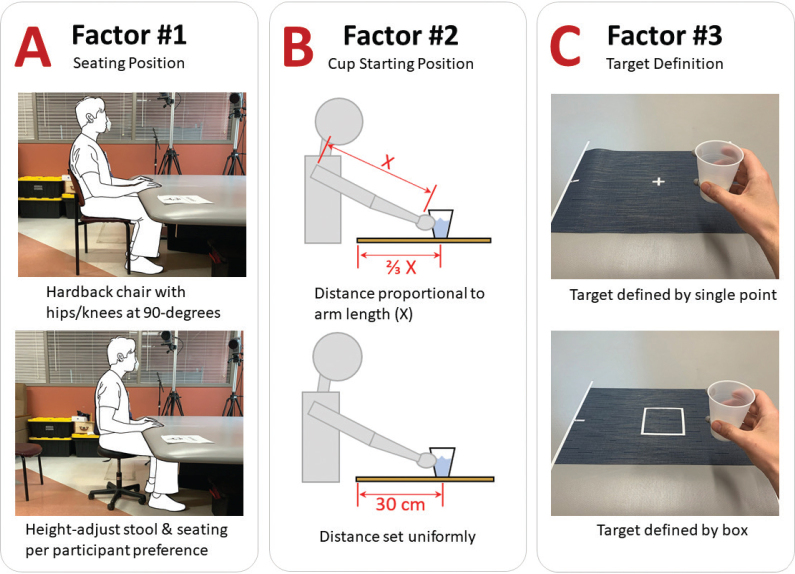 Figure 1
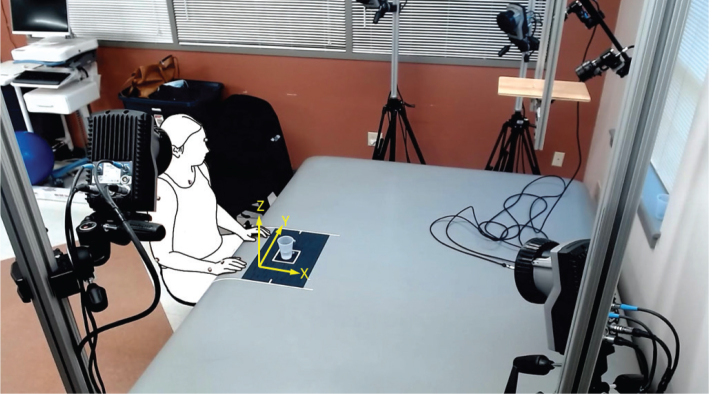 Figure 2
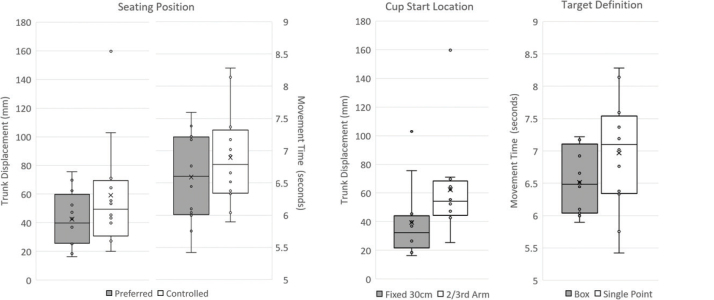 Figure 3
Peer Reviews
No public reviews on file for this paper yet. If you reviewed it on a platform where reviews are public (OpenReview, ICLR, NeurIPS, ICML), you can paste yours below so the community can read it here.
Videos
No videos yet. Explain this paper in a talk, walkthrough, or lecture? Add one.
Taxonomy
TopicsStroke Rehabilitation and Recovery · Musculoskeletal pain and rehabilitation · Spinal Cord Injury Research