Isotype-selective roles of hepatic acetyl-CoA carboxylases in a mouse model of fatty liver disease
Martina Beretta, Calum S. Vancuylenburg, Riya Shrestha, Ellen M. Olzomer, Brenna Osborne, Mingyan Zhou, Suri Zhang, Adam Hargreaves, Frances L. Byrne, Kyle L. Hoehn

TL;DR
This study explores how inhibiting specific liver enzymes (ACC1 and ACC2) can reverse fatty liver disease in mice, but also causes unwanted metabolic effects.
Contribution
The study reveals that ACC1 inhibition drives metabolic issues while ACC2 inhibition alone is ineffective, suggesting a need for selective inhibition strategies.
Findings
Dual inhibition of ACC1 and ACC2 reverses fatty liver disease and fibrosis but causes hypertriglyceridemia and glucose intolerance.
ACC1 inhibition alone leads to metabolic dysregulation with limited efficacy in treating fatty liver.
ACC2 inhibition alone has minimal effect on liver disease and no adverse metabolic effects.
Abstract
Acetyl-CoA carboxylase enzymes ACC1 and ACC2 promote liver fat storage. Accordingly, ACC inhibition represents a strategy to reverse fatty liver disease and related disorders. Human and rodent studies show that targeting both ACC isotypes can reverse some fatty liver phenotypes, but also result in unwanted metabolic phenotypes including hypertriglyceridemia. The objective of this study was to determine whether liver-selective genetic inhibition of ACC1 or ACC2 individually can reverse fatty liver disease phenotypes without adverse metabolic phenotypes in a mouse model of fatty liver disease. Four genotypes of male C57BL/6J mice floxed for ACC1, ACC2, both ACC alleles, or no ACC alleles were fed an Amylin diet for 28 weeks to induce fatty liver disease. After 20 weeks of Amylin feeding, ACC genes were deleted in the liver by adeno-associated virus 8 (AAV8)-mediated Cre recombinase…
Genes, proteins, chemicals, diseases, species, mutations and cell lines named across the full text — each resolved to its canonical identifier and authoritative record.
Click any figure to enlarge with its caption.
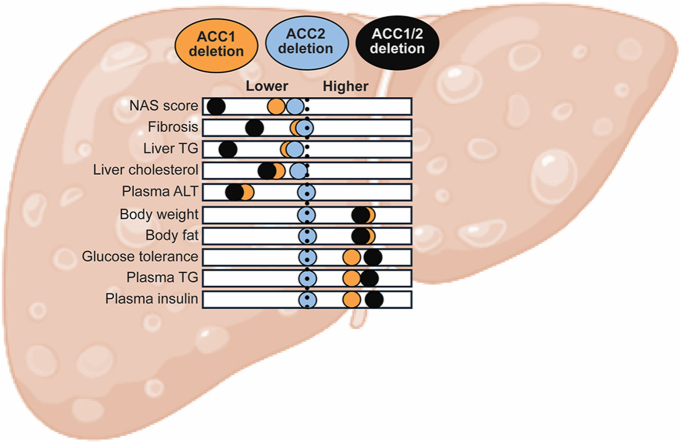 Figure 1
 Figure 2
 Figure 3
 Figure 4
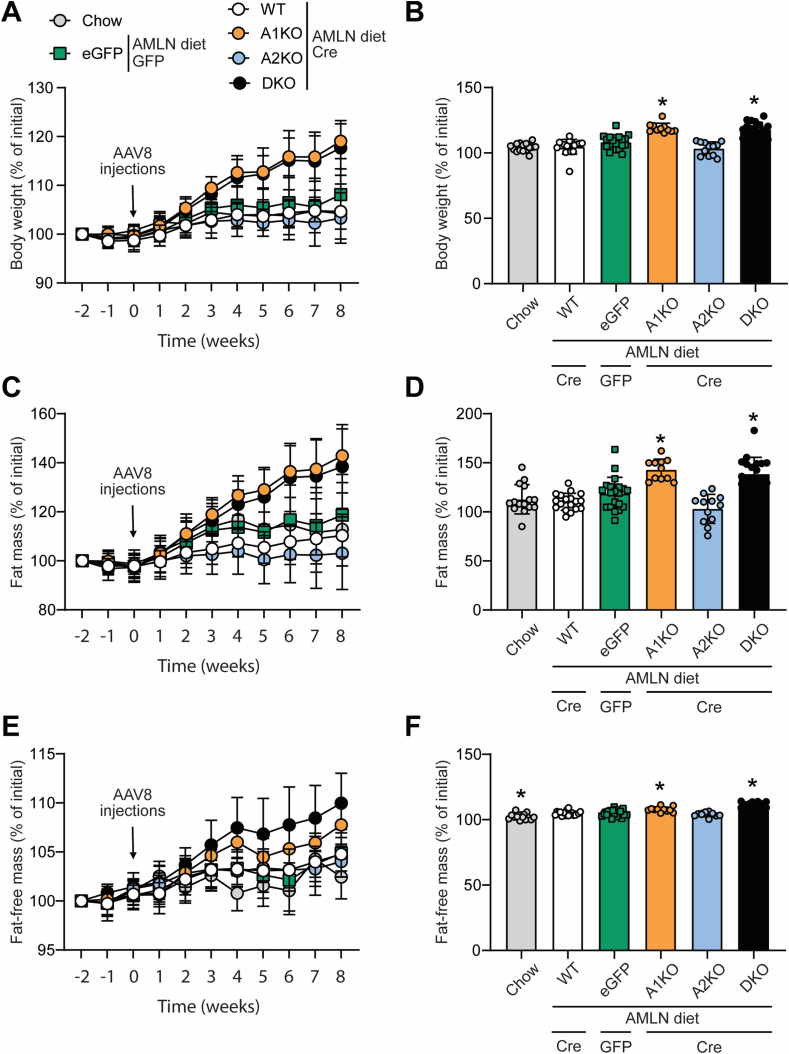 Figure 5
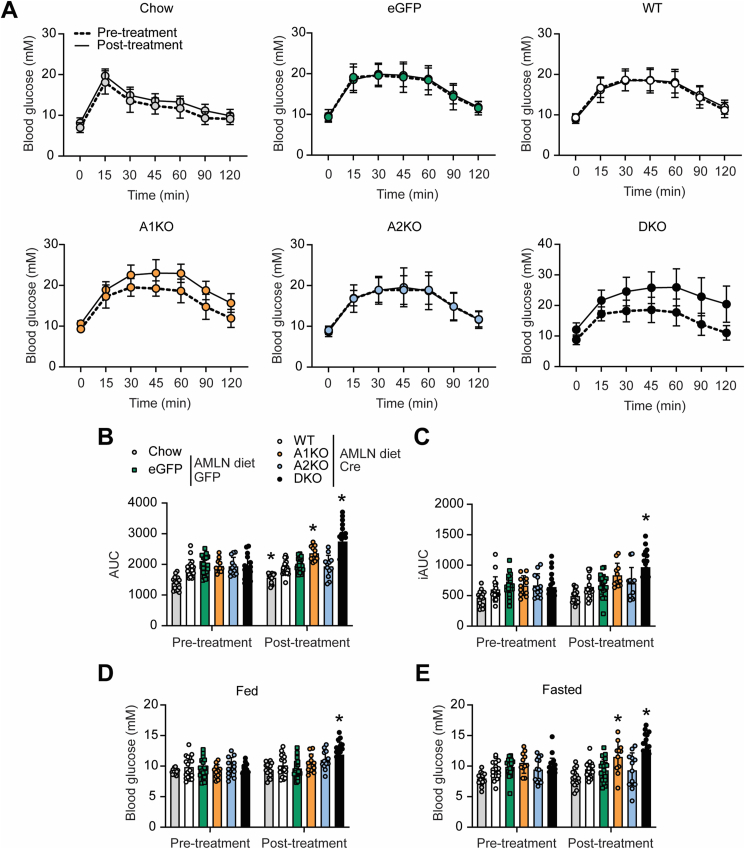 Figure 6
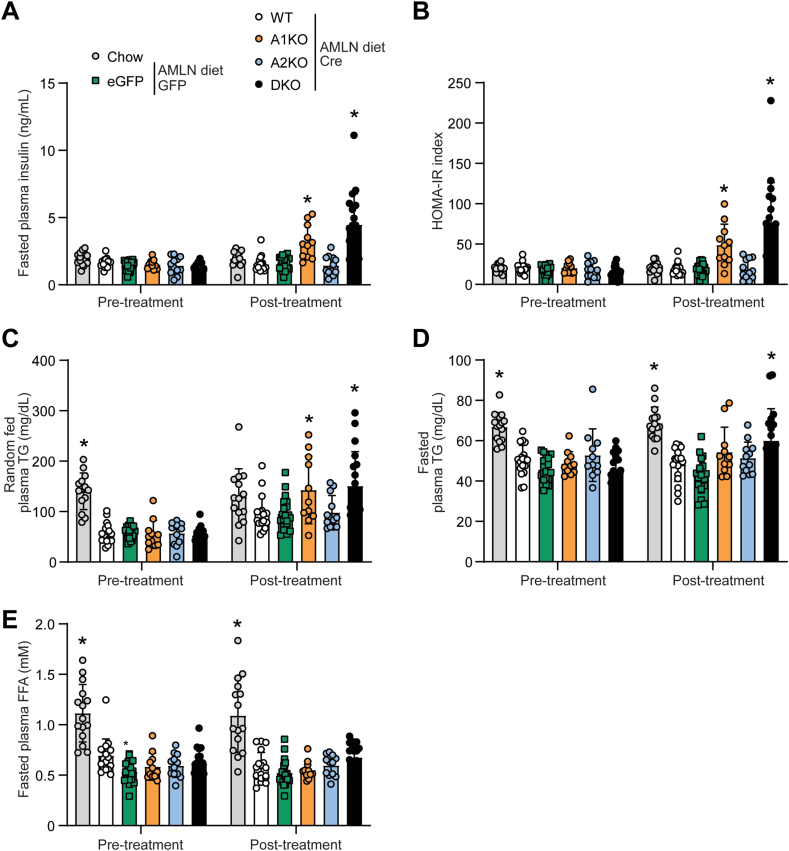 Figure 7
Peer Reviews
No public reviews on file for this paper yet. If you reviewed it on a platform where reviews are public (OpenReview, ICLR, NeurIPS, ICML), you can paste yours below so the community can read it here.
Videos
No videos yet. Explain this paper in a talk, walkthrough, or lecture? Add one.
Taxonomy
TopicsDiet and metabolism studies · Adipose Tissue and Metabolism · Liver Disease Diagnosis and Treatment