Efficacy and safety of nemolizumab in prurigo nodularis: a systematic review and meta-analysis of randomized controlled trials
Ana Carolina Putini Vieira, Maria Antônia Costa Cruz Akabane, Gianna Carolinne Graff Caletti, Kélen Klein Heffel, Amanda Tauana Oliveira e Silva

TL;DR
Nemolizumab, a drug targeting IL-31, effectively reduces itching and skin lesions in patients with prurigo nodularis, with a favorable safety profile.
Contribution
This study provides a meta-analysis of RCTs showing nemolizumab's efficacy and safety in treating prurigo nodularis.
Findings
Nemolizumab significantly reduced pruritus at week-4 and week-16 compared to placebo.
It improved Investigator’s Global Assessment success rates at week-16.
Nemolizumab showed a favorable safety profile with no significant increase in adverse events.
Abstract
Prurigo nodularis (PN) is a chronic, debilitating inflammatory skin disorder characterized by persistent itching, firm pruritic nodular lesions, and evidence of frequent scratching, like excoriation, and lichenification. Nemolizumab, a monoclonal antibody targeting IL-31, has shown significant improvements in skin lesions, itching, and sleep disturbances by reducing type 2 immune responses in PN. Evaluate the efficacy and safety of nemolizumab in treating PN by systematically analyzing randomized controlled trials (RCTs). Methods: The authors conducted a systematic review and meta-analysis by searching Pubmed, Embase, Cochrane Central and Scopus for RCTs comparing nemolizumab to placebo for PN. Statistical analysis usedR Studio 4.3.2. Three trials, involving 630 patients, were included. Nemolizumab significantly reduced pruritus at week-4 (MD = −32.04; 95% CI: −38.47, −25.62) and at…
Genes, proteins, chemicals, diseases, species, mutations and cell lines named across the full text — each resolved to its canonical identifier and authoritative record.
Click any figure to enlarge with its caption.
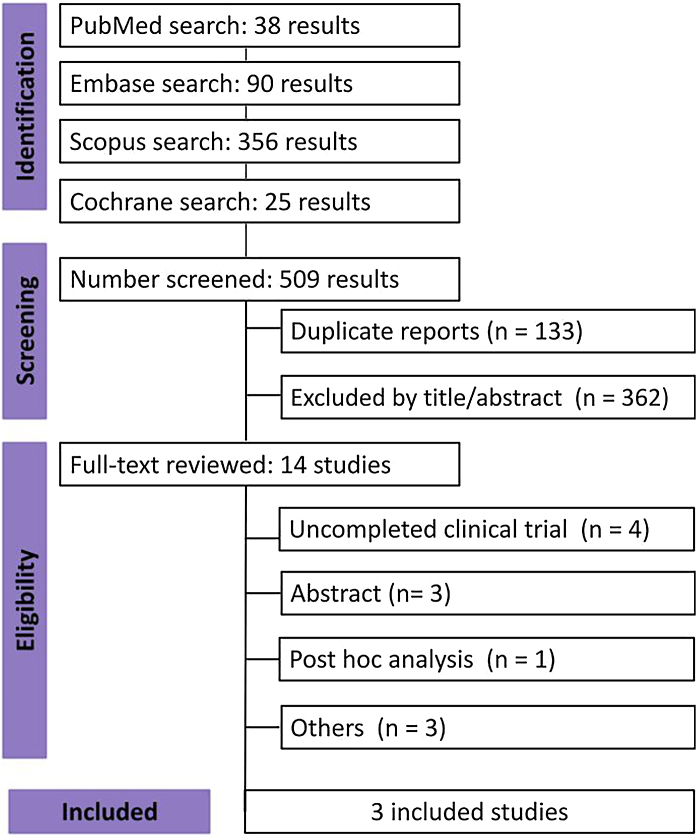 Figure 1
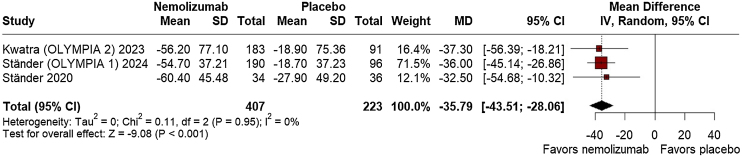 Figure 2
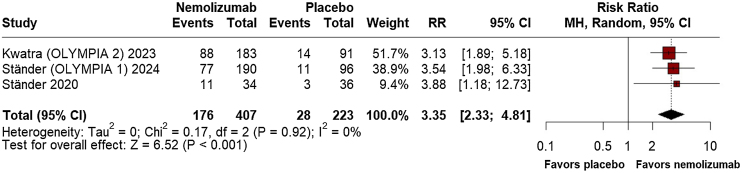 Figure 3
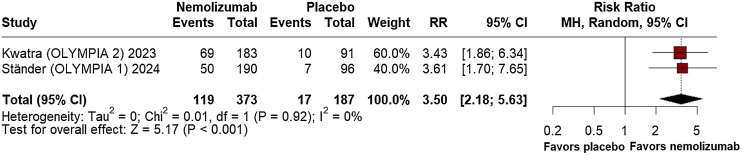 Figure 4
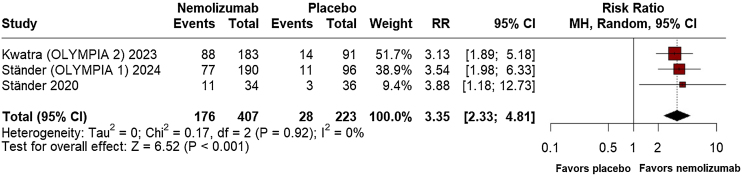 Figure 5
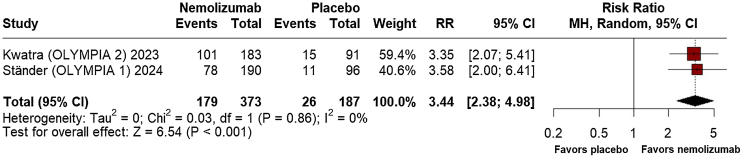 Figure 6
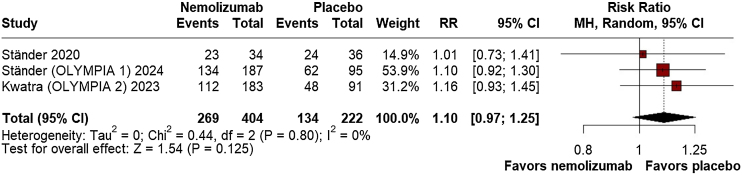 Figure 7
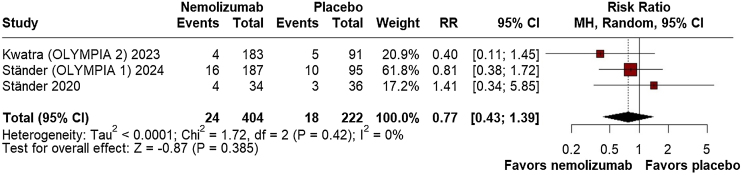 Figure 8
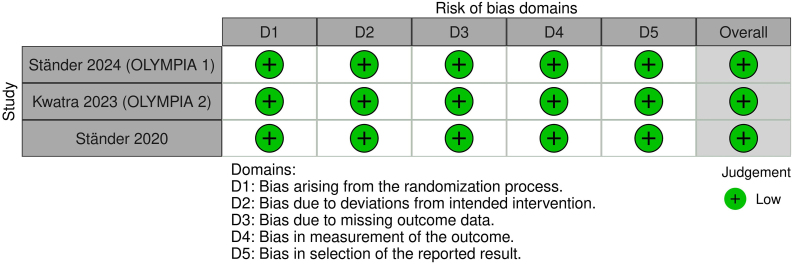 Figure 9
Peer Reviews
No public reviews on file for this paper yet. If you reviewed it on a platform where reviews are public (OpenReview, ICLR, NeurIPS, ICML), you can paste yours below so the community can read it here.
Videos
No videos yet. Explain this paper in a talk, walkthrough, or lecture? Add one.
Taxonomy
TopicsDermatology and Skin Diseases · Urticaria and Related Conditions · Contact Dermatitis and Allergies