Aberrant Right Subclavian Artery With a Bicarotid Trunk: A Rare Cause of Stridor in Infants
Mohammad Alashqar, Israa Salman, Shahd Saadeh, Seba Lubbadeh, Osayd Khasati

TL;DR
A rare blood vessel abnormality can cause breathing and feeding issues in infants and requires imaging and surgery for effective treatment.
Contribution
Highlights the importance of advanced imaging and timely surgery for a rare vascular anomaly in infants.
Findings
Aberrant right subclavian artery is a rare cause of stridor and feeding difficulties in infants.
Contrast-enhanced CT or MRI is essential for diagnosing this vascular anomaly.
Timely surgical intervention prevents severe complications and improves outcomes.
Abstract
The aberrant right subclavian artery represents a rare vascular anomaly that must be considered in the differential diagnosis of infants experiencing respiratory distress and feeding difficulties. Advanced imaging techniques, such as contrast‐enhanced computed tomography or magnetic resonance imaging, are essential for identifying this vascular anomaly and its anatomical course. Timely surgical intervention is critical as it can prevent severe complications and ultimately improve outcomes.
Genes, proteins, chemicals, diseases, species, mutations and cell lines named across the full text — each resolved to its canonical identifier and authoritative record.
Click any figure to enlarge with its caption.
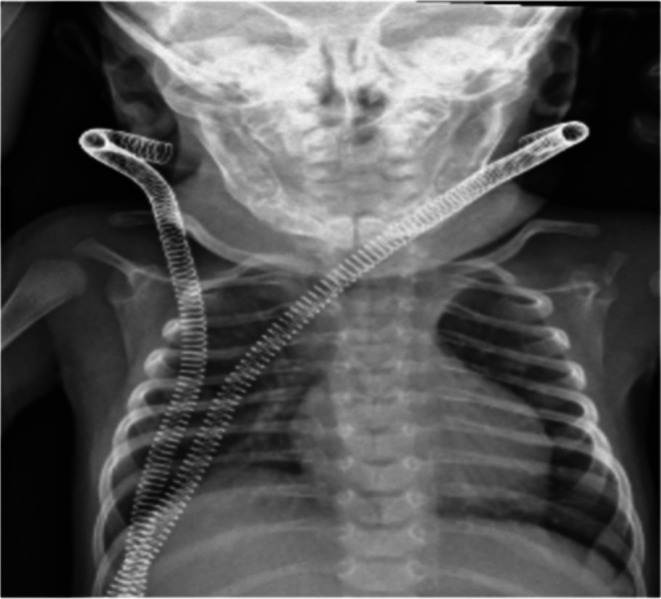 Figure 1
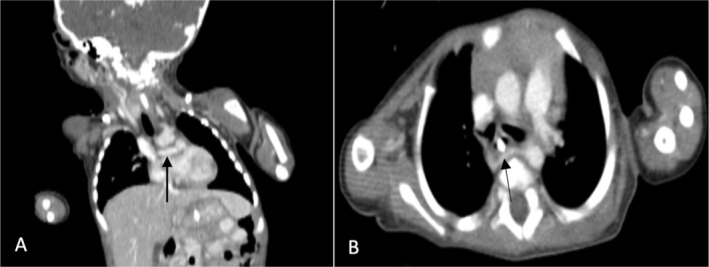 Figure 2
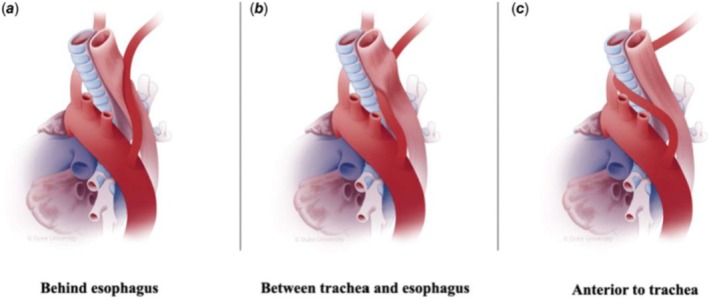 Figure 3
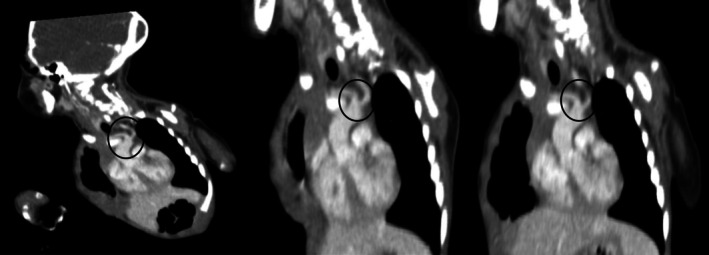 Figure 4
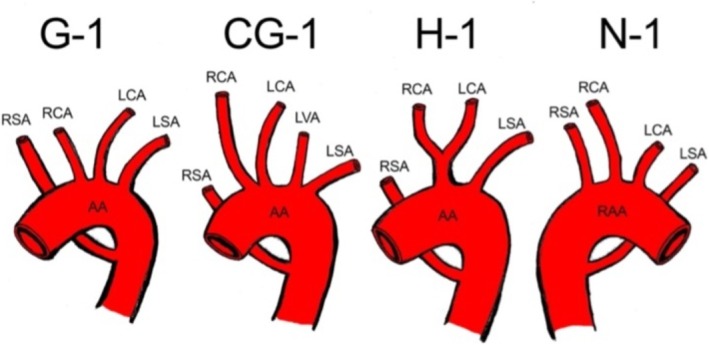 Figure 5
Peer Reviews
No public reviews on file for this paper yet. If you reviewed it on a platform where reviews are public (OpenReview, ICLR, NeurIPS, ICML), you can paste yours below so the community can read it here.
Videos
No videos yet. Explain this paper in a talk, walkthrough, or lecture? Add one.
Taxonomy
TopicsCongenital Heart Disease Studies · Tracheal and airway disorders · Coronary Artery Anomalies