A comparison of isolated mandibular fractures and pattern of fractures of the mandible in cases with panfacial fractures – A study from 2007 to 2024 in a highest-level German trauma centre on 2056 patients with mandibular fractures
Lars Bonitz, Leonie Koch, Stefan Hassfeld, Ákos Bicsák

TL;DR
This study compares mandibular fractures as isolated injuries and part of panfacial fractures in over 2,600 patients, highlighting differences in demographics and fracture patterns.
Contribution
The study provides new insights into the distinct fracture patterns and demographic trends of isolated versus panfacial mandibular fractures.
Findings
Isolated mandibular fractures peaked in young males (20–30 years), while older females showed a secondary peak in panfacial fractures.
Fracture distribution differed significantly between isolated and panfacial groups, with a cranial shift in panfacial cases.
Male-to-female ratio was 3:1, with males being significantly younger in both fracture types.
Abstract
This study investigates mandibular fractures focusing on long-term trends and fracture patterns of mandibular fractures as isolated fractures and as part of panfacial fractures. In addition to descriptive demographics, the fracture site distribution was statistically compared with the Wilcoxon rank test and compared in groups with the χ2-test. 2,699 mandibular fracture cases were analyzed: 1847 patients were isolated, and 852 with panfacial fractures involving the mandible. The male-to-female ratio was 3:1. Males were significantly younger than females in isolated and panfacial fractures. The yearly patient numbers decreased in panfacial cases and remained approximately the same – with high volatility – in isolated cases. Isolated fractures peaked in young males (20–30 years), while older females showed a secondary peak in panfacial fractures. Fracture distribution differed…
Genes, proteins, chemicals, diseases, species, mutations and cell lines named across the full text — each resolved to its canonical identifier and authoritative record.
Click any figure to enlarge with its caption.
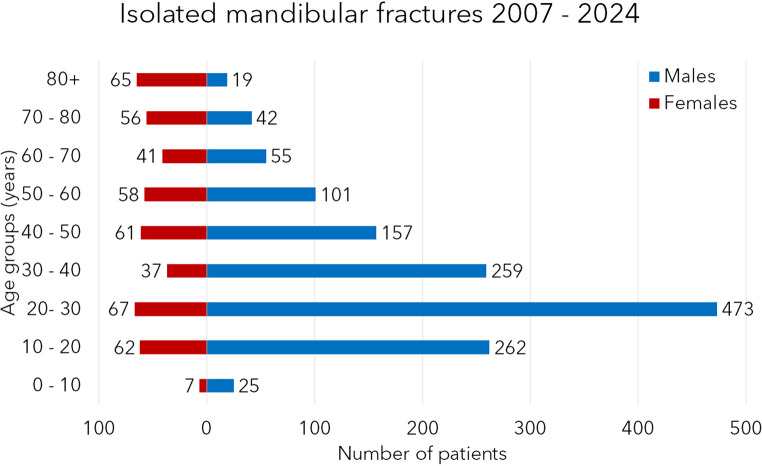 Figure 1
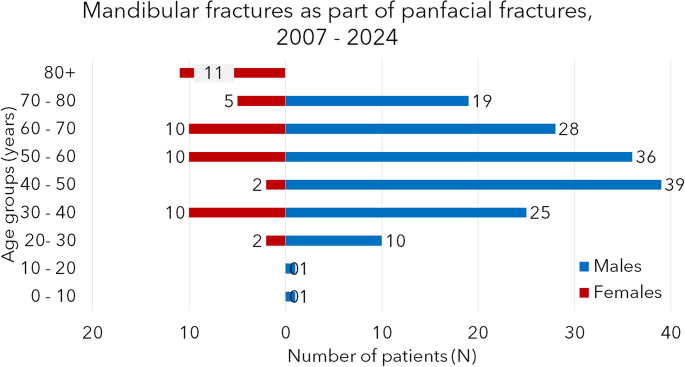 Figure 2
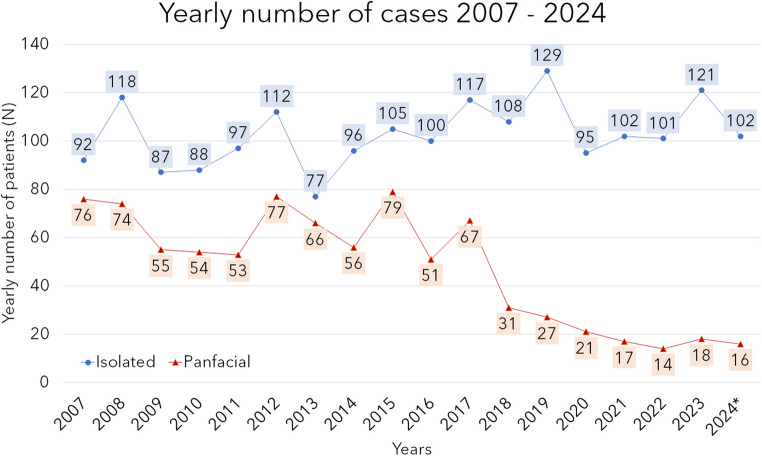 Figure 3
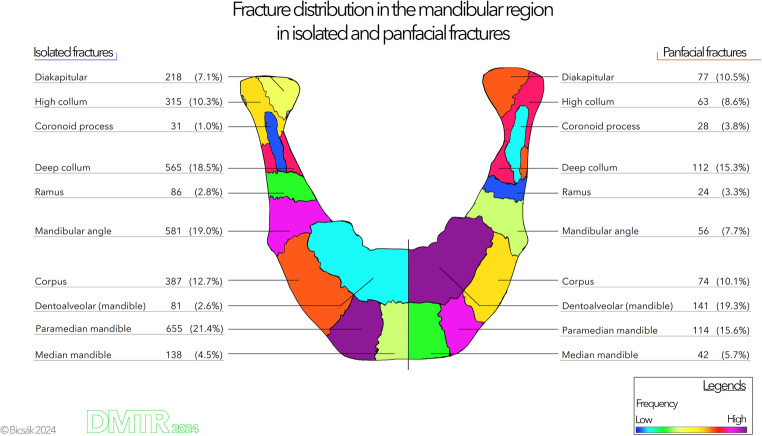 Figure 4
Peer Reviews
No public reviews on file for this paper yet. If you reviewed it on a platform where reviews are public (OpenReview, ICLR, NeurIPS, ICML), you can paste yours below so the community can read it here.
Videos
No videos yet. Explain this paper in a talk, walkthrough, or lecture? Add one.
Taxonomy
TopicsFacial Trauma and Fracture Management · Dental Radiography and Imaging · Spinal Fractures and Fixation Techniques