The Precuneus Region Drives Brain Network Changes in Tremor‐Dominant Parkinson's Disease: Insights from a Morphological Causal Analysis
Moxuan Zhang, Siyu Zhou, Pengda Yang, Huizhi Wang, Jinli Ding, Xiaobo Wang, Xuzhu Chen, Chaonan Zhang, Anni Wang, Yuan Gao, Qiang Liu, Yuchen Ji, Yin Jiang, Lin Shi, Chunlei Han, Zhong Yang, Tao Feng, Jianguo Zhang, Fangang Meng

TL;DR
This study identifies a brain region, the precuneus, as central to structural changes in tremor-dominant Parkinson's disease and develops a machine learning model to predict DBS treatment outcomes.
Contribution
The study reveals a causal morphological progression pattern in tremor-dominant Parkinson's disease and introduces a predictive model for DBS outcomes.
Findings
The bilateral precuneus shows significant gray matter volume reduction in tremor-dominant Parkinson's patients.
The precuneus regulates structural covariance with regions like the supplementary motor area and temporal lobe.
A machine learning model using cortical volume and clinical data accurately predicts DBS treatment outcomes.
Abstract
The tremor‐dominant (TD) subtype of Parkinson's disease (PD) is characterized by prominent tremor symptoms. However, the temporal and causal relationships between brain structural alterations in TD patients remain unexplored. A total of 61 TD patients and 61 matched healthy controls (HCs) were included in this study. The gray matter volume (GMV) of the bilateral precuneus (PCUN) was significantly reduced in TD patients. A structural covariance network analysis seeded with the left pallidum (PAL.L), which had the most significant differences, revealed a substantial reduction in covariance with precentral gyrus in TD patients. We performed a causal structural covariance network analysis using the TD duration as a pseudotime series. The PCUN, with the highest out‐degree in the cortex, regulates numerous regions, including the supplementary motor area and the extensive temporal lobe.…
Genes, proteins, chemicals, diseases, species, mutations and cell lines named across the full text — each resolved to its canonical identifier and authoritative record.
Click any figure to enlarge with its caption.
 Figure 1
 Figure 2
 Figure 3
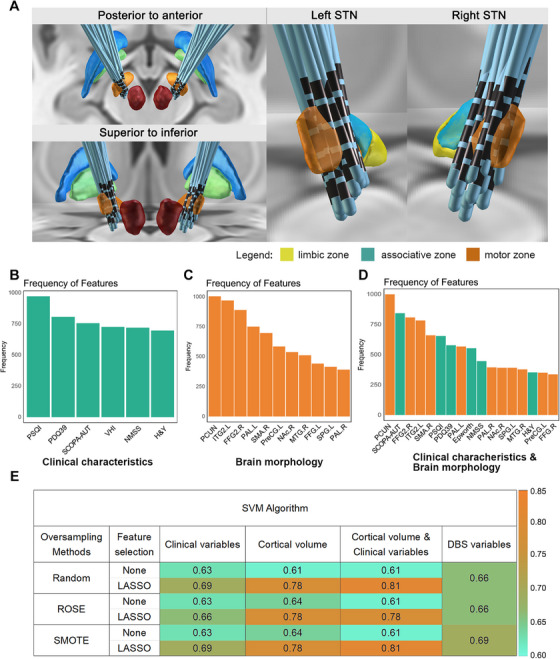 Figure 4
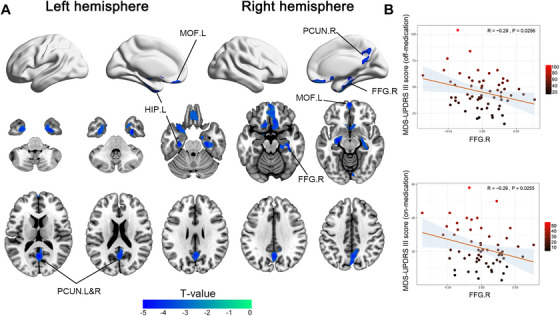 Figure 5
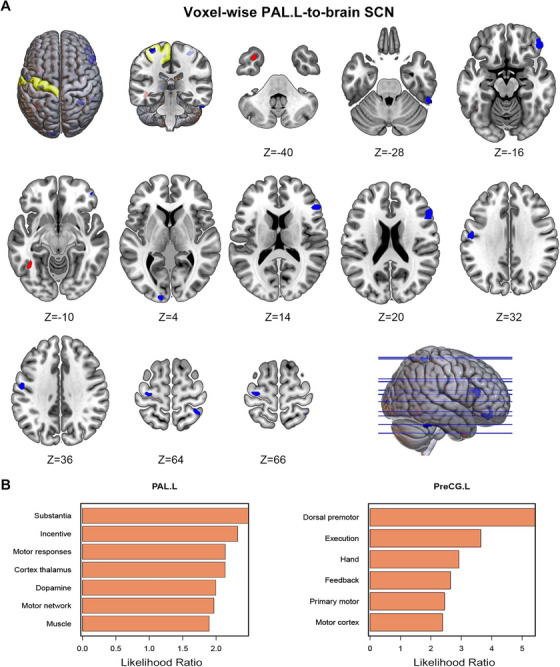 Figure 6
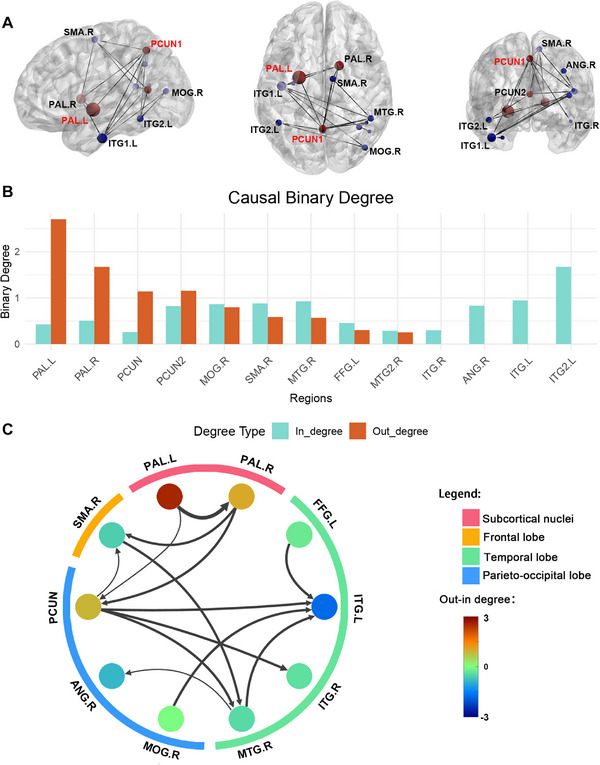 Figure 7
Peer Reviews
No public reviews on file for this paper yet. If you reviewed it on a platform where reviews are public (OpenReview, ICLR, NeurIPS, ICML), you can paste yours below so the community can read it here.
Videos
No videos yet. Explain this paper in a talk, walkthrough, or lecture? Add one.
Taxonomy
TopicsNeurological disorders and treatments · Parkinson's Disease Mechanisms and Treatments · Functional Brain Connectivity Studies