Nomogram-based model to predict prognosis in anisometropic amblyopia
Wenyan Xu, Xiaoman Li, Lizhong Wang, Xiyan Xiang, Yuejia Peng, Hongyi Li, Xuewen Ding, Jianing Zhang, Xiaoyue Hu, Jie Chen, Wuhe Chen

TL;DR
This study developed a predictive model to estimate the prognosis of anisometropic amblyopia using patient data and a nomogram for personalized treatment planning.
Contribution
A novel nomogram-based model was developed to predict prognosis in anisometropic amblyopia using clinical predictors.
Findings
Baseline age, interocular BCVA difference, and spherical equivalence were significant predictors of amblyopia prognosis.
The nomogram achieved strong predictive performance with an AUC of 0.783 in the training set and 0.782 in the validation set.
Abstract
This study aimed to identify predictive factors and develop an effective nomogram to estimate the prognosis of anisometropic amblyopia. We retrospectively analyzed 2,897 patients aged 3–18 years diagnosed with anisometropic amblyopia, with at least 12 months of follow-up. The cure criterion was a best corrected visual acuity (BCVA) of 0.1 LogMAR or better in the amblyopic eye, with less than one line of interocular difference. The potential predictors included 15 baseline clinical characteristics. Participants were randomly assigned (7:3) to the training and validation sets. A nomogram to predict the prognosis of amblyopia was computed using a logistic regression model with least absolute shrinkage and a selection operator. Model performance was assessed by discrimination (area under the curve [AUC]) and calibration (calibration plots). This study included 2,897 patients, of whom…
Genes, proteins, chemicals, diseases, species, mutations and cell lines named across the full text — each resolved to its canonical identifier and authoritative record.
Click any figure to enlarge with its caption.
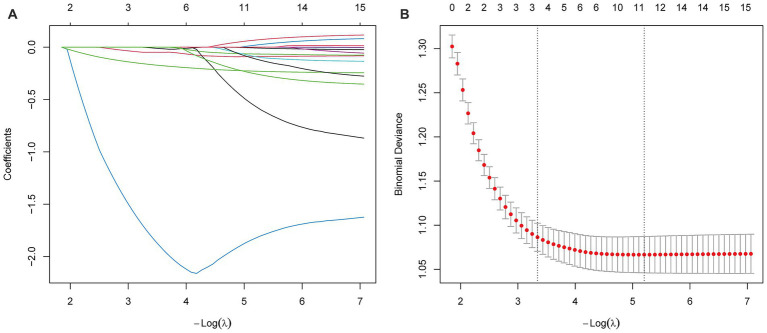 Figure 1
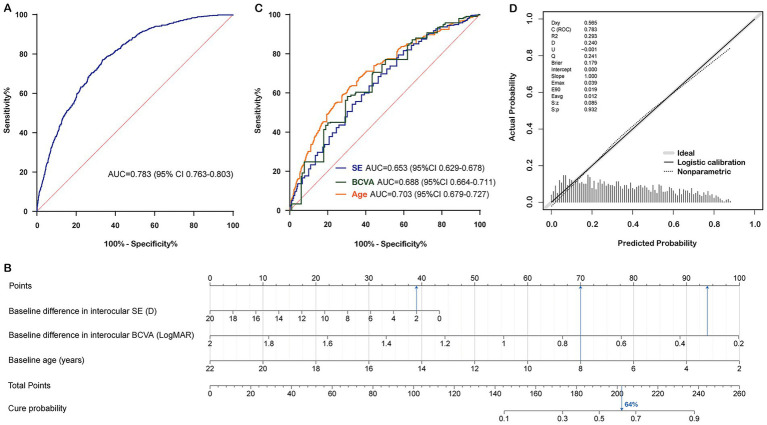 Figure 2
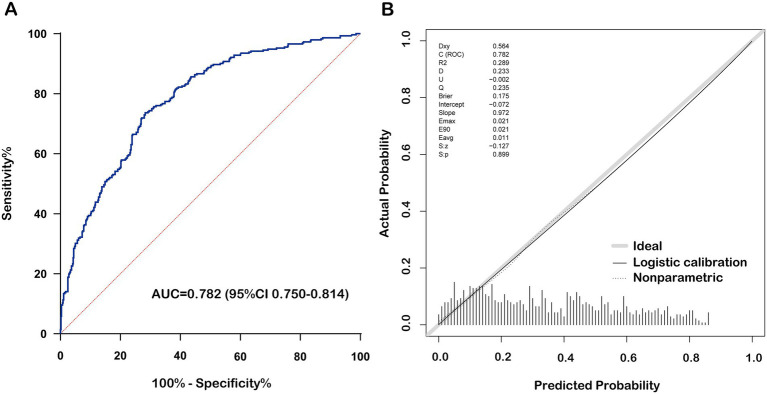 Figure 3
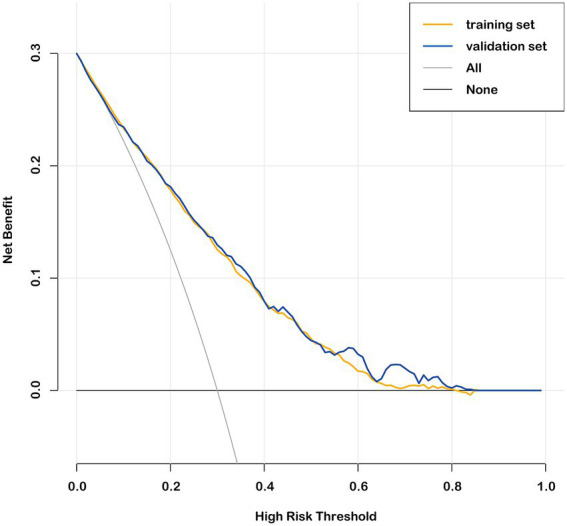 Figure 4
Peer Reviews
No public reviews on file for this paper yet. If you reviewed it on a platform where reviews are public (OpenReview, ICLR, NeurIPS, ICML), you can paste yours below so the community can read it here.
Videos
No videos yet. Explain this paper in a talk, walkthrough, or lecture? Add one.
Taxonomy
TopicsOphthalmology and Visual Impairment Studies · Corneal surgery and disorders · Visual perception and processing mechanisms