First identification of human adenovirus subtype 21a in Shenzhen, China with high-throughput sequencing
Dan-dan Niu, Shi-song Fang, Zhi-gao Chen, Qiu-ying Lv, Ting-ting Liu, Ni-xuan Chen, Ying-ying Li, Ying Sun, Chao Li, Shun-wu Huang, Yan-peng Cheng, Hong-lin Wang, Ying Wen, Yi-xiong Chen, Xin-dong Zhang, Jian-hua Lu, Xiao-lu Shi, Zhen Zhang, Xuan Zou, Tie-jian Feng

TL;DR
This study reports the first identification of human adenovirus subtype 21a in children in Shenzhen, China, using high-throughput sequencing.
Contribution
The first identification and characterization of HAdV-21a in China, including genome and mutation analysis.
Findings
HAdV-21a was identified in a child in Shenzhen with acute respiratory infection.
The strain had one amino acid insertion mutation in the penton base compared to other Chinese HAdV-21 strains.
Global HAdV-21 strains are divided into two branches with distinct antigenic variations.
Abstract
Human adenovirus type 21 (HAdV-21) is recognized as an important pathogen responsible for acute respiratory infections (ARIs). However, it has been rarely reported and remains poorly characterized to date in China. Outpatient or inpatient children under 14 years old with suspected ARIs were enrolled from two hospitals in Shenzhen from September 2023 to April 2024. Respiratory samples were collected and tested for 22 common respiratory pathogens. A comparative analysis was conducted on the positive proportions of pathogens among different groups. Phylogenetic analysis and amino acid mutation analysis were conducted for HAdV-21 strains. A total of 498 pediatric patients with ARIs were enrolled. There were 366 (73.5%) patients infected with at least one pathogen, and 133 (26.7%) patients co-infected with other pathogens. The most frequently detected pathogens were streptococcus pneumoniae…
Genes, proteins, chemicals, diseases, species, mutations and cell lines named across the full text — each resolved to its canonical identifier and authoritative record.
Click any figure to enlarge with its caption.
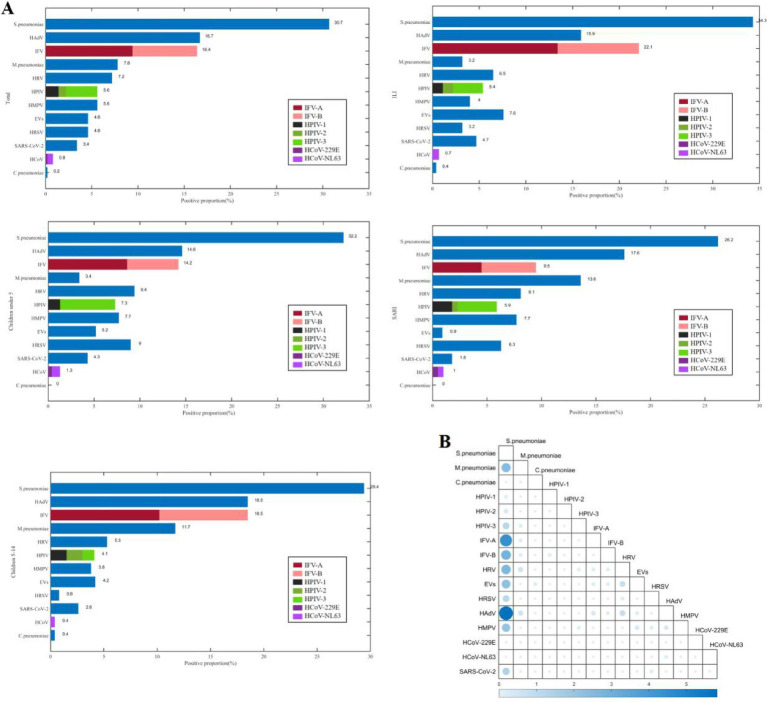 Figure 1
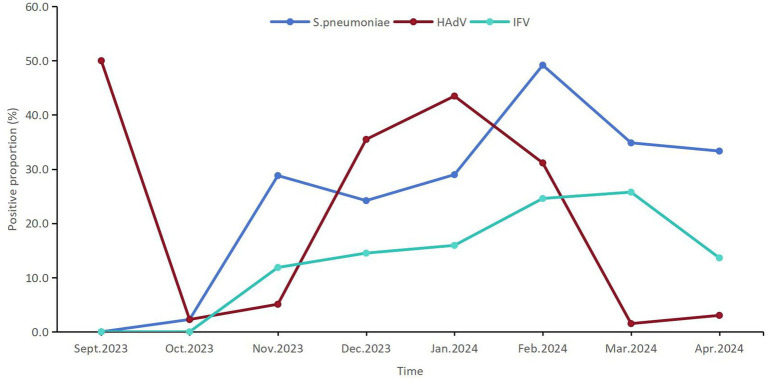 Figure 2
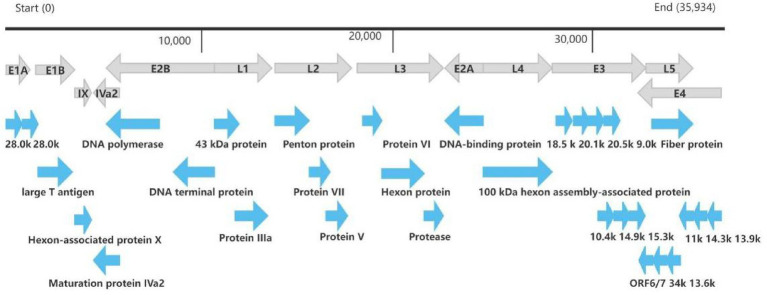 Figure 3
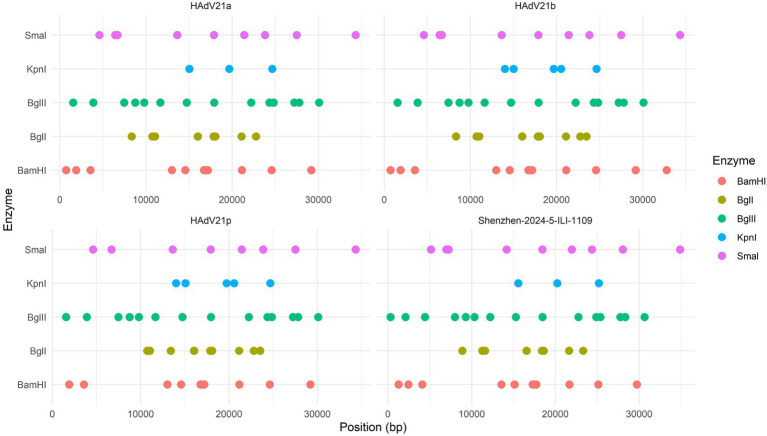 Figure 4
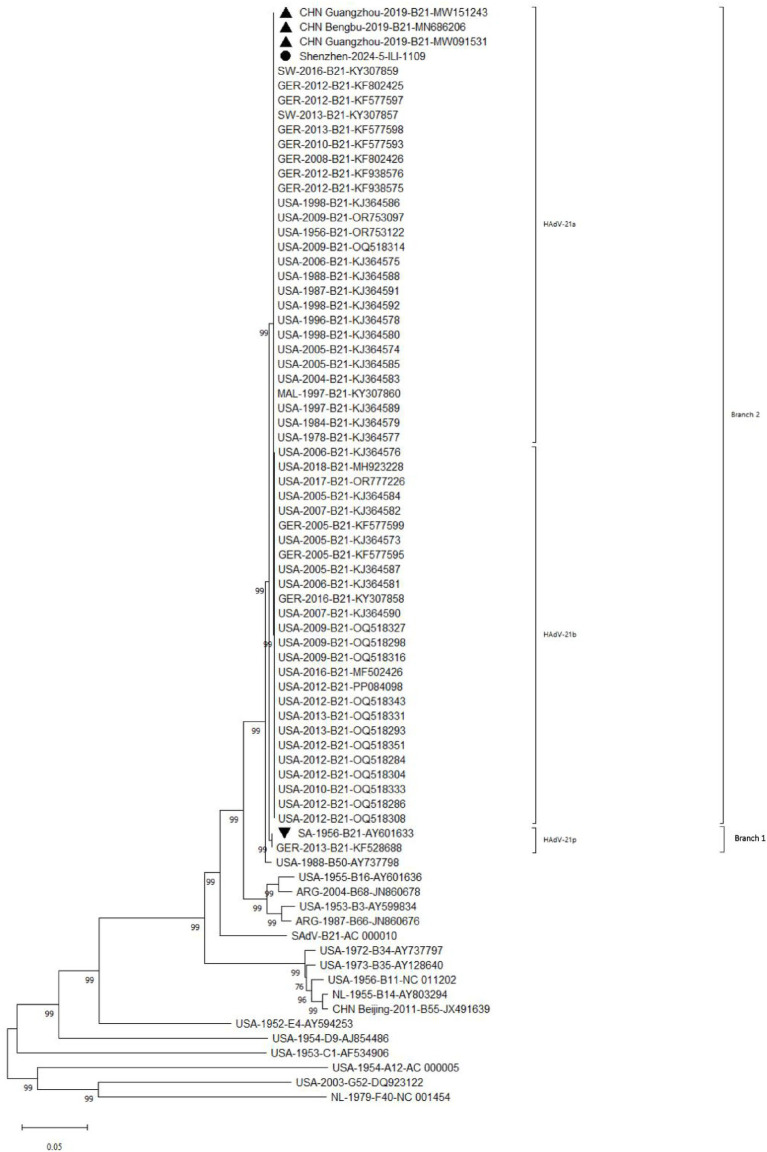 Figure 5
Peer Reviews
No public reviews on file for this paper yet. If you reviewed it on a platform where reviews are public (OpenReview, ICLR, NeurIPS, ICML), you can paste yours below so the community can read it here.
Videos
No videos yet. Explain this paper in a talk, walkthrough, or lecture? Add one.
Taxonomy
TopicsVirus-based gene therapy research · Respiratory viral infections research · Viral gastroenteritis research and epidemiology