Directed evolution of drug-like Aβ conformation-specific antibodies
Alec A. Desai, Matthew D. Smith, Jennifer M. Zupancic, Emily K. Makowski, Yulei Zhang, Julia E. Gerson, Shannon J. Moore, Alexandra B. Sutter, Sean P. Ferris, Magdalena I. Ivanova, Geoffrey G. Murphy, Henry L. Paulson, Peter M. Tessier

TL;DR
Scientists developed a new method to create better antibodies that target harmful protein clumps linked to Alzheimer's disease.
Contribution
A directed evolution platform was developed to generate high-quality conformational antibodies against Aβ fibrils.
Findings
The approach produced antibodies with higher affinity and specificity than existing clinical candidates.
Antibodies showed reduced off-target binding compared to aducanumab and crenezumab.
The method is applicable to diverse peptide and protein aggregates in human diseases.
Abstract
Monoclonal antibodies that recognize conformational epitopes in protein aggregates are important for research, diagnostic, and therapeutic applications related to neurodegenerative disorders such as Alzheimer’s and Parkinson’s diseases. Unfortunately, it remains challenging to discover and engineer high-quality conformational antibodies that are specific for protein aggregates and possess optimal combinations of three key binding properties, namely high affinity, high conformational specificity, and low off-target binding. Here we report a directed evolution approach for generating high-quality conformational antibodies against Alzheimer’s Aβ fibrils in the native IgG format. Our directed evolution approach uses targeted mutagenesis, yeast surface display, cell sorting, and deep sequencing to identify antibody candidates with optimized binding properties. Notably, we find that this…
Genes, proteins, chemicals, diseases, species, mutations and cell lines named across the full text — each resolved to its canonical identifier and authoritative record.
Click any figure to enlarge with its caption.
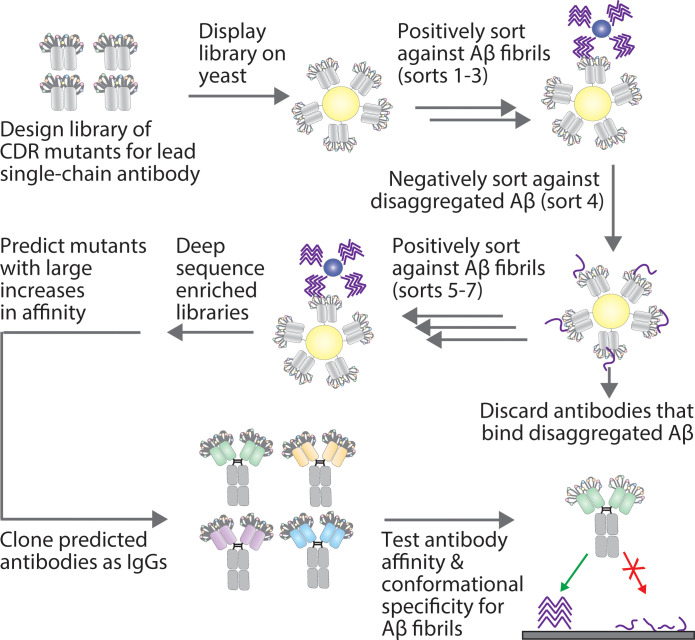 Figure 1
 Figure 2
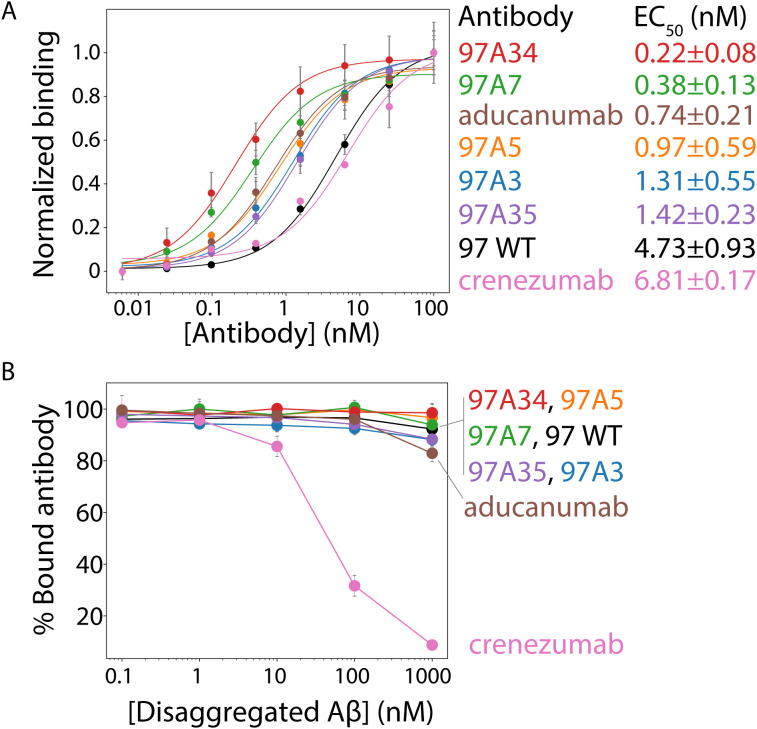 Figure 3
 Figure 4
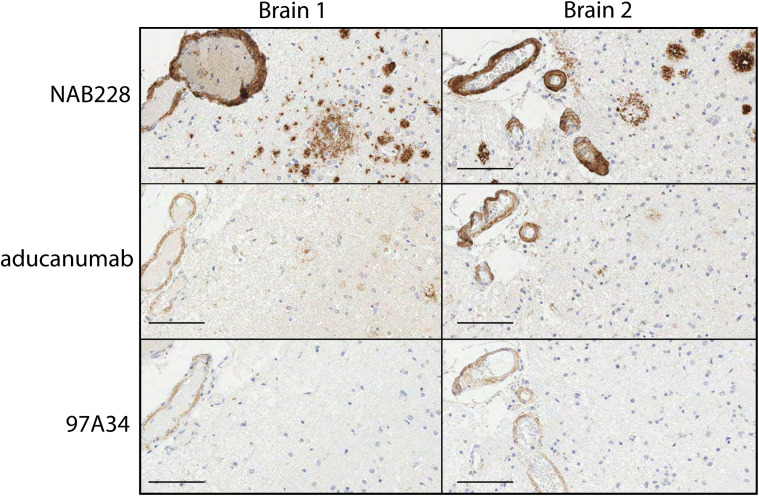 Figure 5
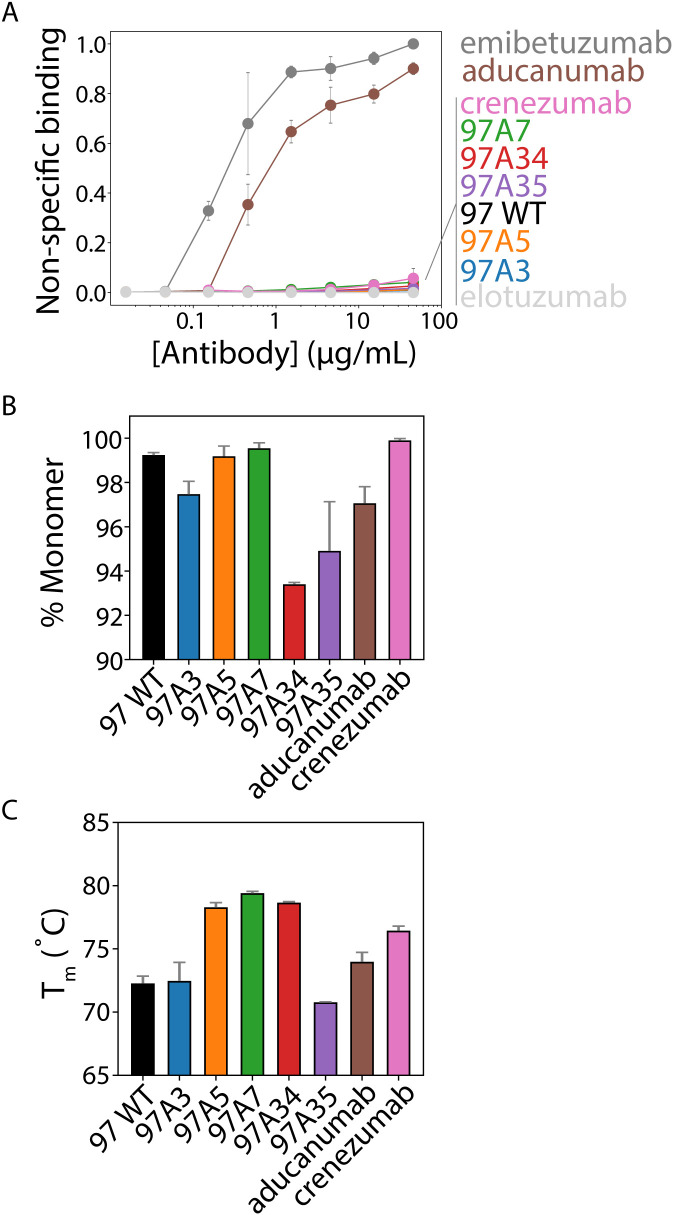 Figure 6
Peer Reviews
No public reviews on file for this paper yet. If you reviewed it on a platform where reviews are public (OpenReview, ICLR, NeurIPS, ICML), you can paste yours below so the community can read it here.
Videos
No videos yet. Explain this paper in a talk, walkthrough, or lecture? Add one.
Taxonomy
TopicsMonoclonal and Polyclonal Antibodies Research · Computational Drug Discovery Methods · Glycosylation and Glycoproteins Research