Predictive factors for referral to a peer support worker in psychosocial rehabilitation centers
Romain Monnier, Julien Plasse, Frédéric Haesebaert, Benjamin Gouache, Emilie Legros-Lafarge, Nathalie Guillard-Bouhet, Marie-Cécile Bralet, Nicolas Franck, Dora Khattech, Guillaume Barbalat, Céline Giraudet

TL;DR
This study identifies factors that predict when patients are referred to peer support workers in mental health rehabilitation centers.
Contribution
The study compares expert and machine-based models to predict peer support referrals and identifies key predictive factors.
Findings
Neurodevelopmental disorder diagnosis, social isolation, and low treatment adherence predict peer support referral.
Machine-based models outperformed expert-based models in initial accuracy but both performed poorly after cross-validation.
Poor model performance may be due to unmeasured factors like patient motivation or clinician perceptions.
Abstract
Peer support workers are individuals with personal lived experience of mental health conditions, addictions, or neurodevelopmental disorders, and can be employed as professionals within mental health services. This study aims to identify predictive factors for patient referral to peer support intervention in psychosocial rehabilitation services. Using data from the French REHABase cohort, we compared variables between patients referred (n=134) and not referred (n=242) to peer support intervention. We evaluated an expert-based model (clinician-selected variables) against a machine-based model (algorithm-selected variables) for predictive accuracy. The machine-based model outperformed the expert-based model in the full dataset (AUC = 0.78 vs 0.71). However, the predictive performance of both models substantially declined after cross-validation, yielding modest AUC values (0.60 and…
Genes, proteins, chemicals, diseases, species, mutations and cell lines named across the full text — each resolved to its canonical identifier and authoritative record.
Click any figure to enlarge with its caption.
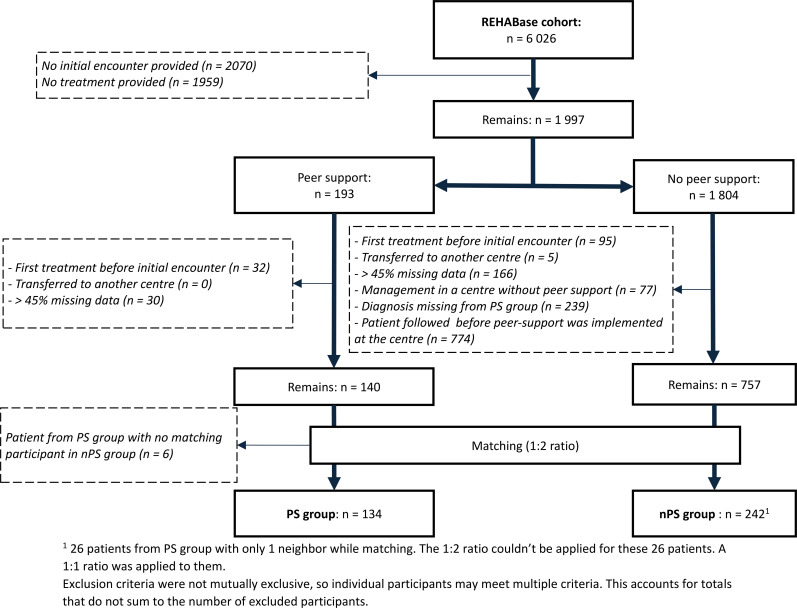 Figure 1
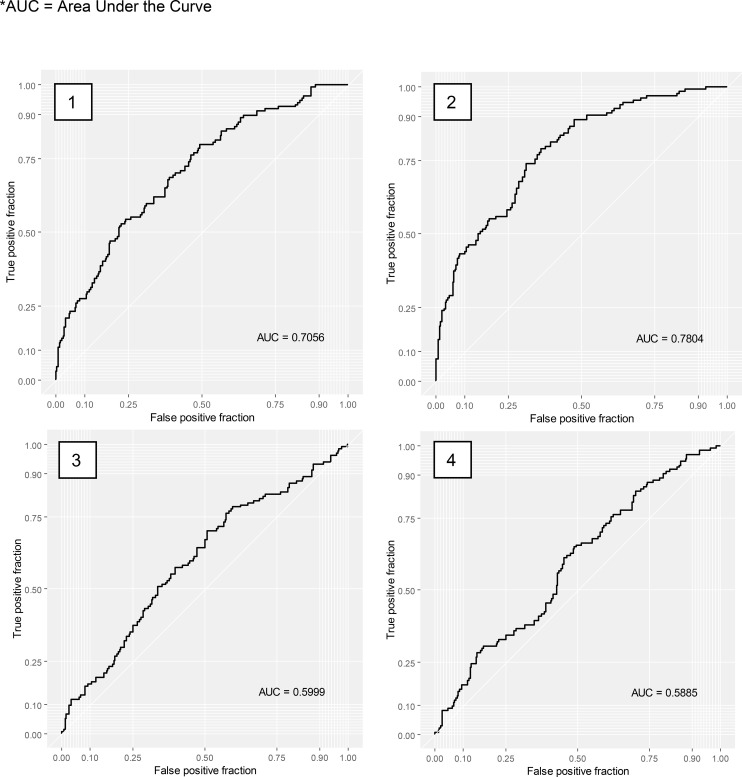 Figure 2
Peer Reviews
No public reviews on file for this paper yet. If you reviewed it on a platform where reviews are public (OpenReview, ICLR, NeurIPS, ICML), you can paste yours below so the community can read it here.
Videos
No videos yet. Explain this paper in a talk, walkthrough, or lecture? Add one.
Taxonomy
TopicsMental Health and Patient Involvement · Family Caregiving in Mental Illness · Mental Health Treatment and Access