Comparative study of the anti-inflammatory effect and acute toxicity of Sacha Inchi oils (Plukenetia volubilis and Plukenetia huayllabambana) in mice
Jose Luis Aguilar-Olano, Silvia Davila Paico, Christian Pitot Alvarez

TL;DR
This study compares the anti-inflammatory effects and safety of two Sacha Inchi oils in mice, finding both are non-toxic and effective at reducing inflammation.
Contribution
The study provides new evidence on the anti-inflammatory efficacy and acute toxicity of two Sacha Inchi species in animal models.
Findings
P. huayllabambana oil contains 53% ω-3 fatty acids, higher than P. volubilis (47%).
Both oils showed high IC50 and LD50 values, indicating they are non-cytotoxic and non-toxic.
P. huayllabambana oil inhibited inflammation by 62%, outperforming P. volubilis.
Abstract
The seed of Sacha Inchi (Plukenetia spp.), a plant native from the Peruvian Amazon, has a high content of Omega 3 (ω-3) in its composition, reaching up to 53% of its total fatty acids. Fatty acids ω-3 can significantly reduce the production of proinflammatory molecules and could therefore inhibit or reduce the inflammatory response. We evaluate the oils from the seeds of two species of Sacha Inchi: Plukenetia volubilis and Plukenetia huayllabambana for their inflammation inhibitory capacity, in an in vivo and in vitro model in experimental animals. The physicochemical analysis showed that Sacha Inchi oil obtained from P. huayllabambana seeds contained 53% ω-3, whereas that obtained from P. volubilis presented 47%. The evaluation of cytotoxicity in culture of normal splenocytes demonstrated that both oils are non-cytotoxic, because they showed a median inhibitory concentration (IC50)…
Genes, proteins, chemicals, diseases, species, mutations and cell lines named across the full text — each resolved to its canonical identifier and authoritative record.
Click any figure to enlarge with its caption.
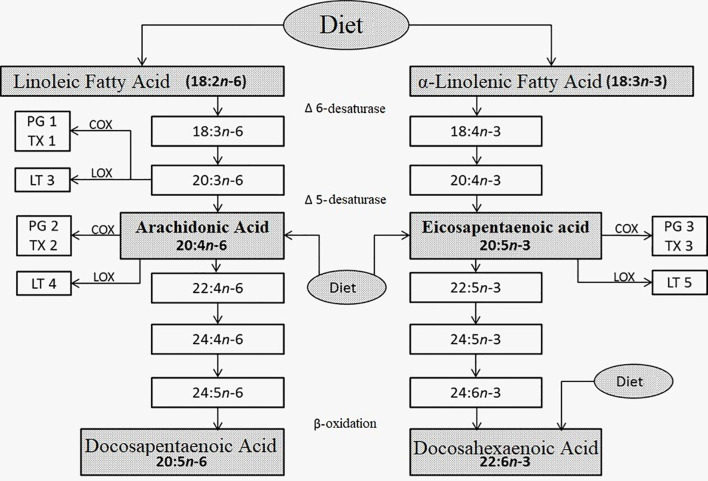 Figure 1
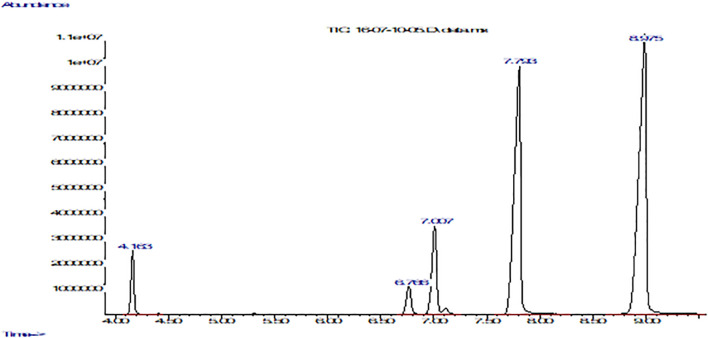 Figure 2
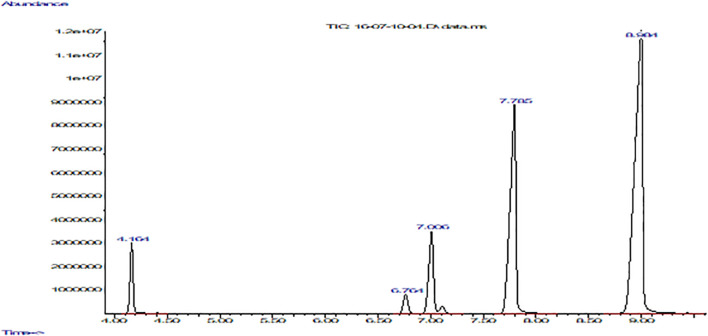 Figure 3
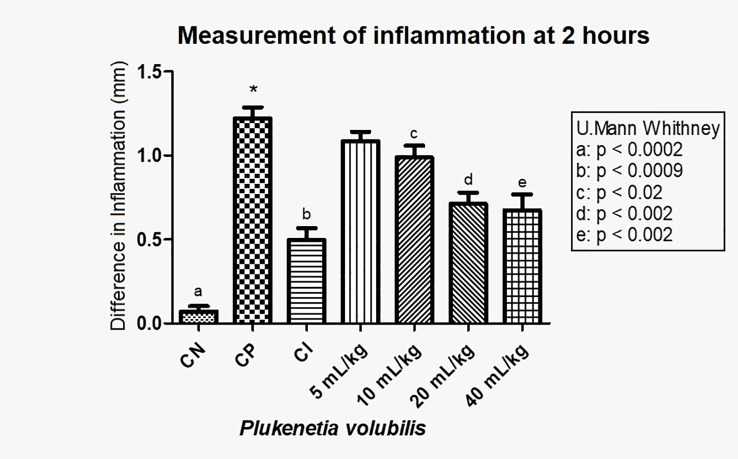 Figure 4
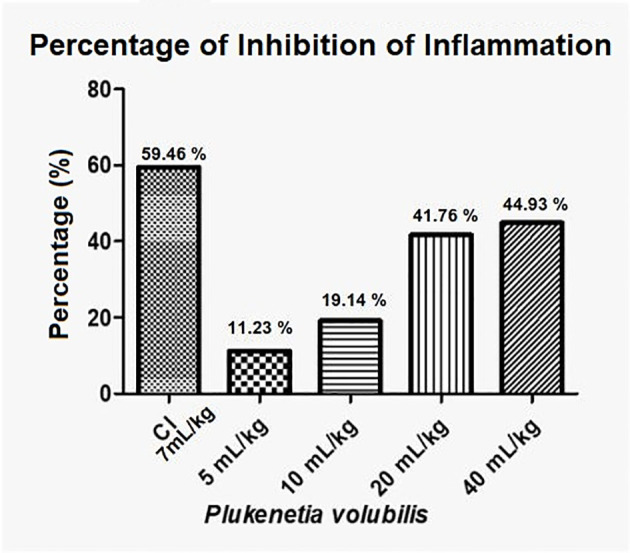 Figure 5
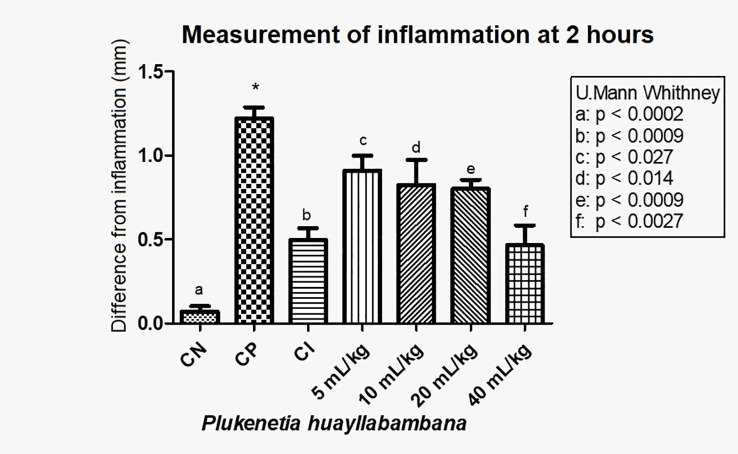 Figure 6
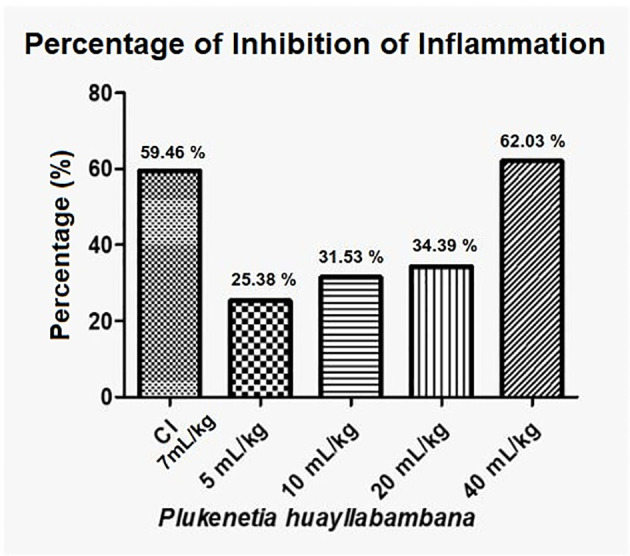 Figure 7
Peer Reviews
No public reviews on file for this paper yet. If you reviewed it on a platform where reviews are public (OpenReview, ICLR, NeurIPS, ICML), you can paste yours below so the community can read it here.
Videos
No videos yet. Explain this paper in a talk, walkthrough, or lecture? Add one.
Taxonomy
TopicsFatty Acid Research and Health · Cholesterol and Lipid Metabolism · Natural product bioactivities and synthesis