Tackling global inequalities in maternal hypertensive disorders: trends and the impact of public health emergencies, 1990–2021
Siying Wei, Junliang Zhu, Changyu Ni, Jianing Bi, Zhongxun Dong, Xueying Xu, Weijie Cai, Xiaojin Wang, Hongbo Liu, Bingshun Wang

TL;DR
This study examines global inequalities in maternal hypertensive disorders from 1990 to 2021, highlighting how public health emergencies like the pandemic worsened health disparities.
Contribution
The study introduces a comprehensive analysis of maternal hypertensive disorder trends, incorporating public health emergency impacts and socio-demographic disparities.
Findings
Maternal hypertensive disorder burden decreased more rapidly in low-SDI regions compared to high-SDI regions.
The pandemic significantly slowed progress in reducing maternal hypertensive disorder burden in low-SDI regions.
Health inequalities increased in lower-SDI populations despite overall global improvements.
Abstract
Despite progress made under the United Nations Millennium Development Goals (MDGs) and the Sustainable Development Goals (SDGs), inequalities in global health persist, particularly in the maternal health. Public health emergencies also affect health equity. This research examined long-term disease burden trends (1990–2021) of maternal hypertensive disorders (MHD), with a focus on the influence of age and socio-demographic index (SDI) differences, as well as short-term disruptions during the COVID-19 pandemic, to inform more equitable maternal health policies. Using the Global Burden of Disease database (2021), this study conducted a systematic examination of indicators of MHD: incidence, maternal mortality ratio (MMR), and disability-adjusted life years (DALYs). All analyses were standardized for age-specific fertility rates (ASFR). Analyses included frontier analysis to identify…
Genes, proteins, chemicals, diseases, species, mutations and cell lines named across the full text — each resolved to its canonical identifier and authoritative record.
Click any figure to enlarge with its caption.
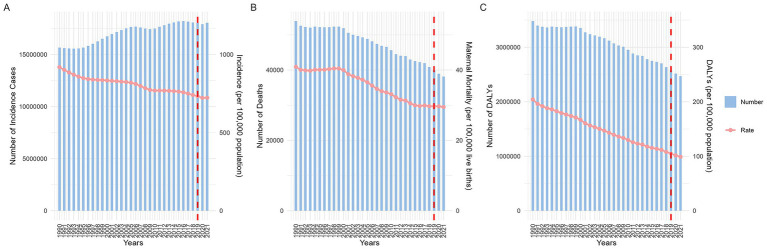 Figure 1
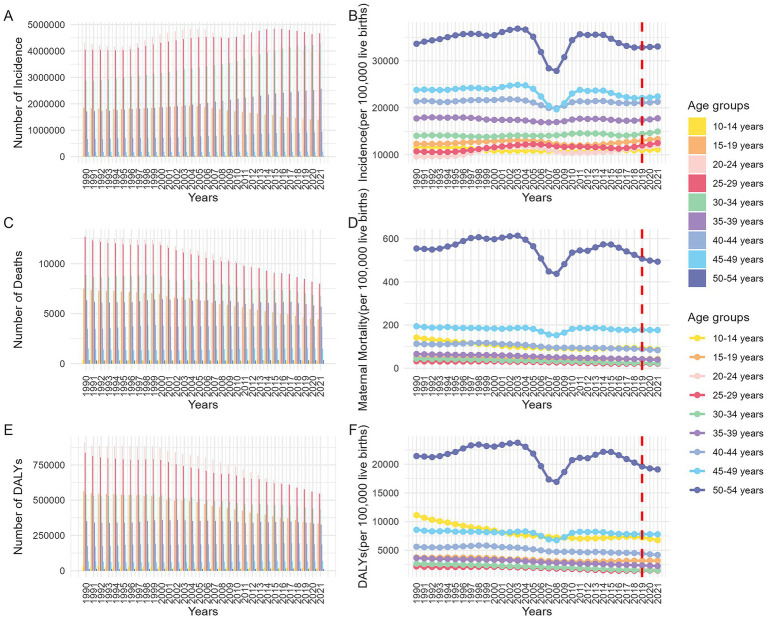 Figure 2
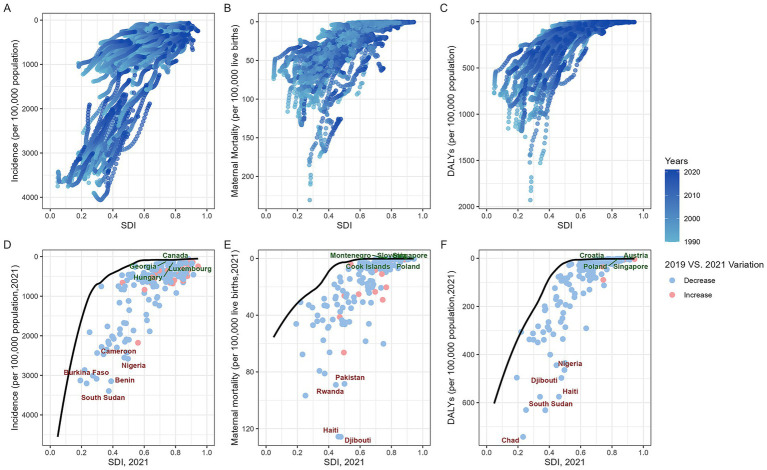 Figure 3
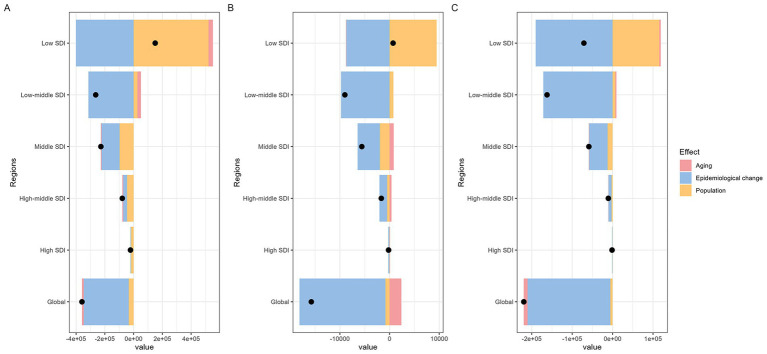 Figure 4
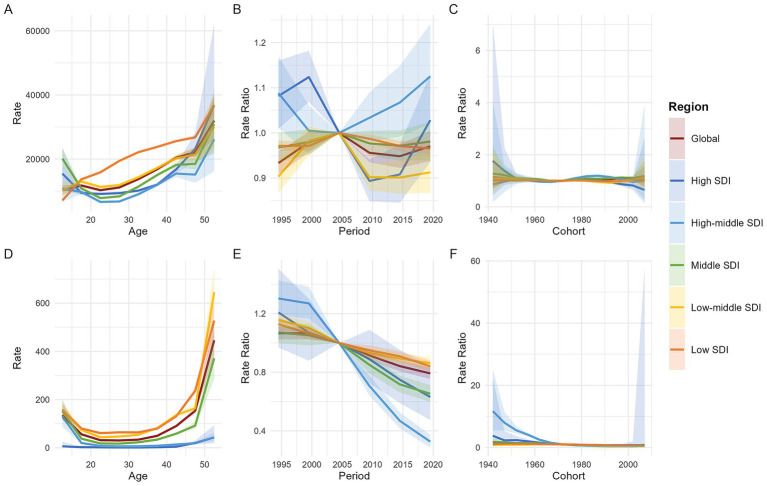 Figure 5
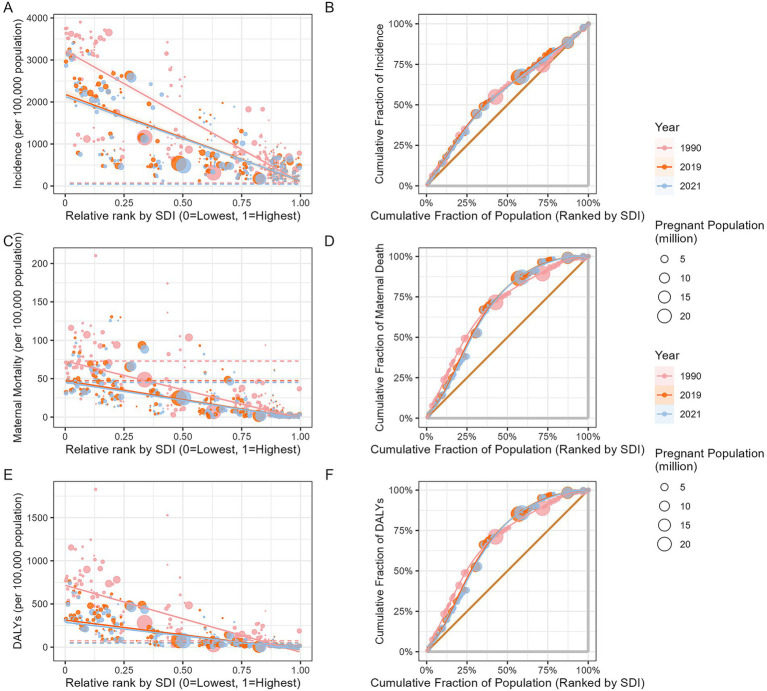 Figure 6
Peer Reviews
No public reviews on file for this paper yet. If you reviewed it on a platform where reviews are public (OpenReview, ICLR, NeurIPS, ICML), you can paste yours below so the community can read it here.
Videos
No videos yet. Explain this paper in a talk, walkthrough, or lecture? Add one.
Taxonomy
TopicsPregnancy and preeclampsia studies · Birth, Development, and Health · Global Maternal and Child Health