Exercise induced immune regulation and drug efficacy in rhinitis nasopharyngeal carcinoma implications for tumor microenvironment single cell immune signal transduction
Guanwen He, Weijing Bao, Jiansheng Yang, Xiuqin Guo, Wenxian Lu, Xiuhui Ji, Shang Gao, Rifu Wei, Yisheng Chen

TL;DR
Exercise can boost the effectiveness of immunotherapy for allergic rhinitis and nasopharyngeal carcinoma by improving immune responses and reshaping the tumor environment.
Contribution
This paper reviews how exercise synergizes with immunotherapy to improve outcomes in allergic rhinitis and nasopharyngeal carcinoma through immune modulation and single-cell insights.
Findings
Exercise enhances immune cell infiltration and activation in the tumor microenvironment.
Single-cell technologies reveal how exercise modulates immune signaling and inflammation in tumors.
Personalized exercise regimens can optimize therapeutic responses in cancer patients.
Abstract
Emerging evidence reveals that exercise modulates immune signaling to enhance the efficacy of immunotherapy in diseases like allergic rhinitis (AR) and nasopharyngeal carcinoma (NPC). By influencing immune cell trafficking, reprogramming inflammatory pathways within the tumor microenvironment (TME), and altering drug pharmacokinetics, exercise improves immune responses and therapeutic outcomes. Exercise enhances immune cell activation and infiltration into tumors, modulates checkpoint and cytokine signaling cascades, and mitigates treatment-related side effects, thereby improving patient compliance. Recent advancements in single-cell technologies, such as single-cell RNA sequencing and spatial omics, provide unprecedented insights into immune cell heterogeneity and signal transduction dynamics in the TME, uncovering new targets for exercise-modulated therapies. This review explores the…
Genes, proteins, chemicals, diseases, species, mutations and cell lines named across the full text — each resolved to its canonical identifier and authoritative record.
Click any figure to enlarge with its caption.
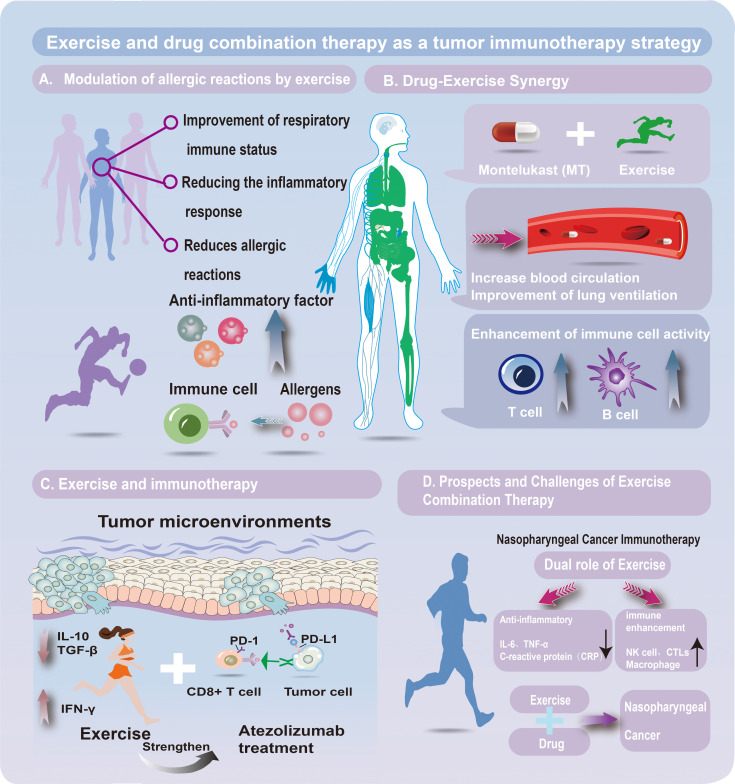 Figure 1
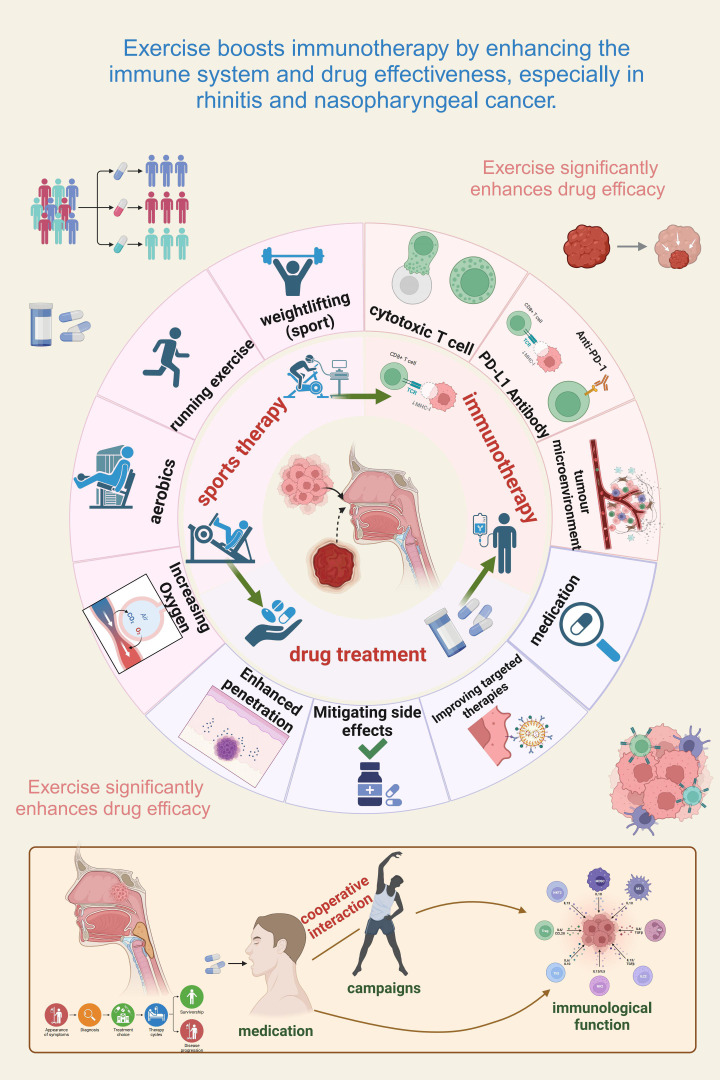 Figure 2
Peer Reviews
No public reviews on file for this paper yet. If you reviewed it on a platform where reviews are public (OpenReview, ICLR, NeurIPS, ICML), you can paste yours below so the community can read it here.
Videos
No videos yet. Explain this paper in a talk, walkthrough, or lecture? Add one.
Taxonomy
TopicsExercise and Physiological Responses · Fibromyalgia and Chronic Fatigue Syndrome Research · Herbal Medicine Research Studies