Intracranial aneurysm segmentation on digital subtraction angiography: a retrospective and multi-center study
Ruibo Liu, Ruixuan Zhang, Wei Qian, Guobiao Liang, Guangxin Chu, Hai Jin, Ligang Chen, Jing Li, He Ma

TL;DR
This study introduces a new deep learning model for accurately segmenting intracranial aneurysms in medical images, improving performance across different sizes and centers.
Contribution
The novel Shape-aware dual-stream attention network (SDAN) addresses segmentation challenges of small intracranial aneurysms in DSA images.
Findings
SDAN achieved a Dice score of 0.951 on internal test data and 0.944 on external validation data.
The model outperformed existing methods across all aneurysm sizes, including small ones.
SDAN effectively reduces over-segmentation and under-segmentation issues in DSA images.
Abstract
Accurate segmentation of intracranial aneurysms (IAs) in digital subtraction angiography (DSA) is critical for endovascular embolization and risk assessment of ruptured IAs. However, this task remains challenging due to problems like vascular overlap, small target size and similarity to ring blood vessels. To develop a novel deep learning model to improve segmentation performance of IAs on DSA datassets, especially addressing challenges of small IAs. We propose a novel deep learning model, the Shape-aware dual-stream attention network (SDAN). This network integrates two novel modules: (1) Edge-aware Local Attention Module (ELAM), which differentiates aneurysms from adjacent vasculature by capturing morphological features, (2) Global Shape-aware Fusion Block (GSFB) that enhances pattern recognition through contextual aggregation between domains. The model was trained and tested on…
Genes, proteins, chemicals, diseases, species, mutations and cell lines named across the full text — each resolved to its canonical identifier and authoritative record.
Click any figure to enlarge with its caption.
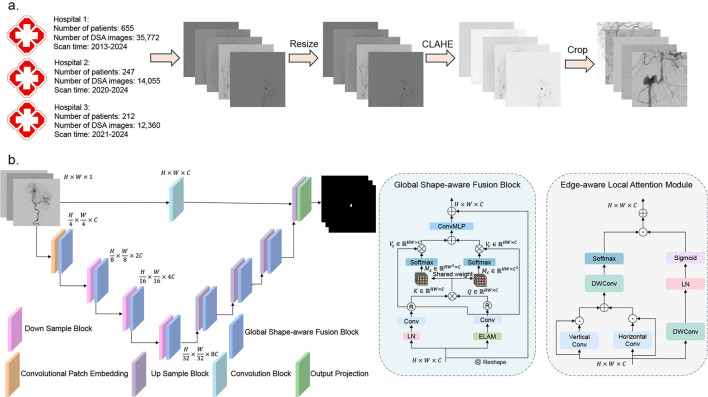 Figure 1
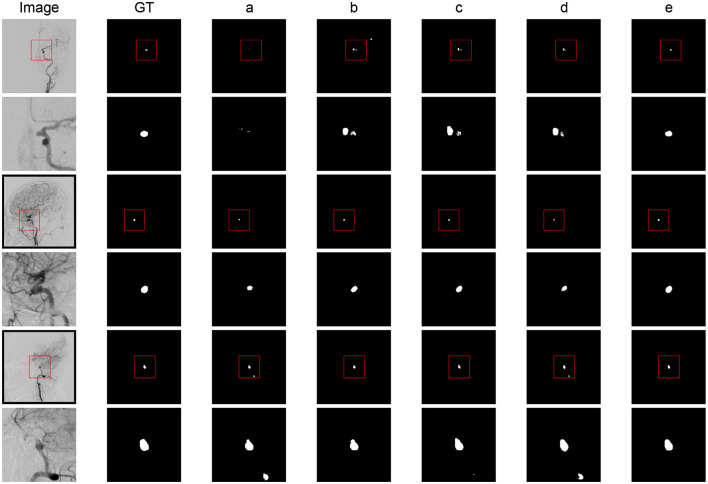 Figure 2
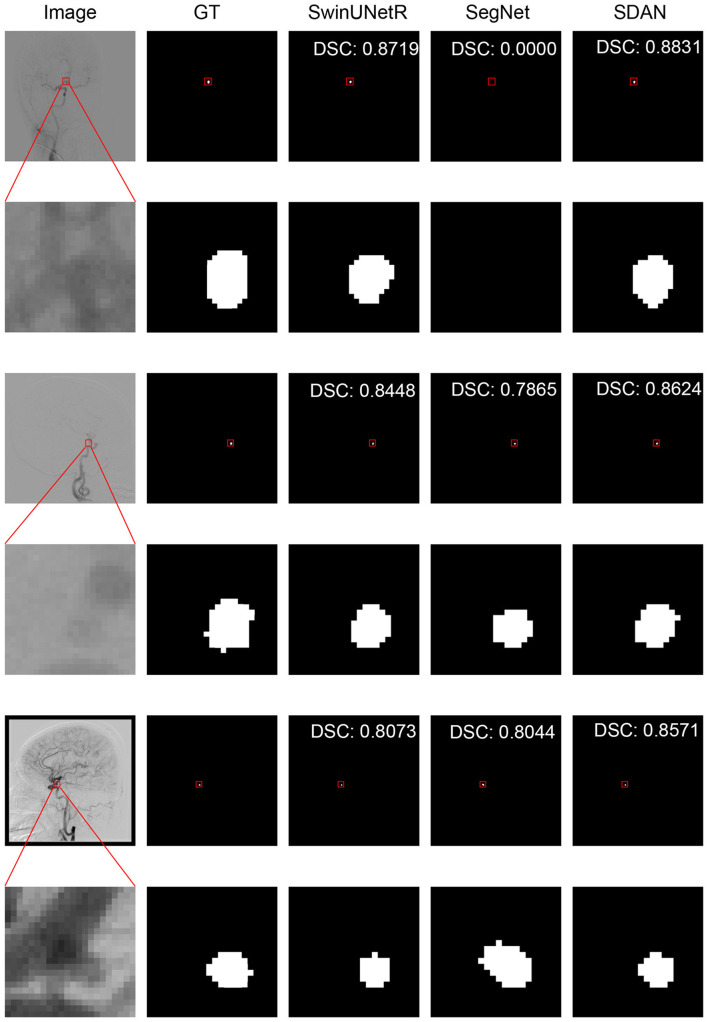 Figure 3
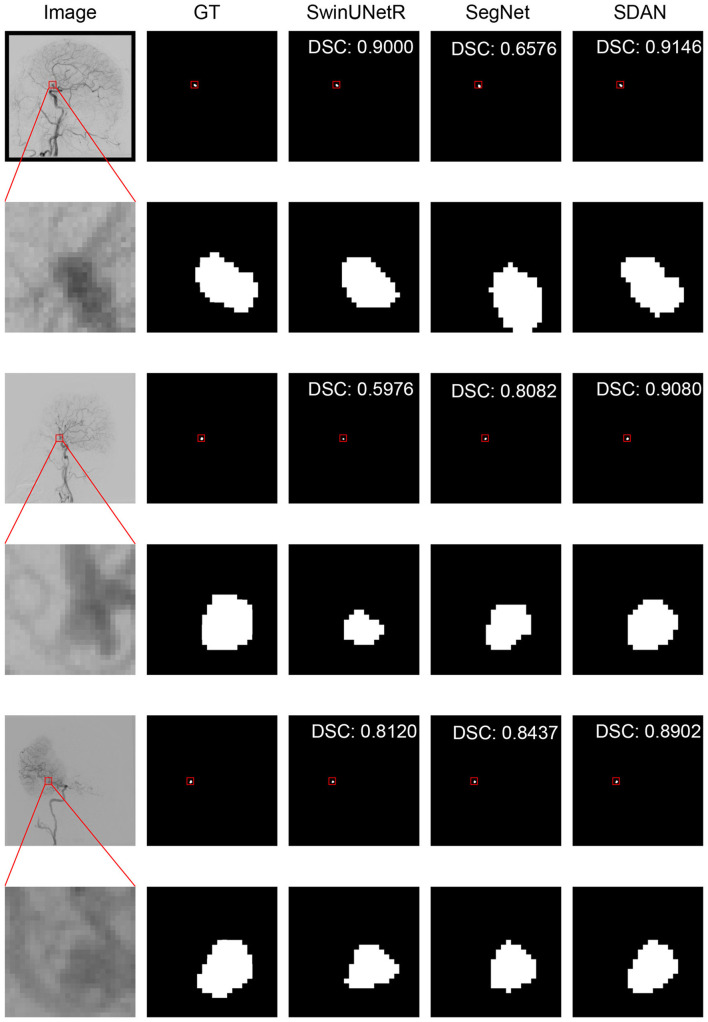 Figure 4
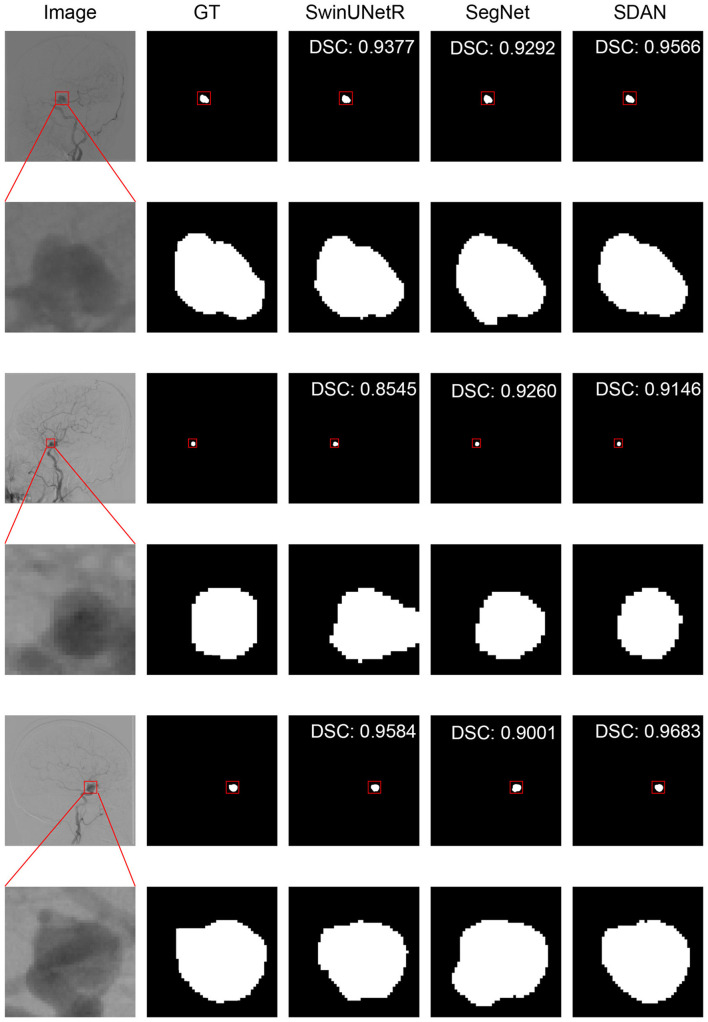 Figure 5
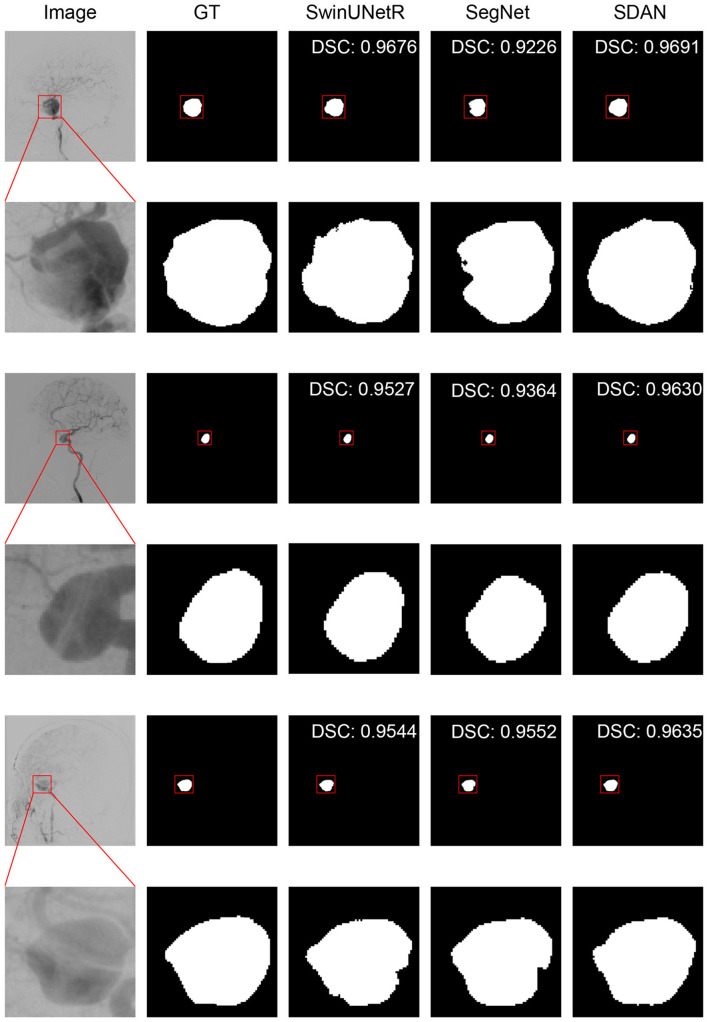 Figure 6
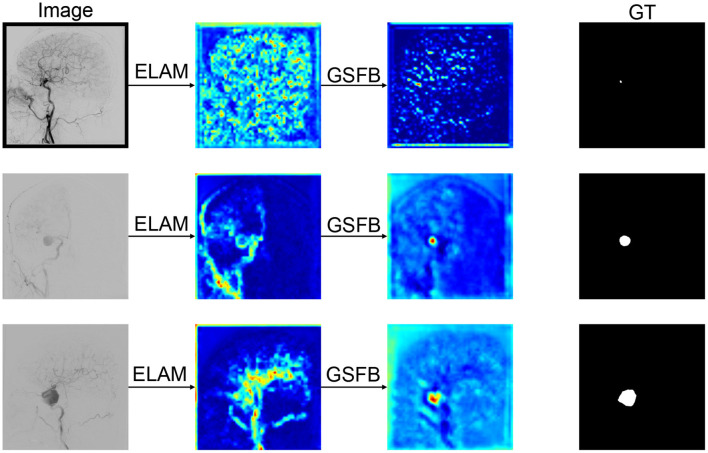 Figure 7
Peer Reviews
No public reviews on file for this paper yet. If you reviewed it on a platform where reviews are public (OpenReview, ICLR, NeurIPS, ICML), you can paste yours below so the community can read it here.
Videos
No videos yet. Explain this paper in a talk, walkthrough, or lecture? Add one.
Taxonomy
TopicsIntracranial Aneurysms: Treatment and Complications · Traumatic Brain Injury and Neurovascular Disturbances · Cerebrovascular and Carotid Artery Diseases