Alleviation effect of glycyrrhetinic acid on zearalenone-induced reproductive toxicity in replacement gilts
Li-Tao Che, Ahmed H. El-Sappah, Heba Allah M. Elbaghdady, Yong-Jun Ren, Qi-Fan Wu, Wan-Hai Zhou, Ya-ru Yang, Rong-Fu Guo

TL;DR
Glycyrrhetinic acid helps reduce reproductive harm caused by zearalenone in young pigs by improving hormone levels and liver function.
Contribution
This study demonstrates that glycyrrhetinic acid can alleviate zearalenone-induced reproductive toxicity in replacement gilts.
Findings
Glycyrrhetinic acid advanced puberty onset and improved uterine and ovarian development impaired by zearalenone.
Glycyrrhetinic acid elevated hormone levels and reduced liver damage caused by zearalenone exposure.
Glycyrrhetinic acid downregulated zearalenone-induced upregulation of HSD genes in liver and duodenum.
Abstract
This study investigated whether glycyrrhetinic acid (GA) can alleviate the reproductive toxicity of Zearalenone (ZEN) in replacement gilts. Eighty Landrace × Yorkshire gilts were randomly assigned to four dietary groups: control (basal diet), ZEN (1 mg/kg), GA (400 mg/kg), and ZEN + GA (1 mg/kg ZEN + 400 mg/kg GA). The onset of estrus advanced significantly in all treatment groups, with the GA and ZEN + GA groups showing the most pronounced changes. Puberty onset occurred earlier in the ZEN group and was further advanced by GA supplementation. ZEN exposure impaired uterine and ovarian development, while GA improved organ development and mitigated the abnormalities in the ZEN + GA group. Hormonal analysis revealed that ZEN reduced estradiol (E2) and luteinizing hormone (LH), whereas GA elevated all measured hormones. The ZEN + GA group showed a partial recovery in hormone levels,…
Genes, proteins, chemicals, diseases, species, mutations and cell lines named across the full text — each resolved to its canonical identifier and authoritative record.
Click any figure to enlarge with its caption.
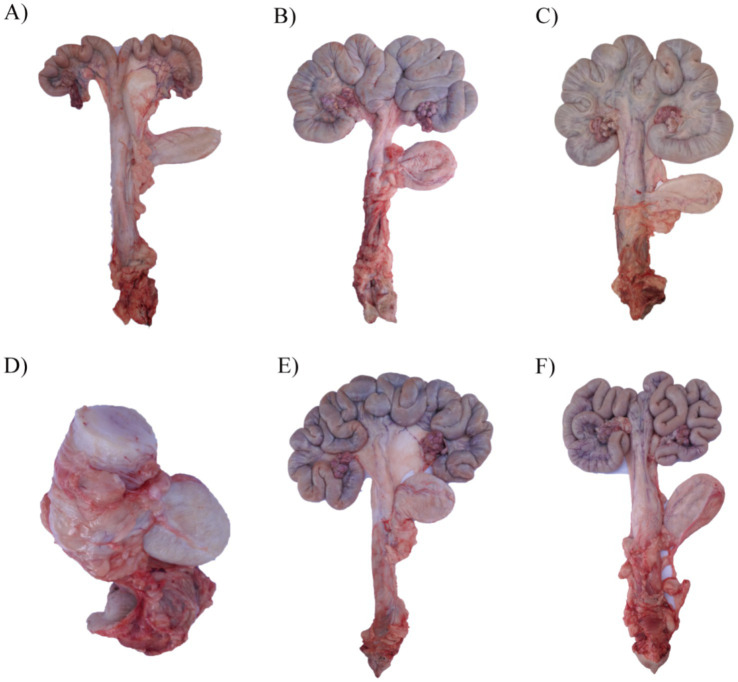 Figure 1
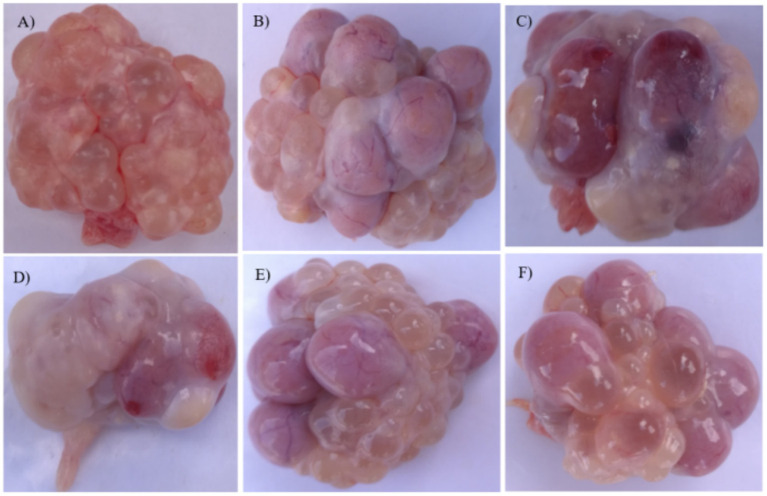 Figure 2
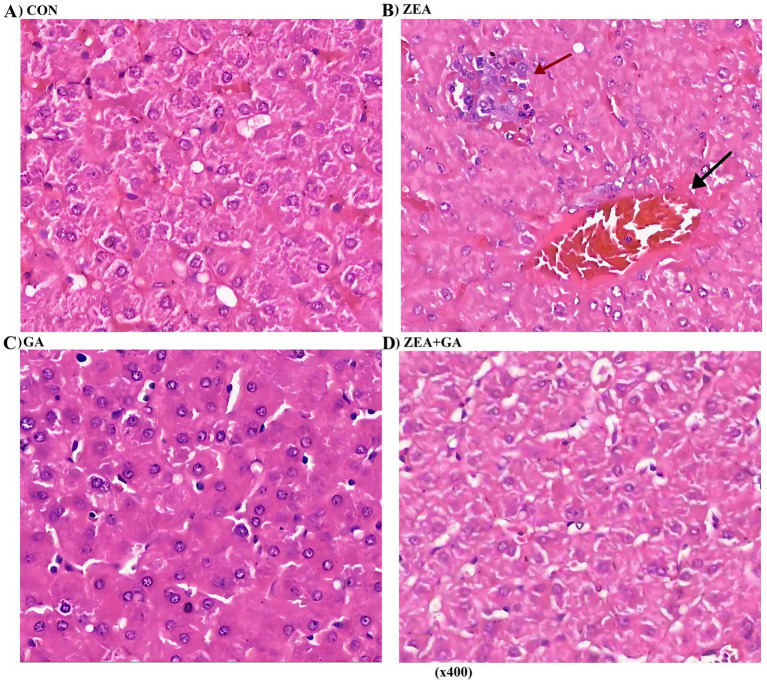 Figure 3
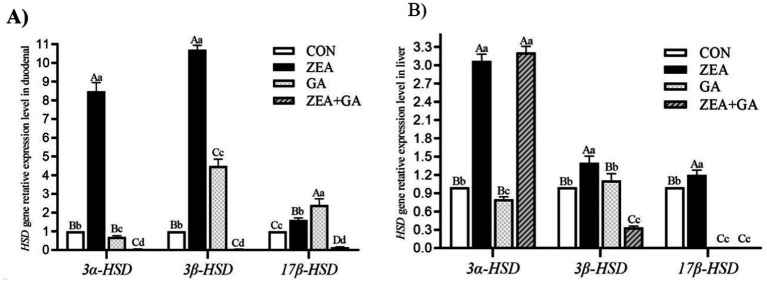 Figure 4
Peer Reviews
No public reviews on file for this paper yet. If you reviewed it on a platform where reviews are public (OpenReview, ICLR, NeurIPS, ICML), you can paste yours below so the community can read it here.
Videos
No videos yet. Explain this paper in a talk, walkthrough, or lecture? Add one.
Taxonomy
TopicsPlant Toxicity and Pharmacological Properties · Veterinary medicine and infectious diseases · Mycotoxins in Agriculture and Food