Analysis of factors associated with IVF/ICSI clinical outcomes in advanced maternal age patients with normal ovarian reserve under the POSEIDON criteria
Yicen Meng, Qianjie Zhang, Yixuan Song, Qian Liu, Wei Li, Jing Yang, Saijiao Li

TL;DR
This study identifies maternal age and endometrial thickness as key factors influencing IVF/ICSI success in older patients with normal ovarian reserve.
Contribution
The study provides new insights into optimizing IVF/ICSI outcomes for POSEIDON group 2 patients by identifying specific age and endometrial thickness thresholds.
Findings
Lower maternal age (<38 years) and higher endometrial thickness (≥11.65 mm) are associated with better clinical outcomes.
Stratifying patients by age and endometrial thickness can improve pregnancy and live birth rates.
Group B2 (age ≥38 and EMT ≥11.65 mm) had the highest live birth rates among older patients.
Abstract
There is limited research about the pregnancy outcomes of POSEIDON group 2 patients. This study aims to evaluate the factors related to the clinical outcomes of in vitro fertilization (IVF) and/or intracytoplasmic sperm injection (ICSI) in POSEIDON group 2 patients, so as to provide clinical guidance to improve clinical outcomes. A total of 1,249 IVF/ICSI cycles of POSEIDON group 2 patients were retrospectively analyzed from July 2019 to September 2024. The patients were divided into different groups according to live birth, maternal age, and endometrial thickness (EMT). The clinical outcomes were compared between groups. Compared with the non-live birth group, maternal age, gonadotropin (Gn) dosage, and Gn total dosage were significantly lower, while EMT was significantly higher in the live birth group (p < 0.05). The type of infertility showed statistically significant differences…
Genes, proteins, chemicals, diseases, species, mutations and cell lines named across the full text — each resolved to its canonical identifier and authoritative record.
Click any figure to enlarge with its caption.
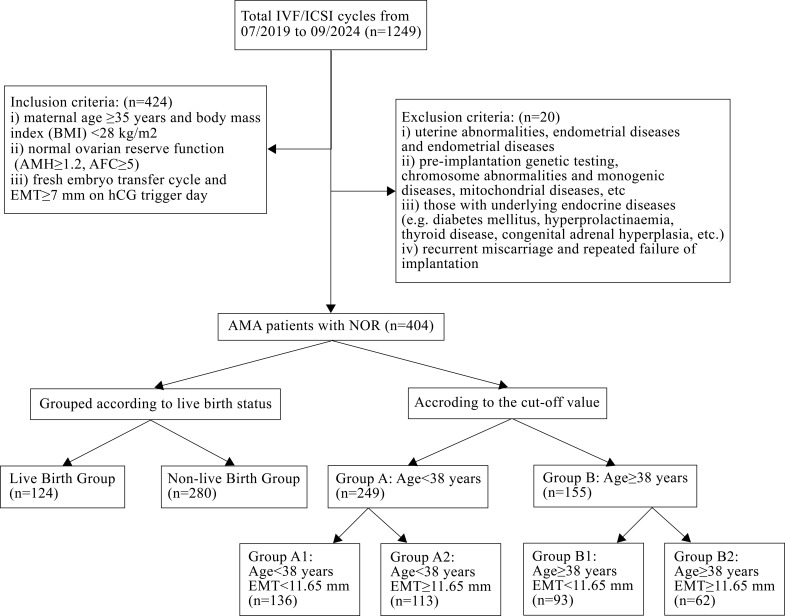 Figure 1
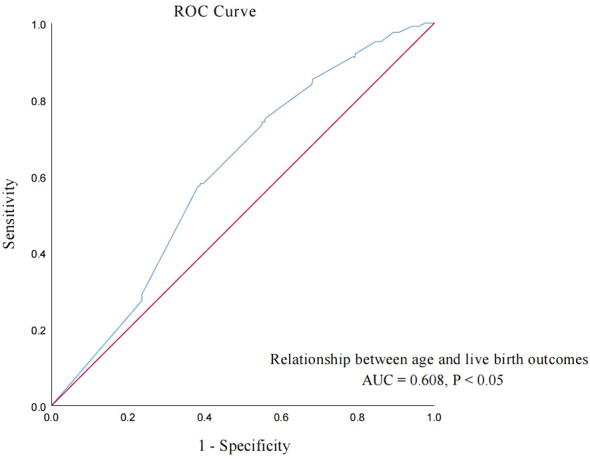 Figure 2
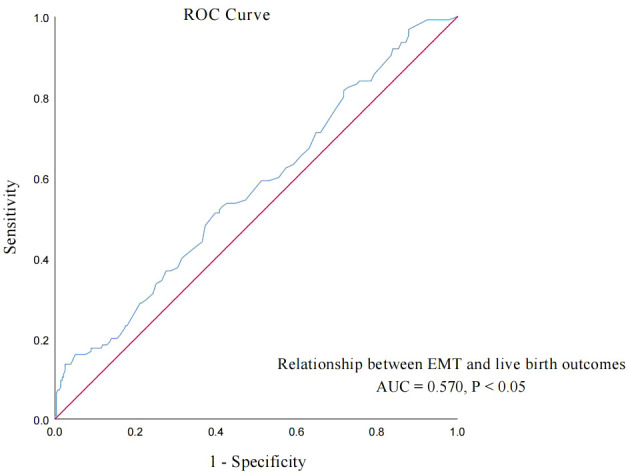 Figure 3
Peer Reviews
No public reviews on file for this paper yet. If you reviewed it on a platform where reviews are public (OpenReview, ICLR, NeurIPS, ICML), you can paste yours below so the community can read it here.
Videos
No videos yet. Explain this paper in a talk, walkthrough, or lecture? Add one.
Taxonomy
TopicsOvarian function and disorders · Assisted Reproductive Technology and Twin Pregnancy · Reproductive Biology and Fertility