Deep learning for scene understanding in mitochondrial dysregulation and blood cancer diagnosis
Feng Zhu, Zihan Liu, Jianming Chang, Yuanyuan Qin, Lulu Wang

TL;DR
This paper introduces a deep learning framework that combines imaging, genomic, and clinical data to improve the diagnosis of blood cancers linked to mitochondrial dysfunction.
Contribution
A novel deep learning framework integrating multimodal data with attention-based fusion and adversarial adaptation for blood cancer diagnosis.
Findings
The proposed framework outperforms conventional diagnostic systems in classification accuracy.
Attention-based multimodal fusion enhances predictive accuracy and interpretability.
Adversarial domain adaptation improves robustness across diverse datasets.
Abstract
Deep learning has emerged as a transformative tool in biomedical research, particularly in understanding disease mechanisms and enhancing diagnostic precision. Mitochondrial dysfunction has been increasingly recognized as a critical factor in hematological malignancies, necessitating advanced computational models to extract meaningful insights from complex biological and clinical data. Traditional diagnostic approaches rely heavily on histopathological examination and molecular profiling, yet they often suffer from subjectivity, limited scalability, and challenges in integrating multimodal data sources. To address these limitations, we propose a novel deep learning framework that integrates medical imaging, genomic information, and clinical parameters for comprehensive scene understanding in mitochondrial dysregulation-related blood cancers. Our methodology combines self supervised…
Genes, proteins, chemicals, diseases, species, mutations and cell lines named across the full text — each resolved to its canonical identifier and authoritative record.
Click any figure to enlarge with its caption.
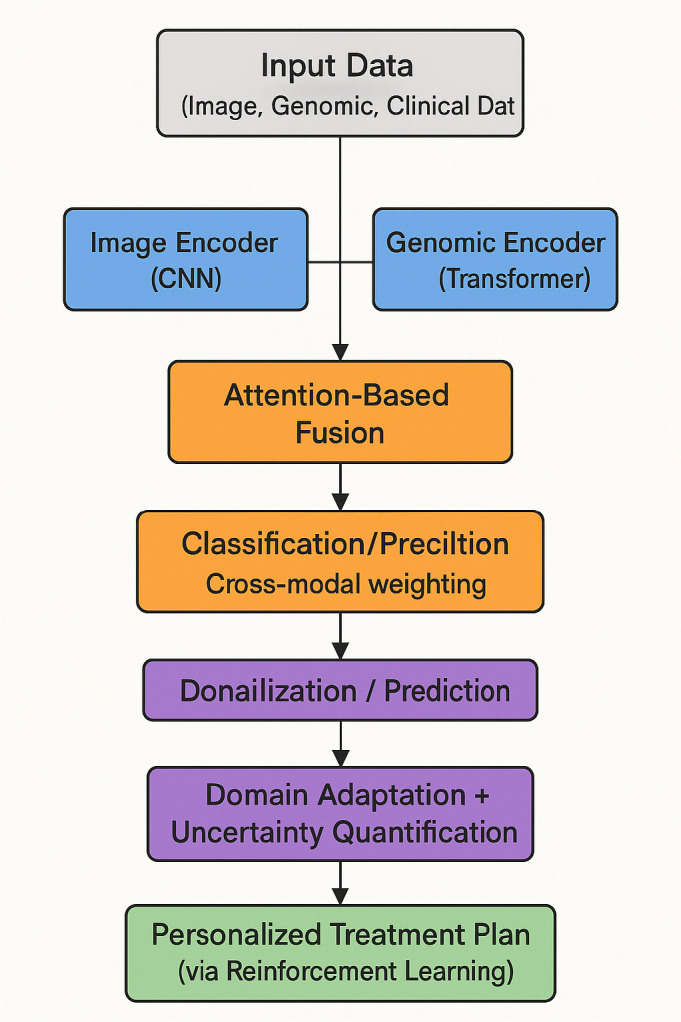 Figure 1
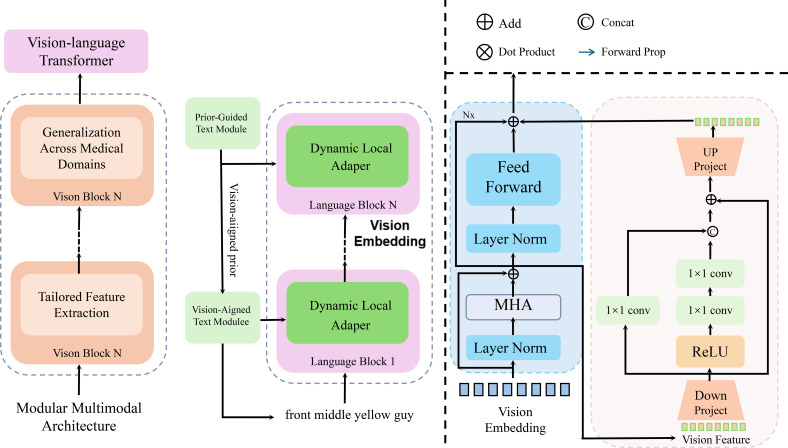 Figure 2
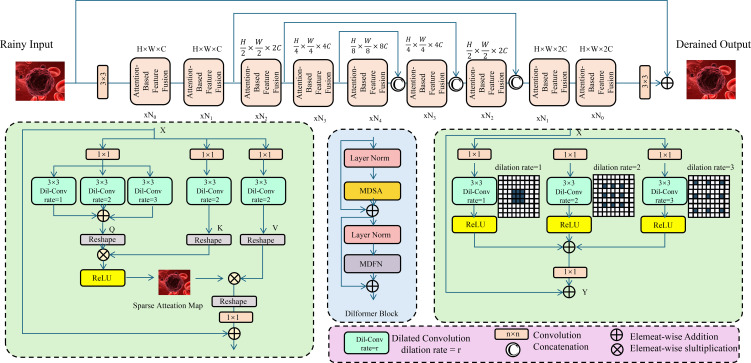 Figure 3
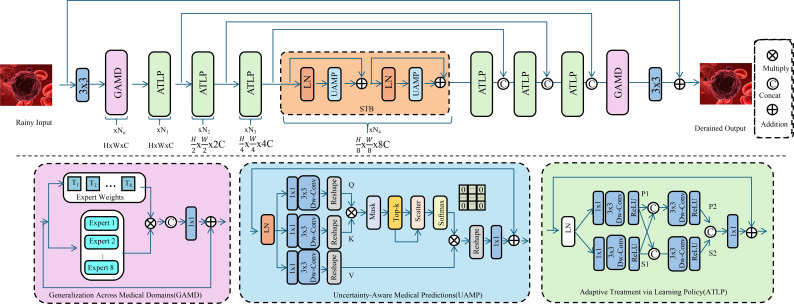 Figure 4
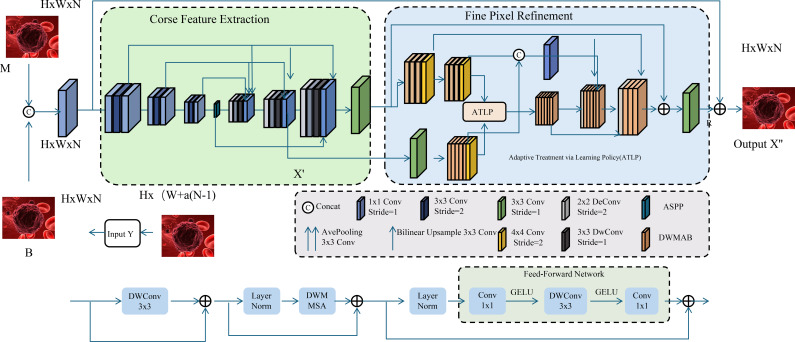 Figure 5
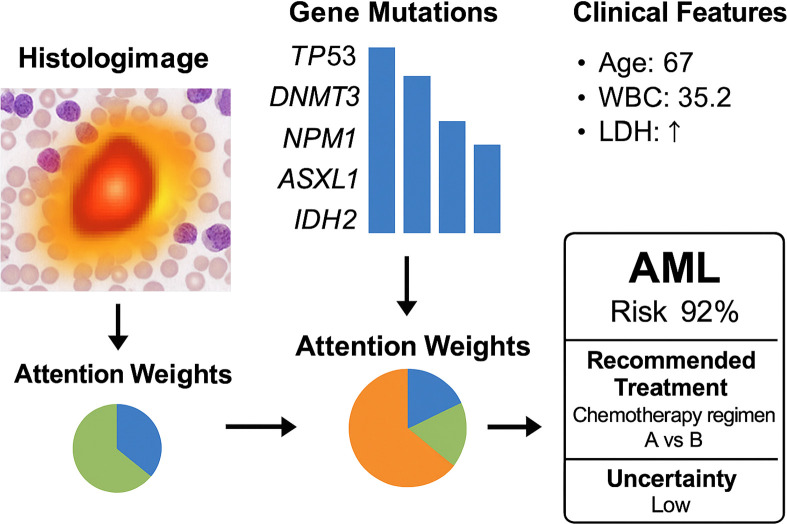 Figure 6
Peer Reviews
No public reviews on file for this paper yet. If you reviewed it on a platform where reviews are public (OpenReview, ICLR, NeurIPS, ICML), you can paste yours below so the community can read it here.
Videos
No videos yet. Explain this paper in a talk, walkthrough, or lecture? Add one.
Taxonomy
TopicsAI in cancer detection · Radiomics and Machine Learning in Medical Imaging · Cell Image Analysis Techniques