Association between the triglyceride-glucose-waist-to-height ratio and cardiovascular disease in Chinese adults with sarcopenia or probable sarcopenia
Wei Huang, Jin Wu, Zhimei Shen, Dasheng Wang, Xu Wang

TL;DR
This study finds that a specific metabolic marker, TyG-WHtR, is strongly linked to higher cardiovascular disease risk in older adults with sarcopenia.
Contribution
The study identifies a threshold effect of TyG-WHtR on cardiovascular risk in sarcopenia patients, suggesting its potential as a predictive biomarker.
Findings
Each one-unit increase in TyG-WHtR corresponds to an 11% higher CVD risk and 25% higher stroke risk.
Individuals in the highest TyG-WHtR tertile had a 51% higher CVD risk and 90% higher stroke risk compared to the lowest tertile.
CVD risk rises significantly when TyG-WHtR exceeds 3.76, showing a nonlinear relationship.
Abstract
Sarcopenia, an age-related syndrome characterized by decreased muscle mass and performance, has been increasingly linked to high cardiovascular disease (CVD) risk. In this study, sarcopenia and probable sarcopenia were diagnosed according to the Asian Working Group for Sarcopenia (AWGS) 2019 criteria. However, specific biomarkers underlying this association, such as the triglyceride-glucose-waist-to-height ratio (TyG-WHtR), remain unclear. A cohort of 2,521 adults ≥45 years with sarcopenia or probable sarcopenia (2011-2020) were stratified by TyG-WHtR tertiles: T1 (≤4.30), T2 (4.30–5.01), and T3 (>5.01). To quantify the predictive utility of TyG-WHtR for CVD, methods such as Cox proportional hazards models, restricted cubic splines, and threshold regression analyses were utilized. Over 7.3 years (median), incident CVD was documented in 727 individuals, including 258 patients who had a…
Genes, proteins, chemicals, diseases, species, mutations and cell lines named across the full text — each resolved to its canonical identifier and authoritative record.
Click any figure to enlarge with its caption.
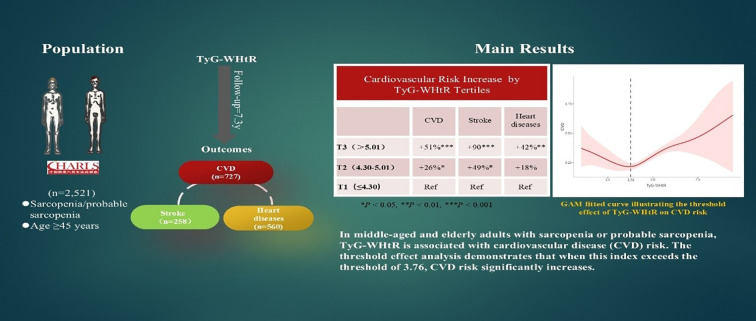 Figure 1
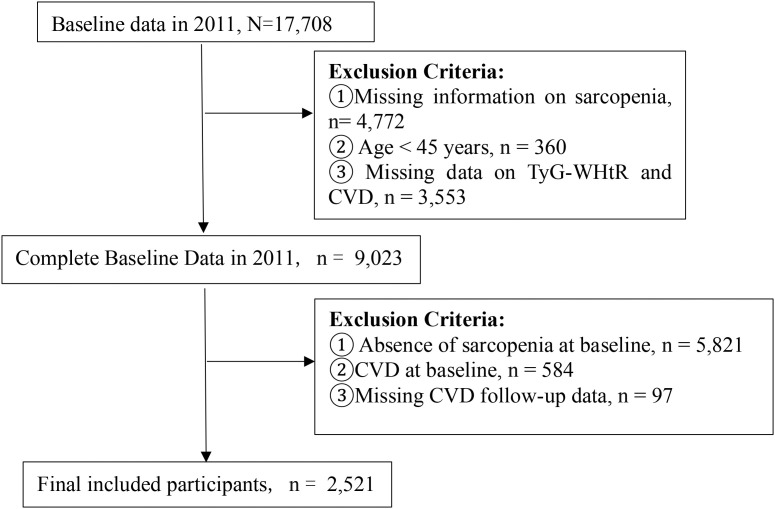 Figure 2
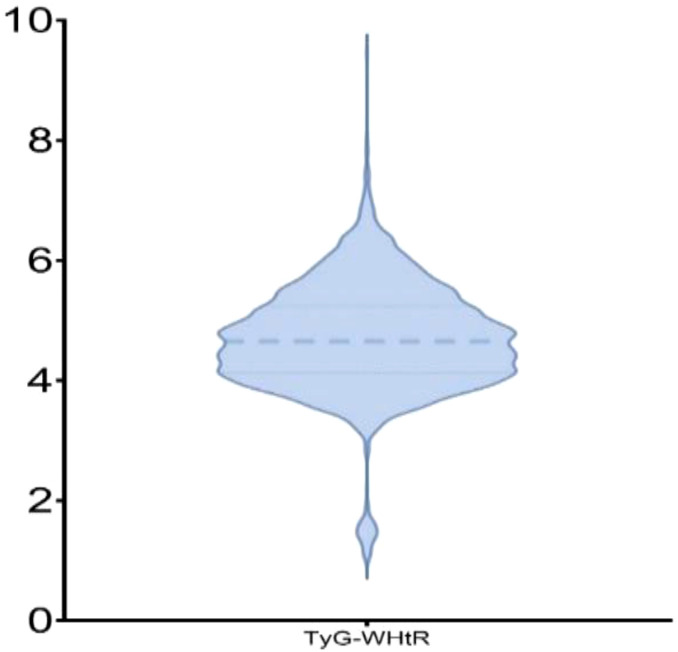 Figure 3
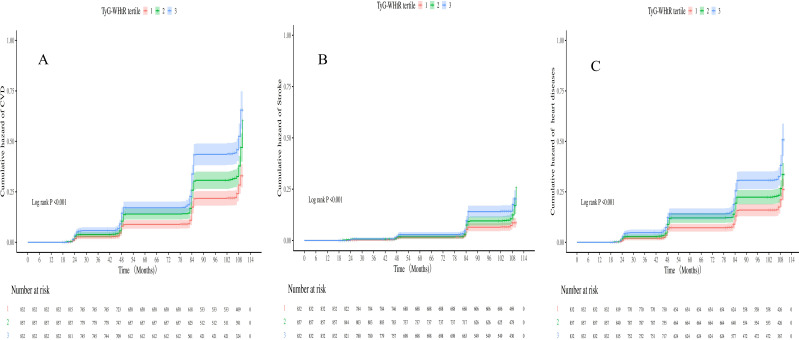 Figure 4
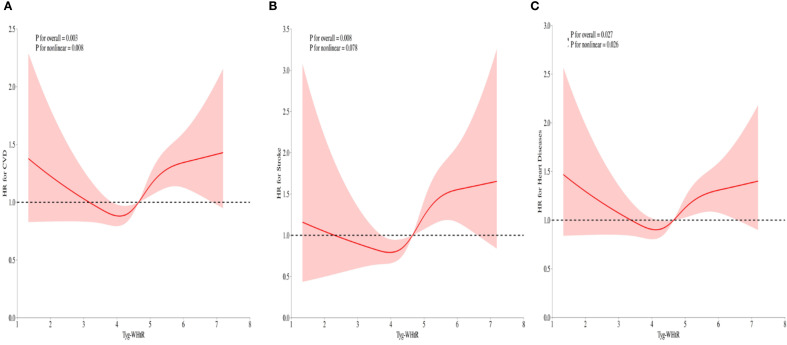 Figure 5
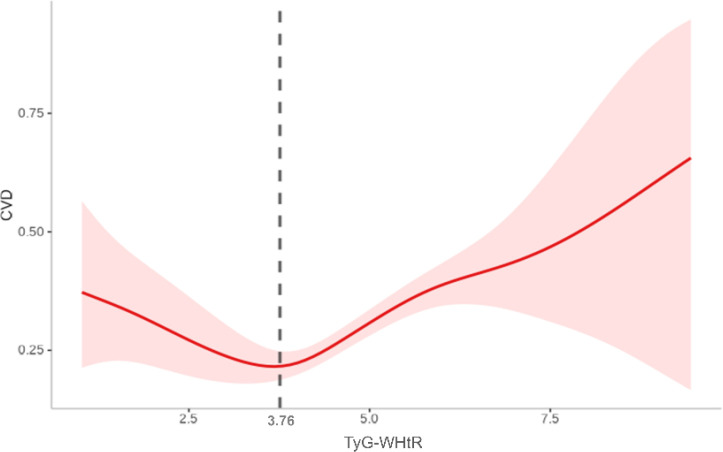 Figure 6
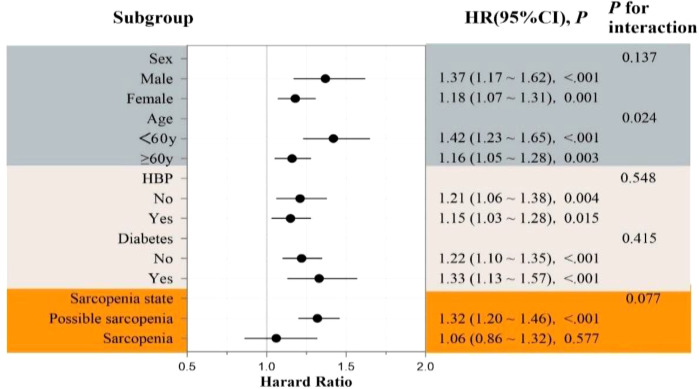 Figure 7
Peer Reviews
No public reviews on file for this paper yet. If you reviewed it on a platform where reviews are public (OpenReview, ICLR, NeurIPS, ICML), you can paste yours below so the community can read it here.
Videos
No videos yet. Explain this paper in a talk, walkthrough, or lecture? Add one.
Taxonomy
TopicsNutrition and Health in Aging · Body Composition Measurement Techniques · Diabetes, Cardiovascular Risks, and Lipoproteins