Effects of meal regularity and snacking frequency on irritable bowel syndrome
Sarah M. Ajabnoor

TL;DR
This study explores how eating habits like meal regularity and snacking frequency affect symptoms of irritable bowel syndrome in Saudi adults.
Contribution
The study identifies snacking frequency as a novel factor associated with reduced IBS symptom severity.
Findings
Approximately 20-30% of participants reported irregular eating patterns like skipping breakfast.
Frequent snacking was independently linked to lower IBS symptom severity.
Chewing difficulty and chronic conditions predicted higher symptom severity.
Abstract
Dietary practices often trigger irritable bowel syndrome (IBS) symptoms. This study primarily aimed to identify and compare the frequency of different eating behaviors in free-living adults in Saudi Arabia with either self-diagnosed IBS or IBS diagnosed based on Rome IV criteria. The study also examined how irregular eating affects IBS symptom severity. This cross-sectional study included 204 adults, 106 (52%) with self-diagnosed IBS and 98 (48%) with Rome IV-defined IBS. All participants completed a questionnaire assessing sociodemographic characteristics, IBS diagnosis (using Rome IV criteria), IBS symptom severity scale (IBS-SSS), and eating patterns. Irregular eating patterns were similarly reported in both groups. Dietary practices such as not eating meals on a regular schedule and skipping breakfast were reported by approximately 20 and 30% of the participants in each group,…
Genes, proteins, chemicals, diseases, species, mutations and cell lines named across the full text — each resolved to its canonical identifier and authoritative record.
Click any figure to enlarge with its caption.
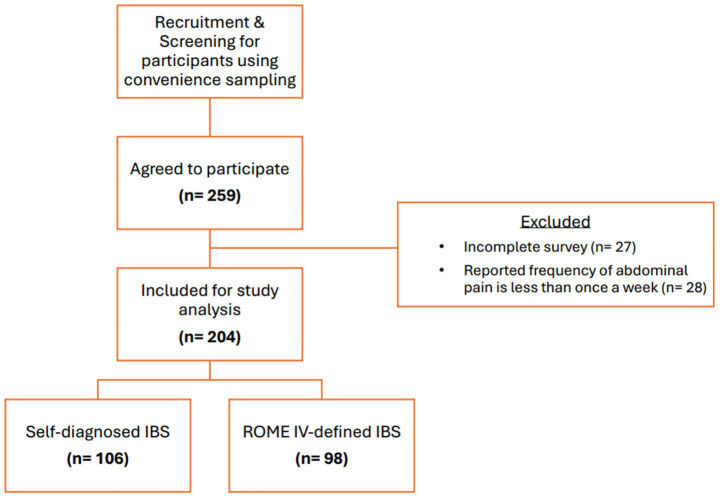 Figure 1
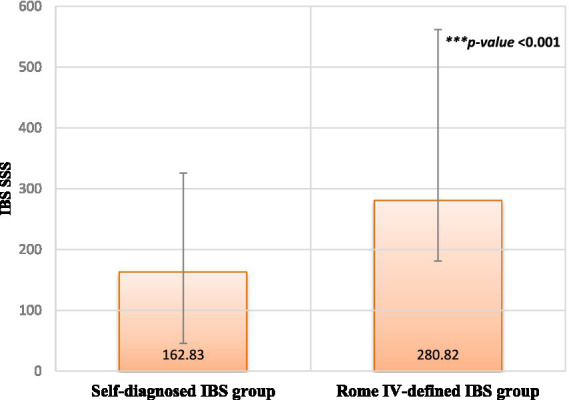 Figure 2
Peer Reviews
No public reviews on file for this paper yet. If you reviewed it on a platform where reviews are public (OpenReview, ICLR, NeurIPS, ICML), you can paste yours below so the community can read it here.
Videos
No videos yet. Explain this paper in a talk, walkthrough, or lecture? Add one.
Taxonomy
TopicsGastrointestinal motility and disorders · Infant Health and Development · Congenital gastrointestinal and neural anomalies