Clinical Outcomes of Later‐Generation EGFR‐TKIs for Uncommon EGFR Mutations in NSCLC: A Multicenter Real‐World Study
Lisa Shigematsu, Tetsuo Tani, Shinnosuke Ikemura, Keiko Ohgino, Kohei Horiuchi, Taro Shinozaki, Shigenari Nukaga, Hideki Terai, Takashi Sato, Katsuhiko Naoki, Koichi Sayama, Yoshitaka Oyamada, Fumio Sakamaki, Kenzo Soejima, Hiroyuki Yasuda, Koichi Fukunaga

TL;DR
Later-generation EGFR inhibitors improved survival in lung cancer patients with rare EGFR mutations, according to a real-world study.
Contribution
This study provides real-world evidence that later-generation EGFR-TKIs improve outcomes for uncommon EGFR mutations in NSCLC.
Findings
Patients receiving later-generation EGFR-TKIs had significantly longer overall survival (47.7 vs. 15.5 months).
Afatinib showed favorable treatment duration for G719X and compound mutations.
Non-use of later-generation EGFR-TKIs was identified as an independent poor prognostic factor.
Abstract
Uncommon EGFR mutations, including G719X, L861Q, S768I, and compound mutations, present therapeutic challenges due to limited prospective evidence and variable drug sensitivity. Although later‐generation (i.e., second‐ and third‐) EGFR‐TKIs have shown benefit in some subtypes, real‐world data is limited. We retrospectively analyzed patients with advanced or recurrent NSCLC harboring uncommon EGFR mutations diagnosed between 2014 and 2019 at Keio University Hospital and affiliated hospitals. Clinical data were updated through May 2023. EGFR mutations were detected using commercial assays. Common mutations and exon 20 insertions were excluded unless coexisting as compound mutations. Survival outcomes were estimated using the Kaplan–Meier method and compared by log‐rank test; hazard ratios were calculated using the Cox proportional hazards model. Swimmer plots depicted treatment duration…
Genes, proteins, chemicals, diseases, species, mutations and cell lines named across the full text — each resolved to its canonical identifier and authoritative record.
Click any figure to enlarge with its caption.
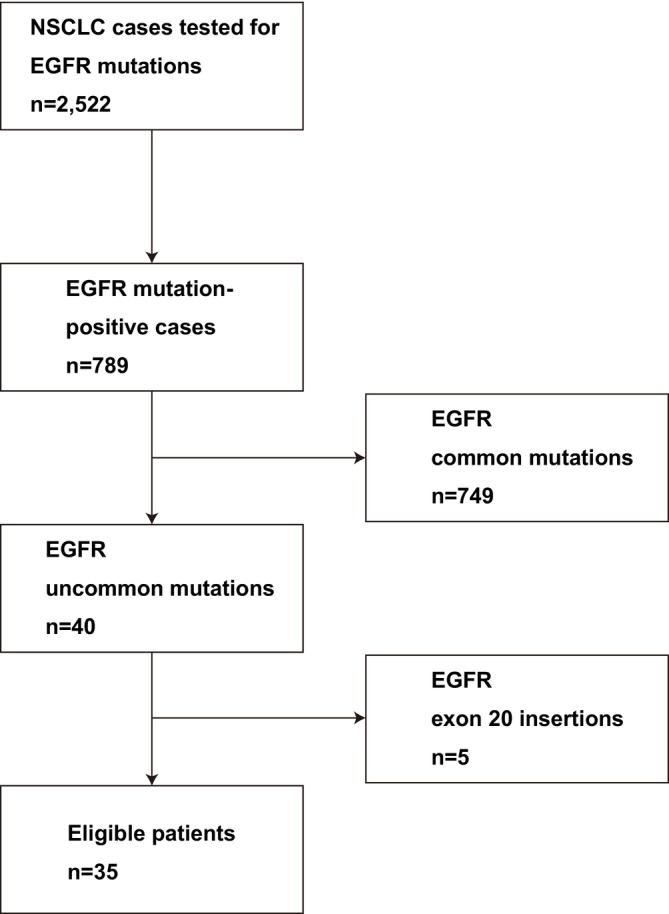 Figure 1
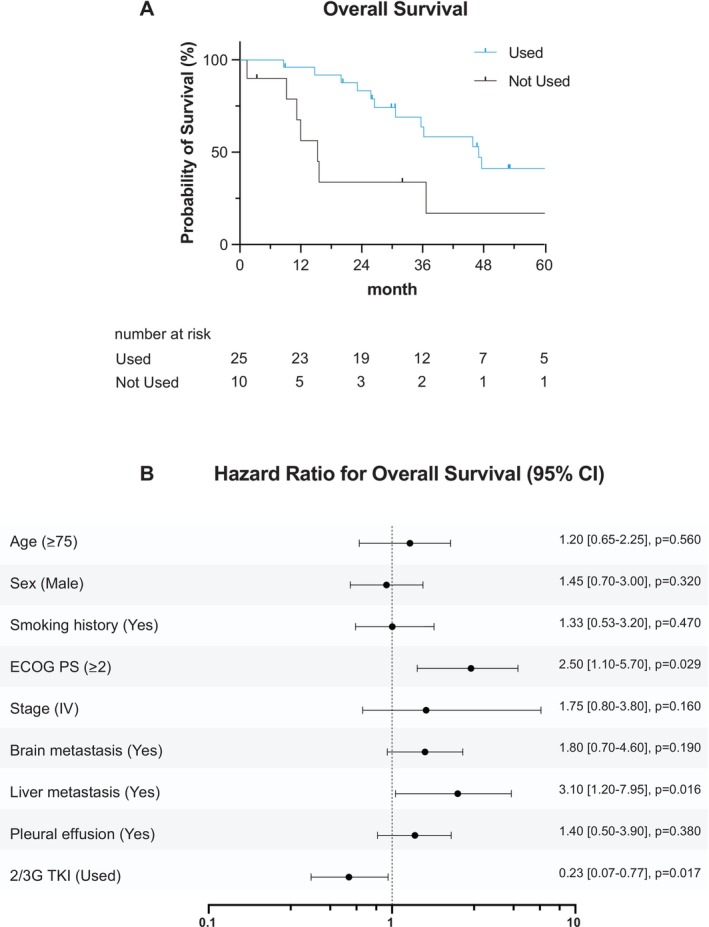 Figure 2
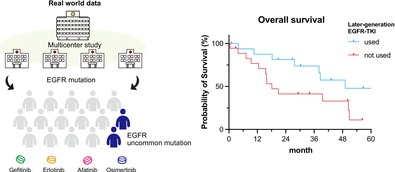 Figure 3
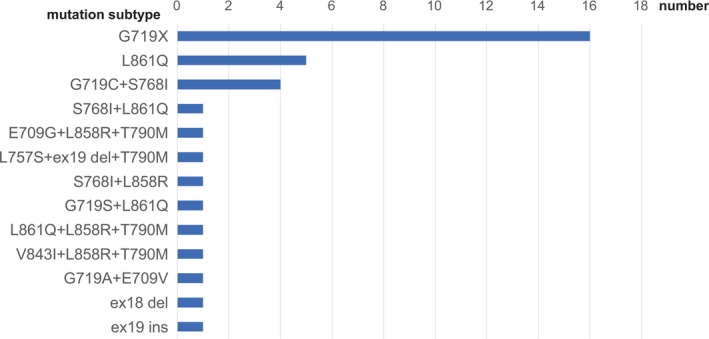 Figure 4
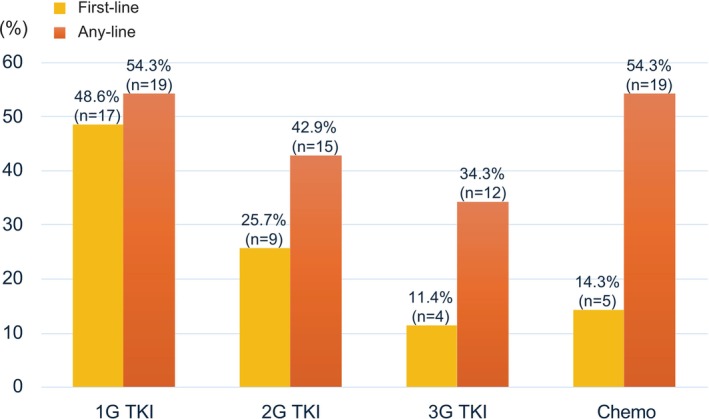 Figure 5
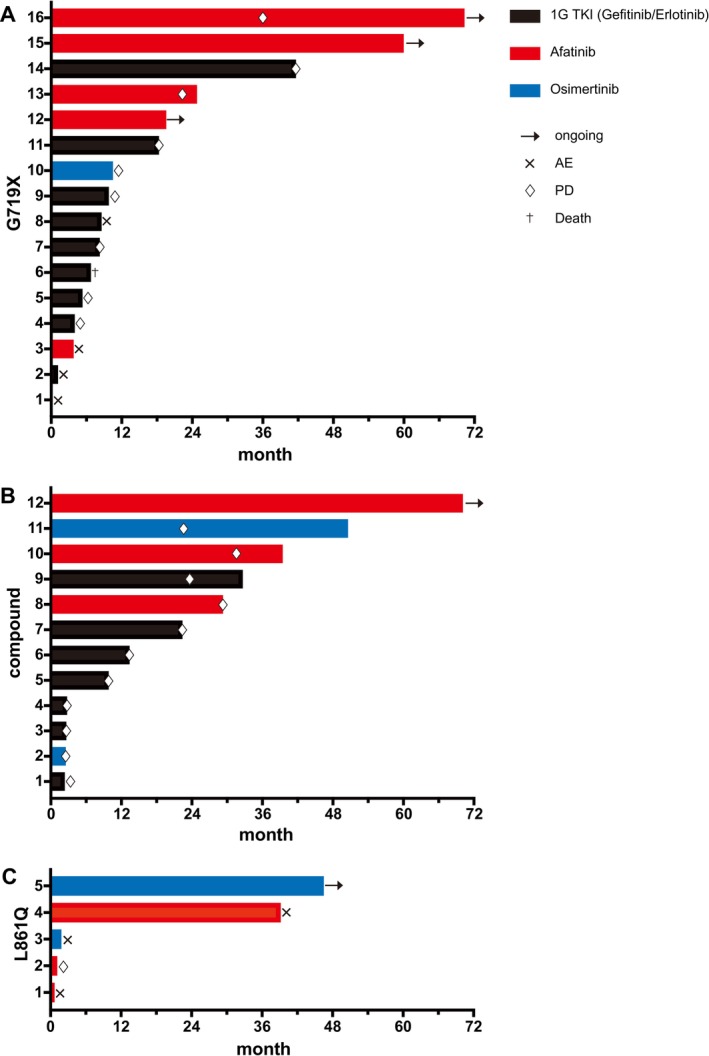 Figure 6
Peer Reviews
No public reviews on file for this paper yet. If you reviewed it on a platform where reviews are public (OpenReview, ICLR, NeurIPS, ICML), you can paste yours below so the community can read it here.
Videos
No videos yet. Explain this paper in a talk, walkthrough, or lecture? Add one.
Taxonomy
TopicsLung Cancer Treatments and Mutations · Colorectal Cancer Treatments and Studies · Chronic Lymphocytic Leukemia Research