Estimating the Abundance of Widely Distributed Primates
Ray Hilborn, Milani Chaloupka

TL;DR
This paper discusses the challenges and methods for estimating the population of widely distributed primates, focusing on the long-tailed macaque.
Contribution
The paper provides a critical review and identifies weaknesses in current methods for estimating primate abundance.
Findings
Estimating primate abundance is challenging due to their wide distribution and lack of conservation funding.
A detailed examination of the long-tailed macaque study reveals methodological weaknesses.
The paper suggests ways to improve the reliability of abundance estimates for primates.
Abstract
Monitoring the abundance of widely distributed animals poses many logistic challenges, and is rarely done because the wide distribution generally suggests a lack of conservation concern and thus funding. However, as there are increasing concerns about the conservation status of some widely distributed primates, evidence based management requires estimates of abundance. In this paper we review how such estimates can be done and have been done for some animals. We also explore in depth the one attempt to do so for a primate, the long‐tailed macaque. We identify weaknesses in the work that has been done and suggest how a reliable estimate could be obtained. This graph illustrates a key step in the process of moving from estimating habitat suitability to absolute density.
Genes, proteins, chemicals, diseases, species, mutations and cell lines named across the full text — each resolved to its canonical identifier and authoritative record.
Click any figure to enlarge with its caption.
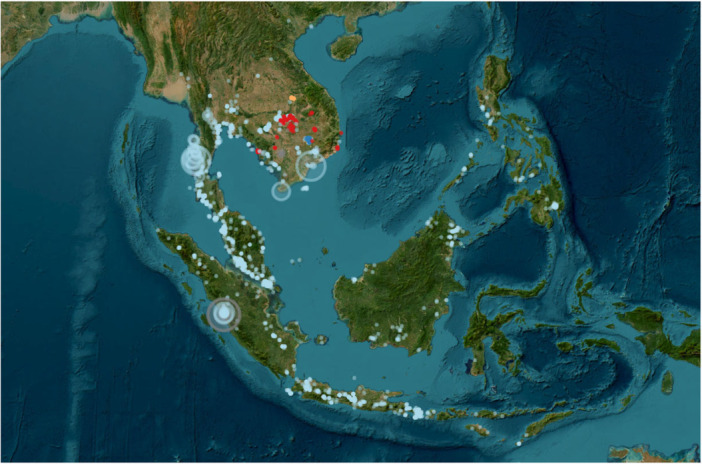 Figure 1
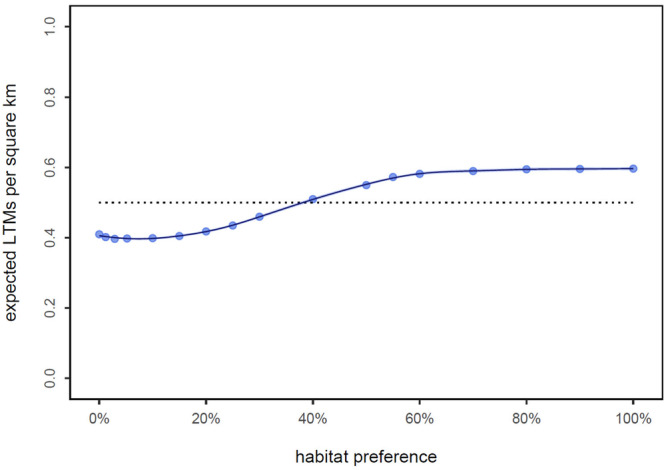 Figure 2
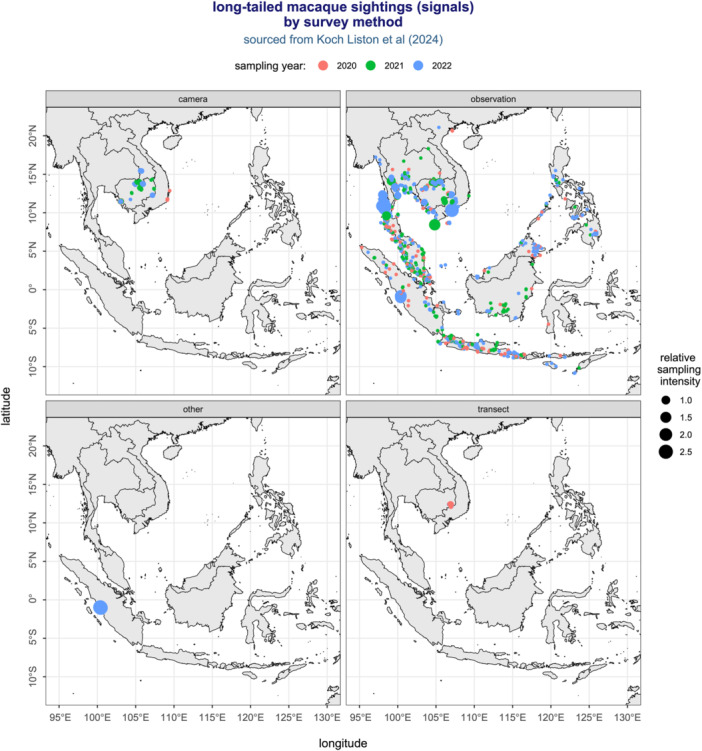 Figure 3
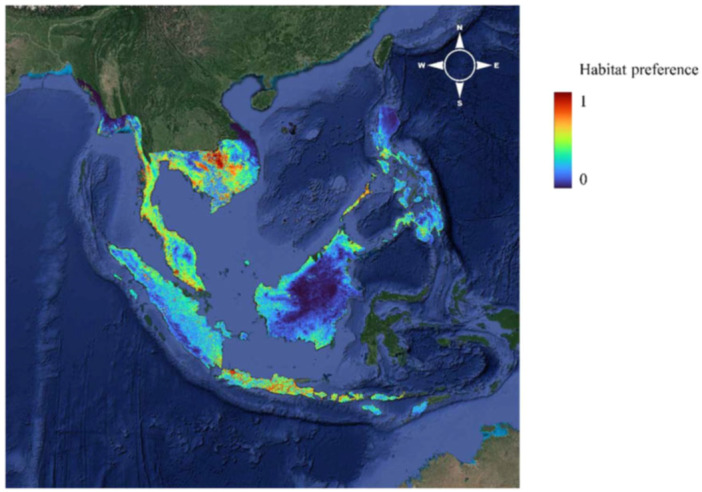 Figure 4
Peer Reviews
No public reviews on file for this paper yet. If you reviewed it on a platform where reviews are public (OpenReview, ICLR, NeurIPS, ICML), you can paste yours below so the community can read it here.
Videos
No videos yet. Explain this paper in a talk, walkthrough, or lecture? Add one.
Taxonomy
TopicsPrimate Behavior and Ecology · Wildlife Ecology and Conservation · Species Distribution and Climate Change