Transaldolase Deficiency in a Saudi Girl: Identification of a Novel Homozygous TALDO1 Variant
Khalid Asiri, Syed Rayees, Badriah G Alasmari

TL;DR
A Saudi girl with a rare genetic disorder caused by a new mutation in the TALDO1 gene is reported, highlighting the condition's clinical features and genetic basis.
Contribution
A novel homozygous TALDO1 gene variant is identified and reported for the first time in a patient with transaldolase deficiency.
Findings
A nine-month-old Saudi girl was diagnosed with transaldolase deficiency due to a novel homozygous TALDO1 gene variant.
The identified variant c.871_873delGAG p.(Glu291del) has not been previously reported in the literature.
The case contributes to the growing database of transaldolase deficiency and raises awareness of its clinical manifestations.
Abstract
Transaldolase deficiency (TALDOD) is a rare autosomal recessive disorder that affects the pentose phosphate pathway, resulting from pathogenic variants in the TALDO1 gene. The condition leads to varied multisystem involvement, including hepatosplenomegaly, liver dysfunction, coagulopathy, cardiac anomalies, facial dysmorphic traits, and renal anomalies, often presenting in infancy or early childhood. We present a case of a nine-month-old Saudi girl with clinical features consistent with TALDOD. Whole exome sequencing confirmed the presence of a homozygous novel variant c.871_873delGAG p.(Glu291del) in exon 7 of the TALDO1 gene with isoform NM_006755.1. To our knowledge, this variant has not been reported in the literature to date. The objective of this case report is to raise awareness about this very rare disease and to add it to the database of TALDOD.
Genes, proteins, chemicals, diseases, species, mutations and cell lines named across the full text — each resolved to its canonical identifier and authoritative record.
Click any figure to enlarge with its caption.
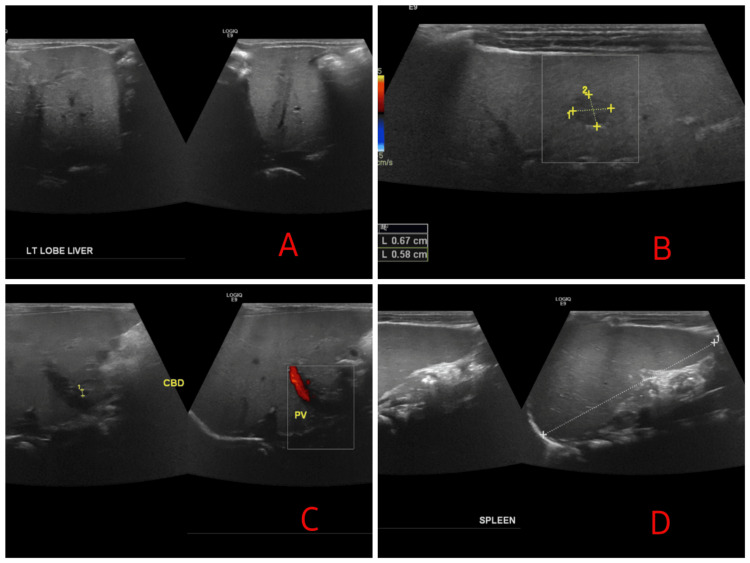 Figure 1
Peer Reviews
No public reviews on file for this paper yet. If you reviewed it on a platform where reviews are public (OpenReview, ICLR, NeurIPS, ICML), you can paste yours below so the community can read it here.
Videos
No videos yet. Explain this paper in a talk, walkthrough, or lecture? Add one.
Taxonomy
TopicsBiomedical Research and Pathophysiology