G-Quadruplex–specific action of chloroquine-based immunomodulator drugs to inhibit the cancer progression
Sunipa Sarkar, Akash Chatterjee, Subhojit Paul, Asim Bisoi, Prosenjit Sen, Prashant Chandra Singh

TL;DR
This study shows that hydroxychloroquine can inhibit cancer progression by stabilizing G-quadruplex DNA structures in the c-myc oncogene, reducing cancer cell invasion and migration.
Contribution
The study reveals a novel mechanism by which hydroxychloroquine represses c-myc transcription through G4 stabilization, offering a new strategy for cancer therapy.
Findings
Hydroxychloroquine most efficiently stabilizes G4 structures in oncogenic DNA compared to other quinoline-based drugs.
Stabilization of c-myc G4 by hydroxychloroquine suppresses its transcriptional activity and reduces breast cancer cell migration.
Hydroxychloroquine enhances the efficacy of conventional chemotherapeutics in vivo, suggesting potential as an adjunct therapy.
Abstract
Immunomodulatory drugs, particularly hydroxychloroquine (HCQ) and chloroquine are in the preclinical investigation for cancer therapy, along with their extensive application in autoimmune and parasitic diseases. A hallmark of cancer cells is the elevated expression of oncogenes that drive tumor progression, often regulated by G-quadruplex (G4) DNA structures located within their upstream promoter regions. This study elucidates that HCQ stabilizes the cellular G4 landscape most efficiently compared to other quinoline-based immunomodulatory drugs within oncogenic DNA, particularly the c-myc oncogene, a pivotal regulator of cancer progression. The drug-induced stabilization of c-myc G4 correlates with significant suppression of its transcriptional activity, culminating in a reduction of invasion and migration of triple-negative breast cancer cells. Mechanistically, the strong electrostatic…
Genes, proteins, chemicals, diseases, species, mutations and cell lines named across the full text — each resolved to its canonical identifier and authoritative record.
Click any figure to enlarge with its caption.
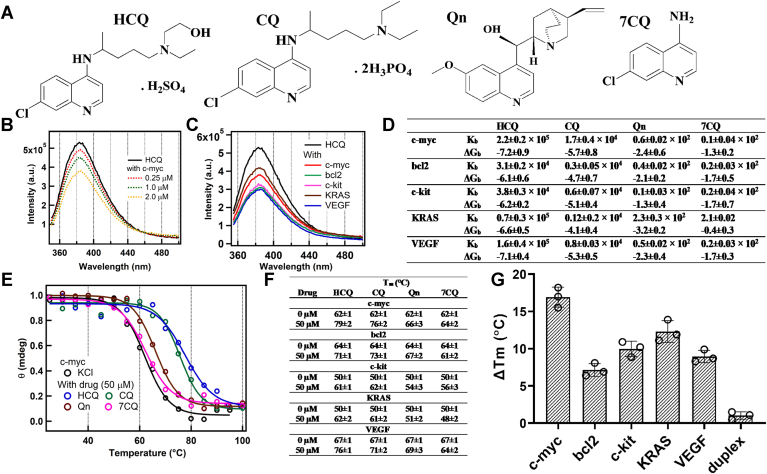 Figure 1
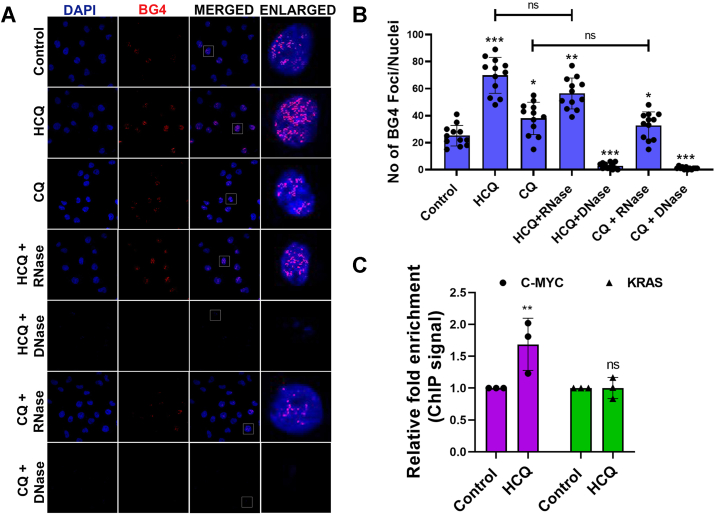 Figure 2
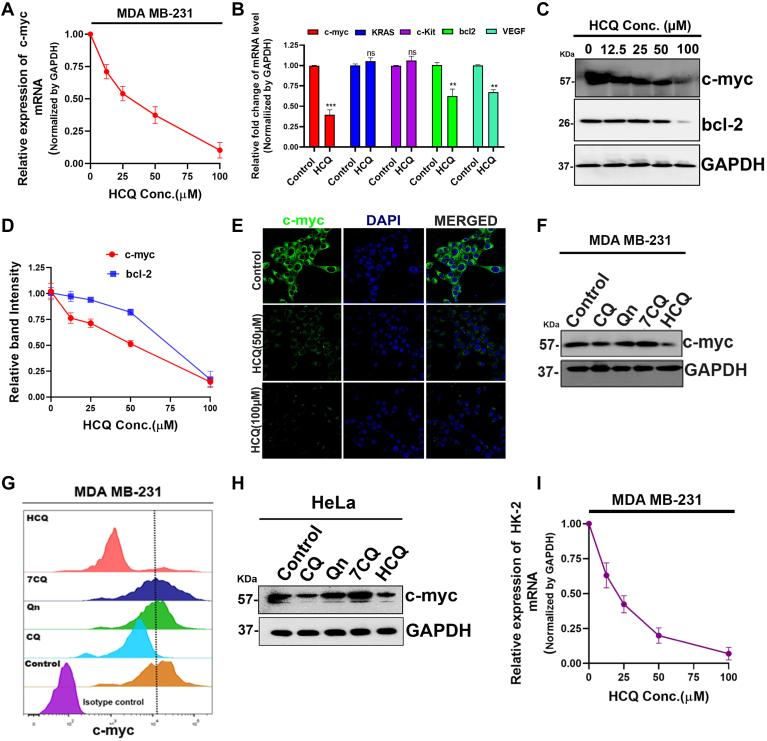 Figure 3
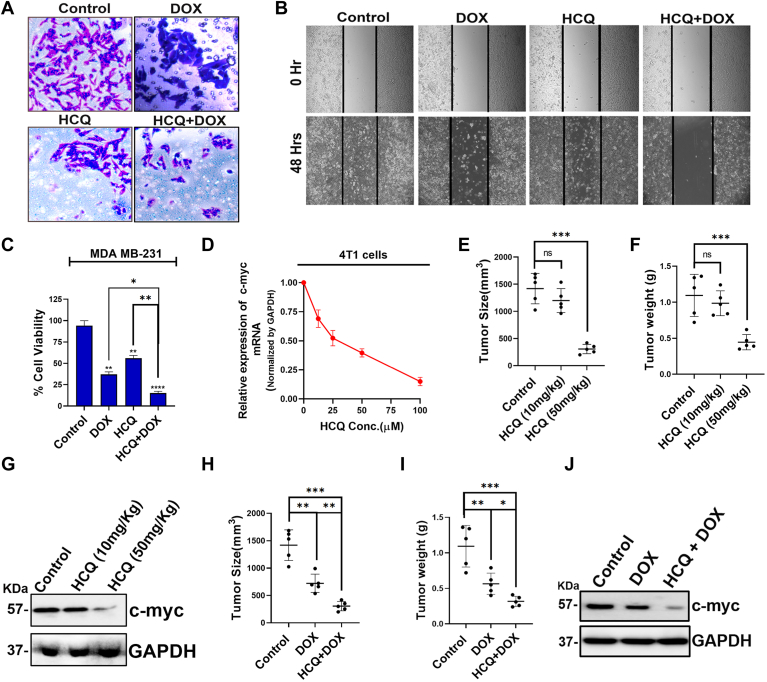 Figure 4
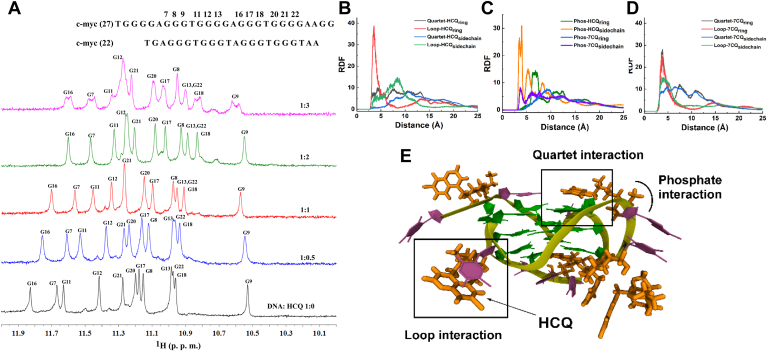 Figure 5
Peer Reviews
No public reviews on file for this paper yet. If you reviewed it on a platform where reviews are public (OpenReview, ICLR, NeurIPS, ICML), you can paste yours below so the community can read it here.
Videos
No videos yet. Explain this paper in a talk, walkthrough, or lecture? Add one.
Taxonomy
TopicsDNA and Nucleic Acid Chemistry · RNA Interference and Gene Delivery · Advanced biosensing and bioanalysis techniques