Systematic analysis of the RGS2 degron reveals characteristics of substrate recognition by the F-box protein FBXO44
Harrison J. McNabb, Eugene Cho, Mary Pitman, Phillip S. Rushton, David Mobley, Benita Sjögren

TL;DR
This study identifies key features of how RGS2 protein is recognized by FBXO44, offering insights for drug development to increase RGS2 levels in diseases.
Contribution
The study systematically defines the RGS2 degron and its interaction with FBXO44, providing a structural framework for drug design and substrate discovery.
Findings
Peptide array and computational modeling identified amino acid changes affecting FBXO44 binding to RGS2.
Experimental validation confirmed the role of specific residues in RGS2–FBXO44 interaction.
Results offer structural insights for designing drugs and predicting additional FBXO44 substrates.
Abstract
Regulator of G protein signaling 2 (RGS2) negatively modulates signaling downstream of G protein–coupled receptors by accelerating GTP hydrolysis at Gα subunits of heterotrimeric G proteins. Decreased RGS2 levels are implicated in numerous diseases, including cardiovascular disease and asthma. Thus, identifying selective means of enhancing RGS2 protein levels would be a viable therapeutic strategy. RGS2 is rapidly degraded through the ubiquitin–proteasomal pathway, and we previously identified F-box only protein 44 (FBXO44) as the substrate recognition component of the E3 ligase responsible for facilitating RGS2 degradation. As such, the RGS2–FBXO44 interaction is a potential target for pharmacological intervention. Detailed information on the FBXO44 recognition site (degron) in RGS2 will aid in structure-based small-molecule inhibitor design, as well as in identifying additional FBXO44…
Genes, proteins, chemicals, diseases, species, mutations and cell lines named across the full text — each resolved to its canonical identifier and authoritative record.
Click any figure to enlarge with its caption.
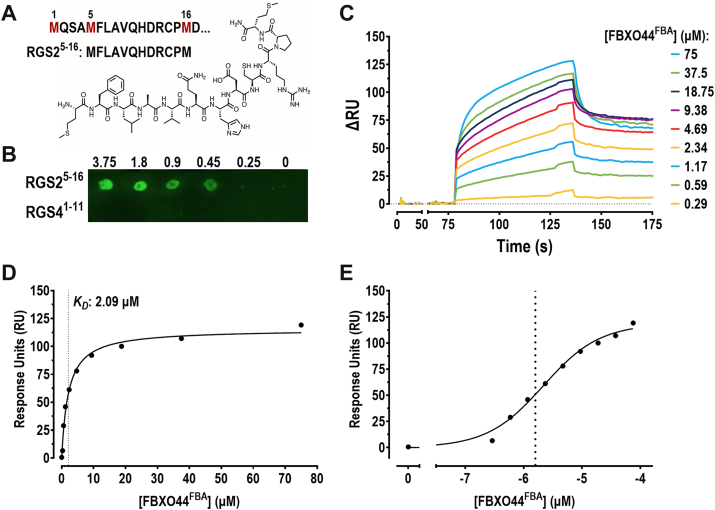 Figure 1
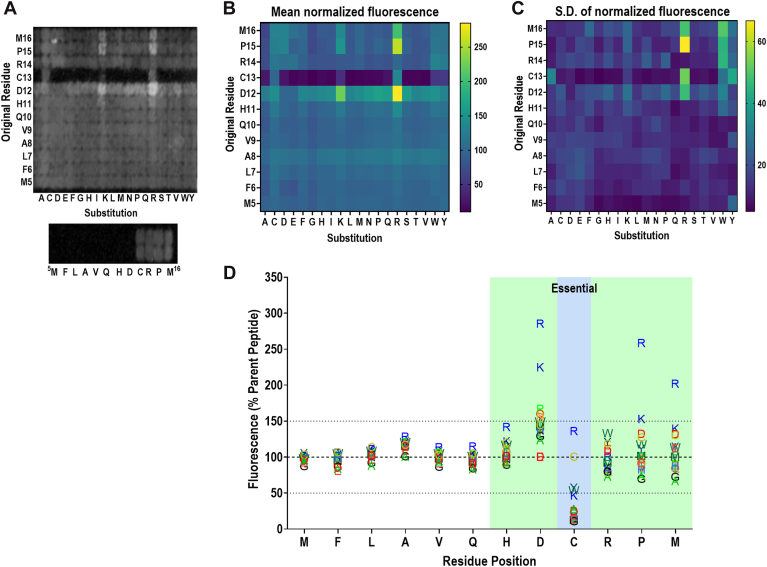 Figure 2
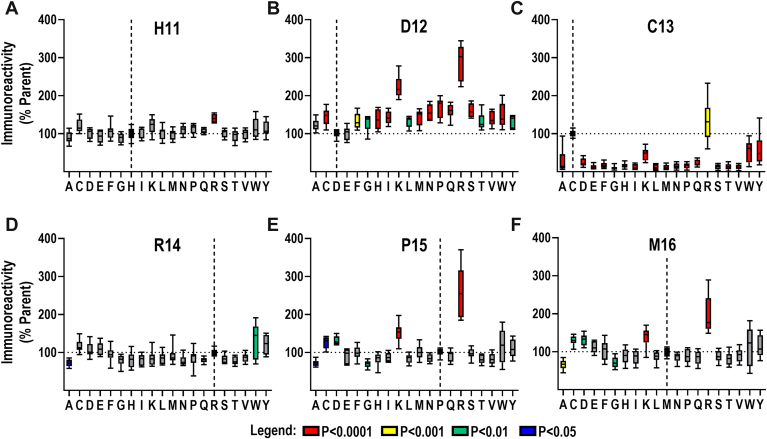 Figure 3
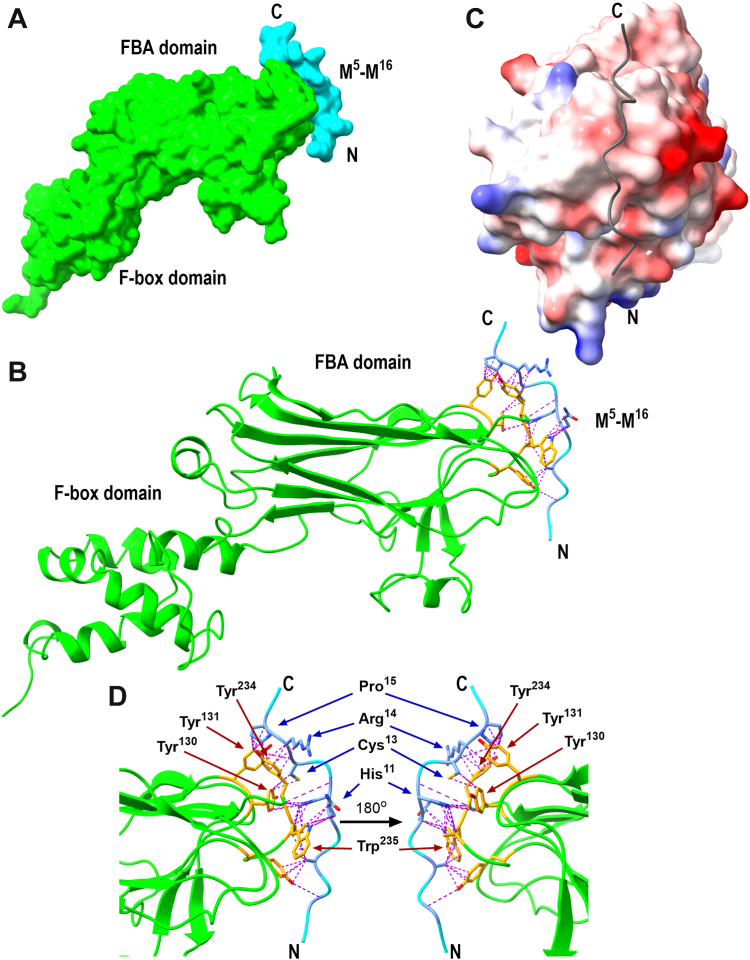 Figure 4
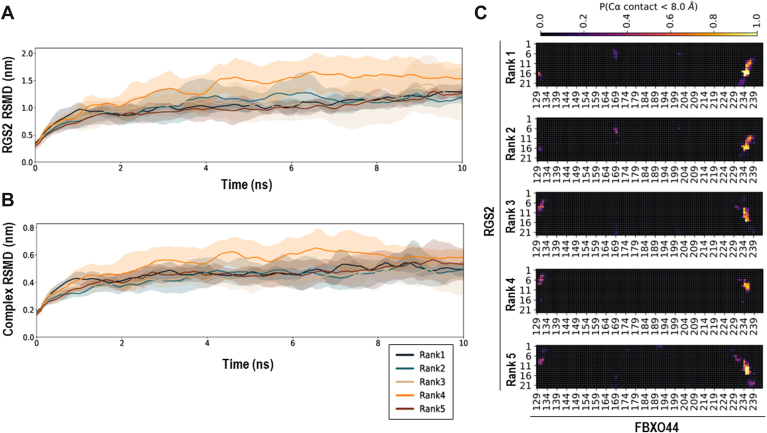 Figure 5
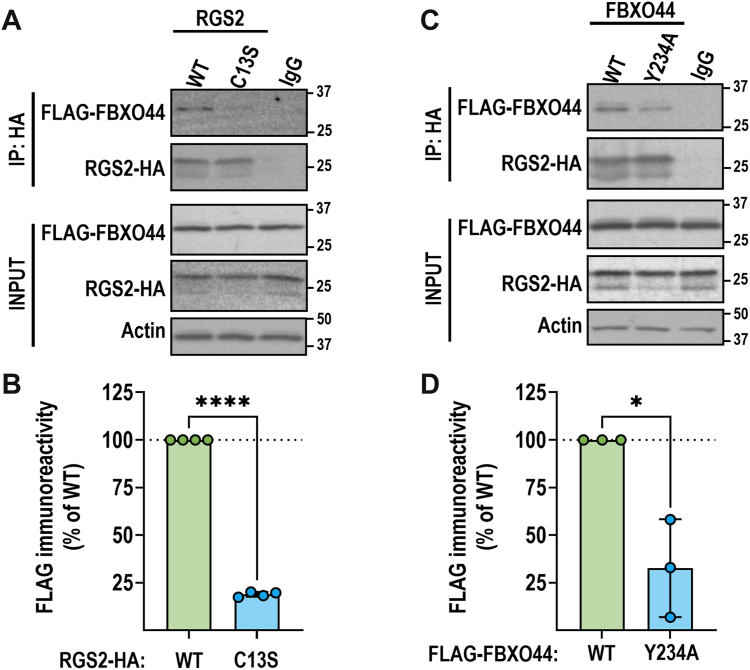 Figure 6
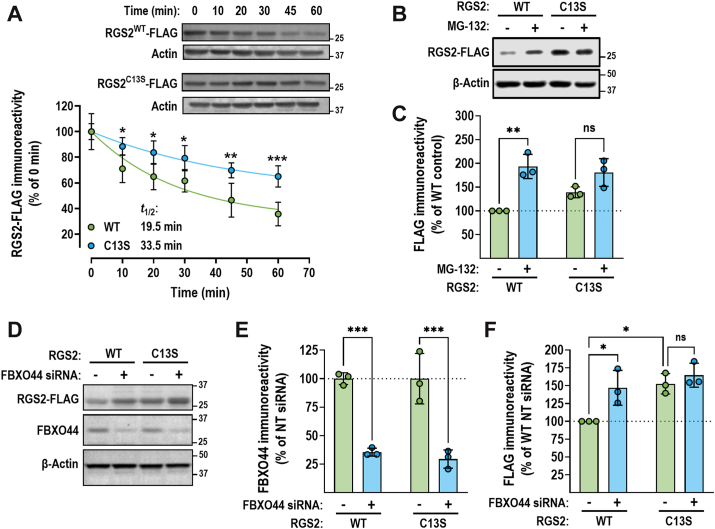 Figure 7
Peer Reviews
No public reviews on file for this paper yet. If you reviewed it on a platform where reviews are public (OpenReview, ICLR, NeurIPS, ICML), you can paste yours below so the community can read it here.
Videos
No videos yet. Explain this paper in a talk, walkthrough, or lecture? Add one.
Taxonomy
Topicsinterferon and immune responses