Oral anticoagulant reversal and mortality in trauma patients: a multicentre propensity score–matched cohort study
Elodie Lang, Marion Gautier, Jean-Luc Hanouz, Fanny Vardon, Vincent Legros, Gary Duclos, Florent Hericher, Gerard Audibert, Delphine Huet-Garrigue, Paer-Sélim Abback, Benjamin Popoff, Olivier Duranteau, Samy Figueiredo, Pierre-Antoine Allain, Thomas Botrel, Jean Pasqueron

TL;DR
This study finds that preinjury use of oral anticoagulants increases trauma mortality, but following guidelines to reverse their effects can significantly reduce this risk without causing more blood clots.
Contribution
The study demonstrates that guideline-concordant reversal of oral anticoagulants reduces trauma mortality without increasing thrombotic risk, emphasizing the need for systematic implementation of reversal strategies.
Findings
Preinjury oral anticoagulant therapy is independently associated with increased trauma mortality, particularly with vitamin K antagonists.
Guideline-concordant reversal of anticoagulants significantly reduces mortality at both day 1 and day 7 post-trauma.
There is no significant association between anticoagulant reversal and thrombotic complications.
Abstract
Oral anticoagulant (OAC) therapy increases bleeding risk but its impact on trauma outcomes and the benefit of reversal remains uncertain. This study aimed to evaluate 1/the effect of preinjury OAC therapy on trauma mortality and 2/the protective role of OAC reversal and its associated thrombotic risk. We conducted an observational study using a prospective multicenter trauma registry between January 2012 and December 2023. OAC-treated patients were matched with non-OAC-treated patients using a propensity score. Univariable and multivariable logistic regressions assessed associations between OAC therapy and day 1 and day 7 mortality. The effect of guideline-concordant OAC reversal was evaluated. Thrombotic complications were recorded. Of the 27,426 trauma patients, 3% were OAC-treated. They were older, had more comorbidities, and experienced higher mortality. After matching (n = 2196),…
Genes, proteins, chemicals, diseases, species, mutations and cell lines named across the full text — each resolved to its canonical identifier and authoritative record.
Click any figure to enlarge with its caption.
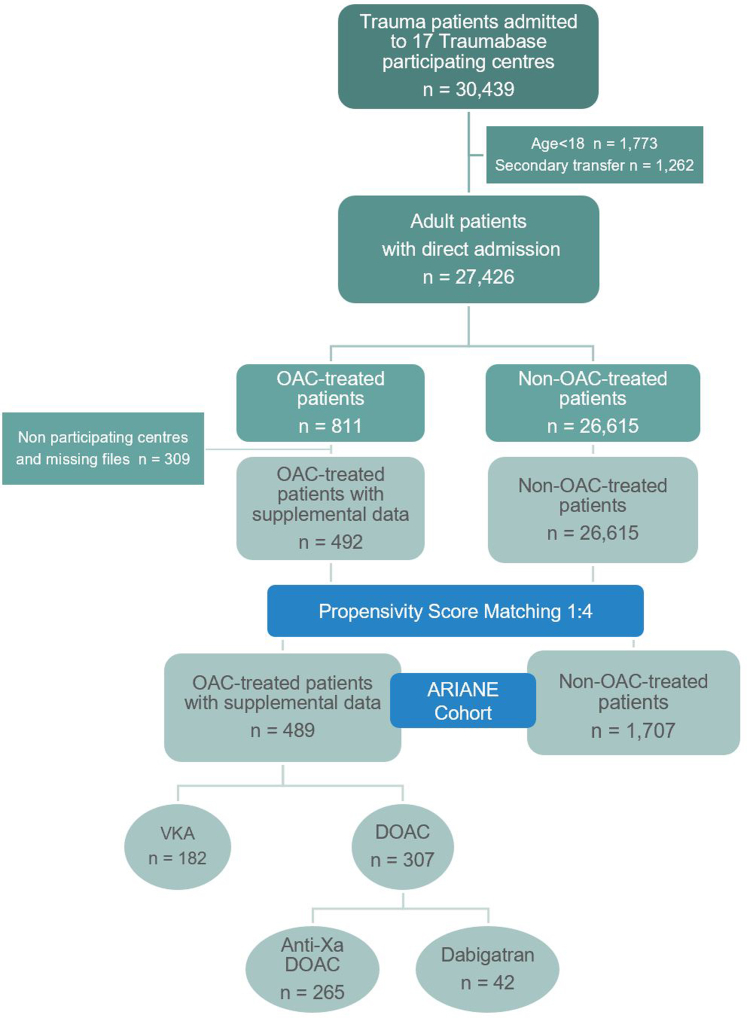 Figure 1
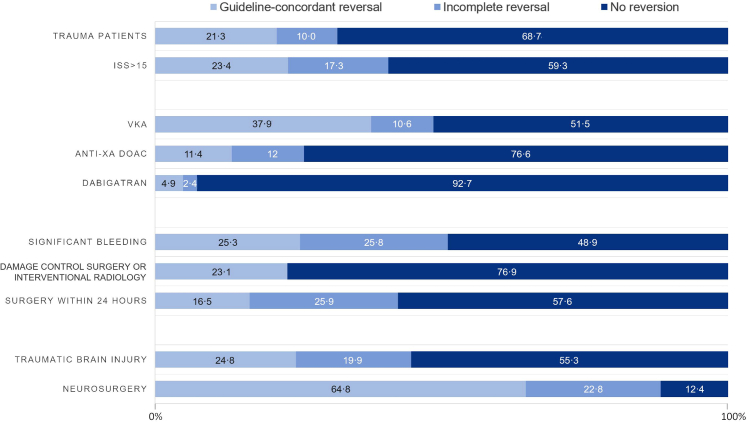 Figure 2
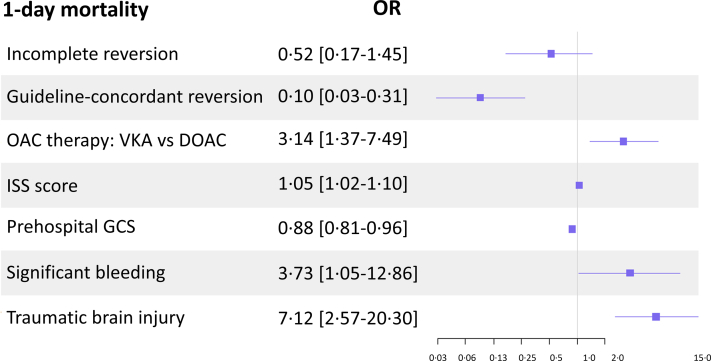 Figure 3
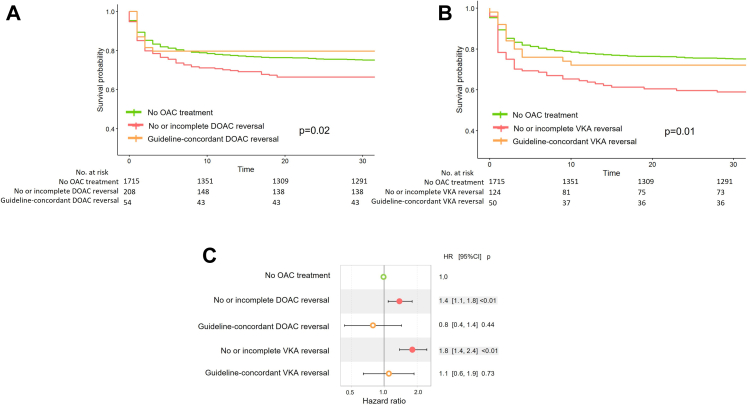 Figure 4
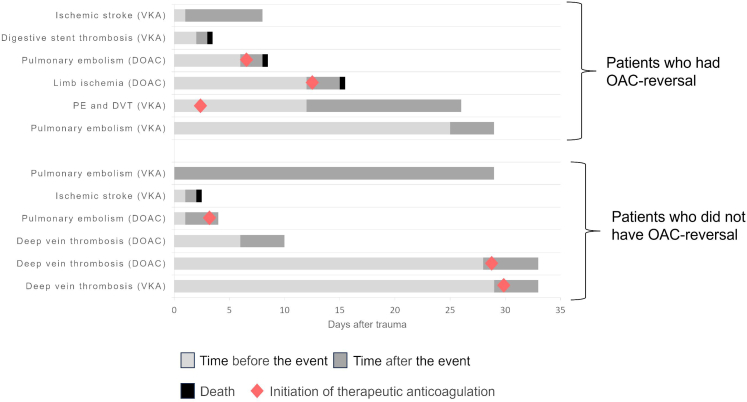 Figure 5
Peer Reviews
No public reviews on file for this paper yet. If you reviewed it on a platform where reviews are public (OpenReview, ICLR, NeurIPS, ICML), you can paste yours below so the community can read it here.
Videos
No videos yet. Explain this paper in a talk, walkthrough, or lecture? Add one.
Taxonomy
TopicsTrauma and Emergency Care Studies · Trauma, Hemostasis, Coagulopathy, Resuscitation · Cardiac Arrest and Resuscitation