The medicalisation of menstruation: a double-edged sword
Andrea Ford, Jessica Campbell, Katie F.M. Marwick, Lara Owen, Katie Marwick, Lotte Gerritsen, Katie Marwick

TL;DR
This paper examines how efforts to improve women's health through medicalizing menstruation can unintentionally reinforce gender inequality.
Contribution
The paper introduces a critical analysis of historical and contemporary examples where menstruation-related initiatives had unintended negative consequences.
Findings
19th-century psychiatry linked menstruation to mental disorder, which was used to justify limiting women's education.
Hormone replacement therapy, while beneficial, has been marketed in ways that reinforce gender stereotypes about aging.
Menstrual leave policies may unintentionally stigmatize menstruating individuals by singling them out for special treatment.
Abstract
The intersection of menstrual and mental health is an under-researched area which is gaining attention from the public, researchers and clinicians. However, there may be unintended risks associated with this increased attention. Here we review some historical and cultural aspects of the well-intentioned medicalisation of menstruation and discuss their impact on gender (in)equality. To critically integrate lessons from the past into current momentum around improving women’s healthcare. Narrative review with interdisciplinary authorship including psychiatry, medical anthropology, and history. We explore three exemplars. 19 th century psychiatry identified menstruation as a time of risk for mental disorder, which recognised relevant aspects of female experience but used this to argue against female education. The 20 th century discovery that hormone replacement therapy can ease…
Genes, proteins, chemicals, diseases, species, mutations and cell lines named across the full text — each resolved to its canonical identifier and authoritative record.
Click any figure to enlarge with its caption.
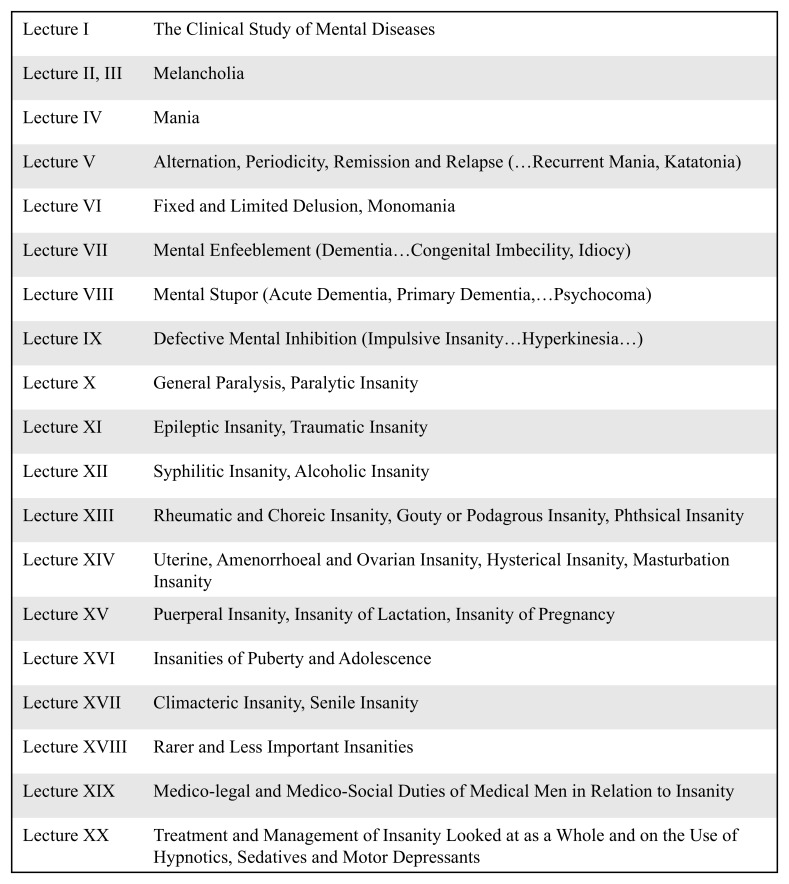 Figure 1
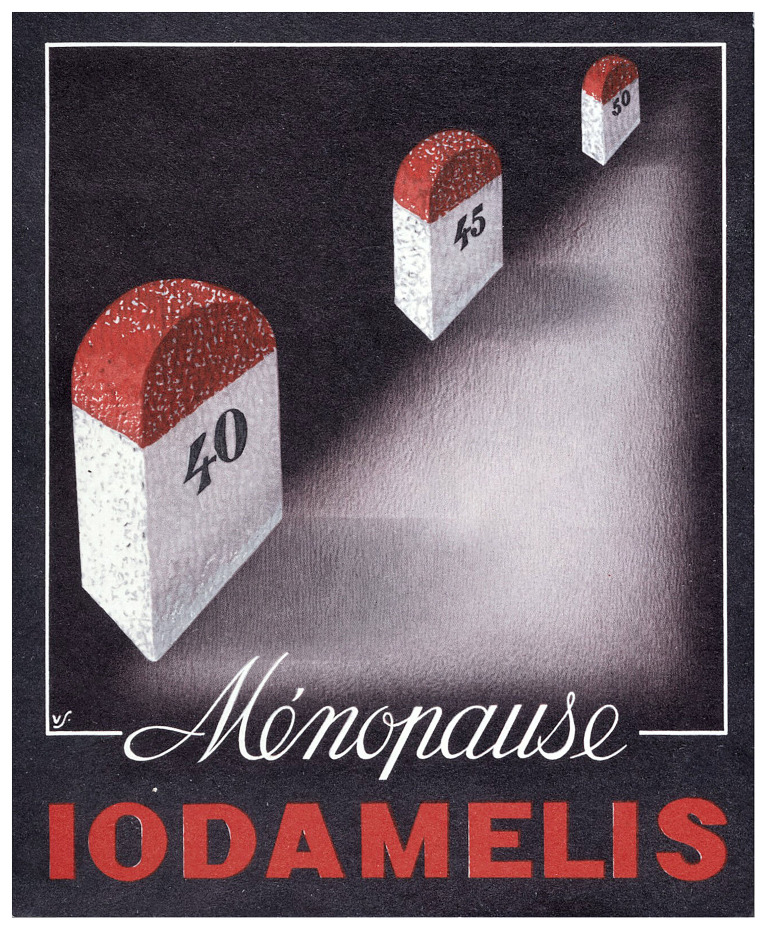 Figure 2
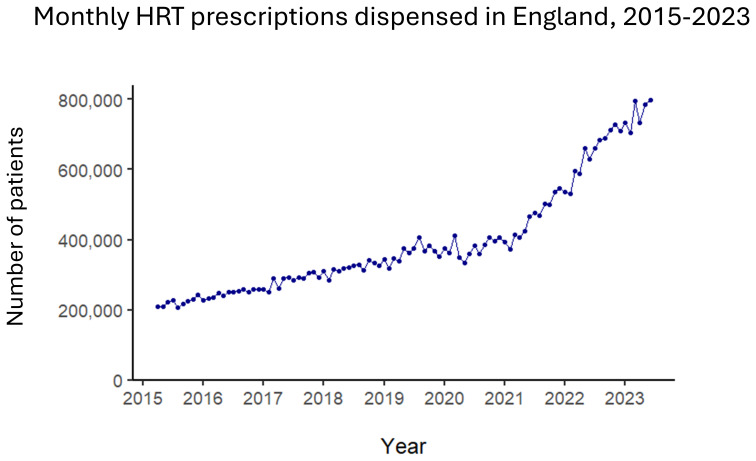 Figure 3
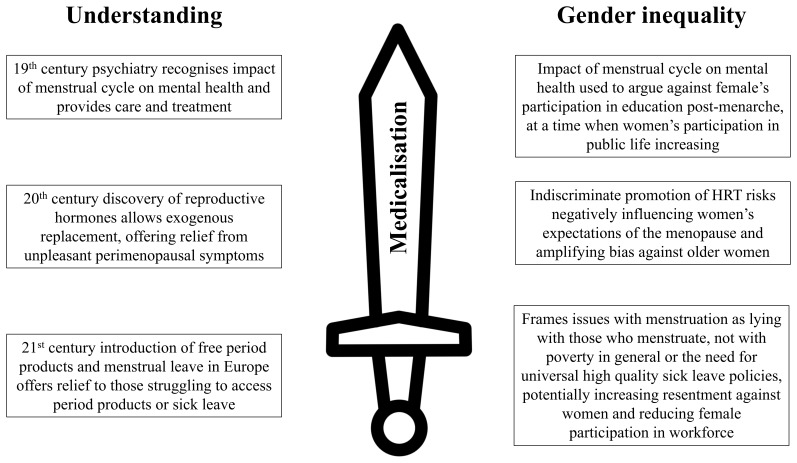 Figure 4
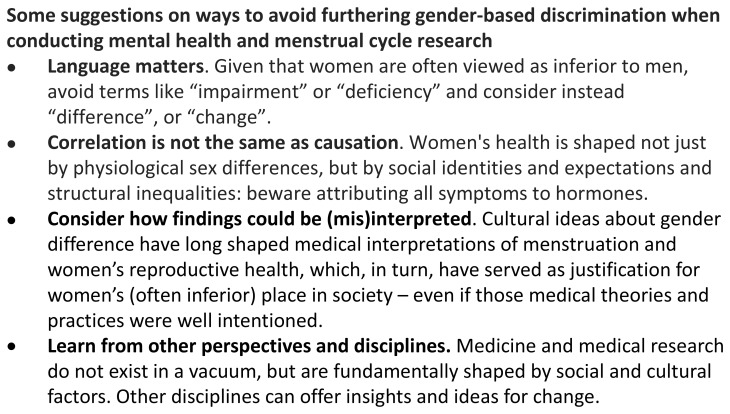 Figure 5
Peer Reviews
No public reviews on file for this paper yet. If you reviewed it on a platform where reviews are public (OpenReview, ICLR, NeurIPS, ICML), you can paste yours below so the community can read it here.
Videos
No videos yet. Explain this paper in a talk, walkthrough, or lecture? Add one.
Taxonomy
TopicsMenstrual Health and Disorders · Historical Studies on Reproduction, Gender, Health, and Societal Changes · Reproductive Health and Contraception