Novel endoluminal parameters for predicting primary loss of response in Crohn’s disease: a multi-center study
Ruchen Yao, Changsheng Cai, Jie Liang, Feng Tian, Xiaocang Cao, Yue Li, Yubei Gu, Qi Feng, Jun Shen, Feng Tian, Feng Tian, Yubei Gu, Qi Feng, Jun Shen, Yu Bai, Zhaolian Bian, Qian Cao, Xiaocang Cao, Kang Chao, Jie Chen, Linlin Chen, Min Chen, Yan Chen, Yuanwen Chen, Cong Dai

TL;DR
This study introduces new imaging parameters, particularly effective luminal diameter, to predict which Crohn’s disease patients will not respond to ustekinumab treatment.
Contribution
The study introduces effective luminal diameter (EffLD) as a novel predictor of ustekinumab response in Crohn’s disease using cardiovascular imaging software.
Findings
Effective luminal diameter (EffLD) emerged as an independent predictor of ustekinumab response with an AUC of 0.858.
Endoluminal CT enterography parameters showed significant differences between primary loss of response and non-PLR groups.
Cardiovascular imaging software was successfully applied to quantify intestinal parameters in Crohn’s disease.
Abstract
Approximately 30% of patients with Crohn’s disease (CD) experience primary loss of response (PLR) to ustekinumab. However, studies integrating imaging parameters to predict PLR remain limited. This study aimed to quantify endoluminal and intestinal wall parameters using computed tomography enterography (CTE) and assess their predictive value for PLR to ustekinumab. This multicenter study analyzed 466 intestinal segments from 161 patients with CD between March 2020 and May 2024. A national survey identified 10 CTE parameters for evaluating disease activity and predicting PLR. Logistic regression models were used to assess predictive performance in a validation cohort. Ten CTE parameters related to lesion characterization—including length, luminal narrowing, and bowel wall thickness—were defined, with newly introduced metrics, including length, area, effective luminal diameter (EffLD),…
Genes, proteins, chemicals, diseases, species, mutations and cell lines named across the full text — each resolved to its canonical identifier and authoritative record.
Click any figure to enlarge with its caption.
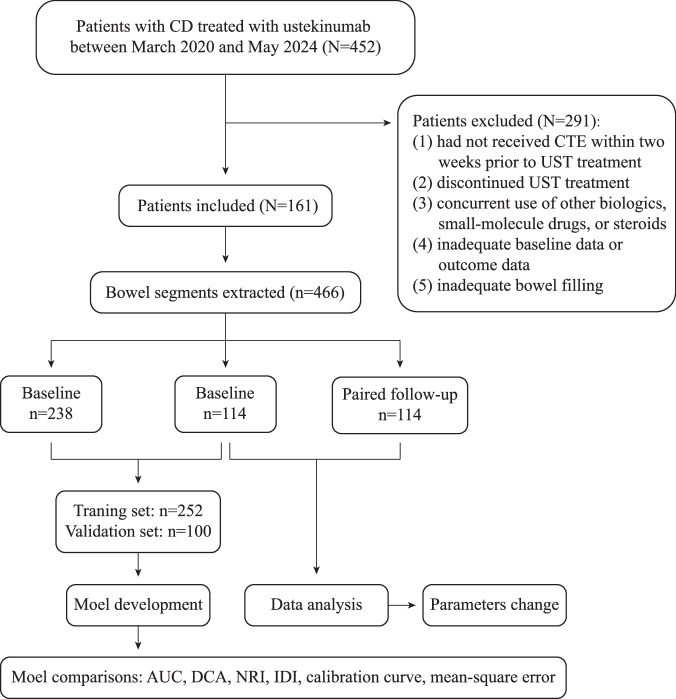 Figure 1
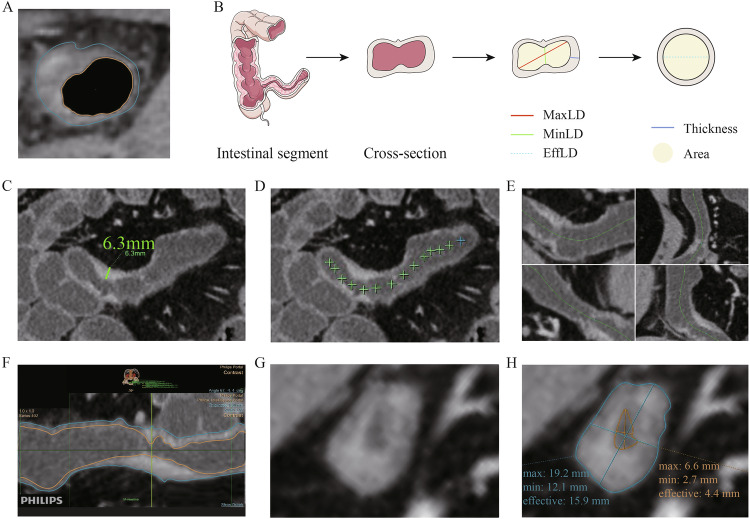 Figure 2
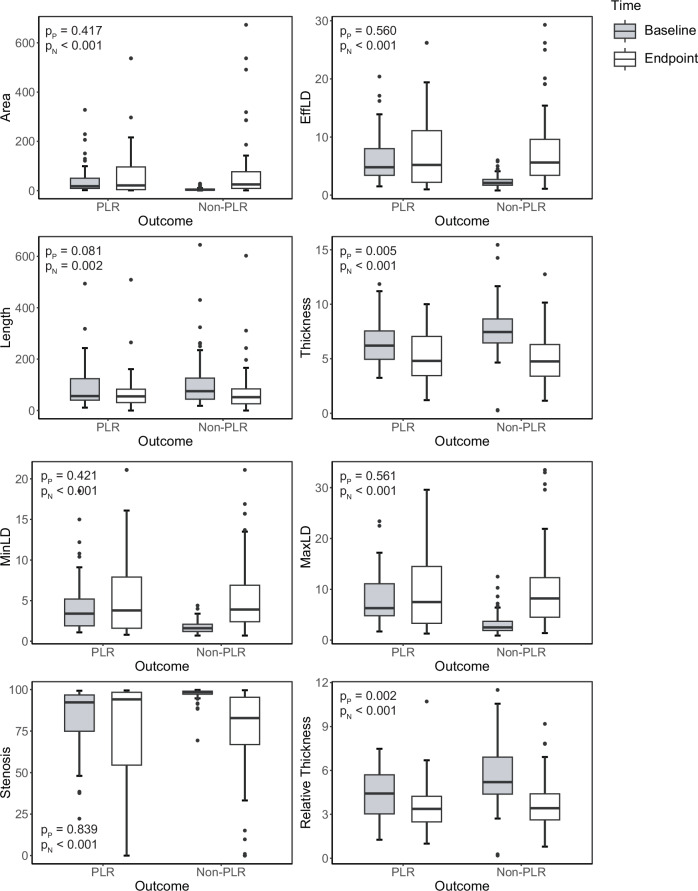 Figure 3
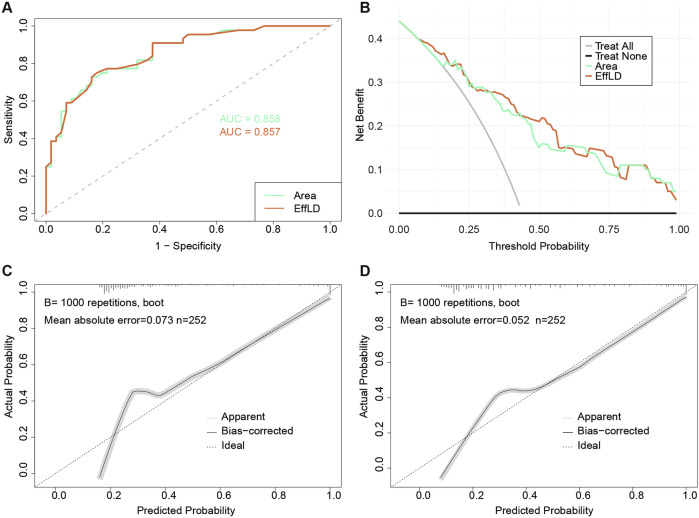 Figure 4
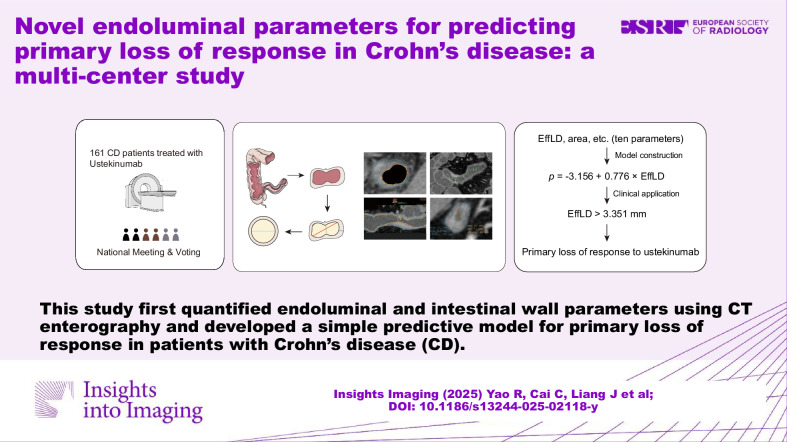 Figure 5
Peer Reviews
No public reviews on file for this paper yet. If you reviewed it on a platform where reviews are public (OpenReview, ICLR, NeurIPS, ICML), you can paste yours below so the community can read it here.
Videos
No videos yet. Explain this paper in a talk, walkthrough, or lecture? Add one.
Taxonomy
TopicsInflammatory Bowel Disease · Microscopic Colitis · Eosinophilic Esophagitis