Effect of practice on the control of reach extent
Faith N. Schroers, Troy M. Herter, Dylan Bruemmer, Takeo Ichiyanagi, Austin Hertherington, Michael O’Donnell, Janelle Ozorowski, Chad Simmons, Jill Campbell Stewart

TL;DR
This study explores how practice affects how people control the extent of their reaching movements, finding that practice improves performance and changes control strategies in one arm but not the other.
Contribution
The study reveals that repetitive practice increases anticipatory planning and feedback adjustments in a non-dominant arm but not in the dominant arm.
Findings
Both arm groups improved reach performance with practice, showing reduced endpoint error and movement time.
The left arm group increased use of anticipatory planning and feedback adjustments with practice, while the right arm group did not.
Changes in control mechanisms may reflect brain hemisphere involvement or internal model development.
Abstract
The control of reaches to targets that vary in distance involves a combination of anticipatory planning and feedback-based adjustments. However, it is not known if their contributions to the control of reach extent change with repetitive practice. This study investigated the effect of three days of practice on the control of reach extent. Right-hand dominant participants reached with either the non-dominant left arm or dominant right arm to six targets presented in two directions and three distances in a virtual environment. The effect of practice on planning and feedback-based adjustments to control reach extent was examined by determining how well peak acceleration and time to peak velocity predicted the eventual distance moved, respectively. Both arm groups demonstrated improvements in reach performance (decreased endpoint error and movement time). The Left Arm group demonstrated an…
Genes, proteins, chemicals, diseases, species, mutations and cell lines named across the full text — each resolved to its canonical identifier and authoritative record.
Click any figure to enlarge with its caption.
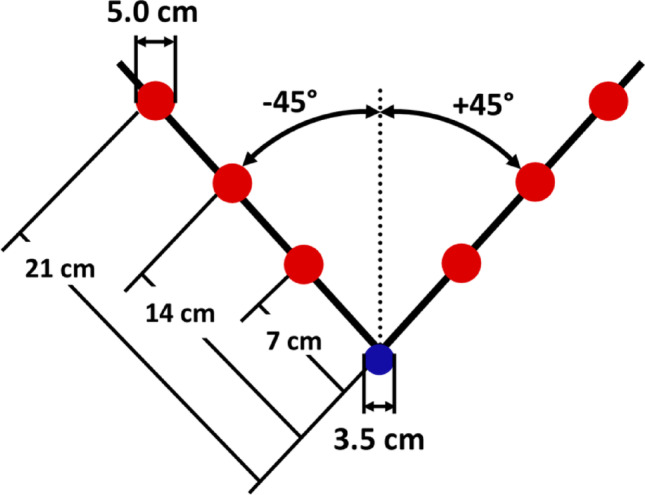 Figure 1
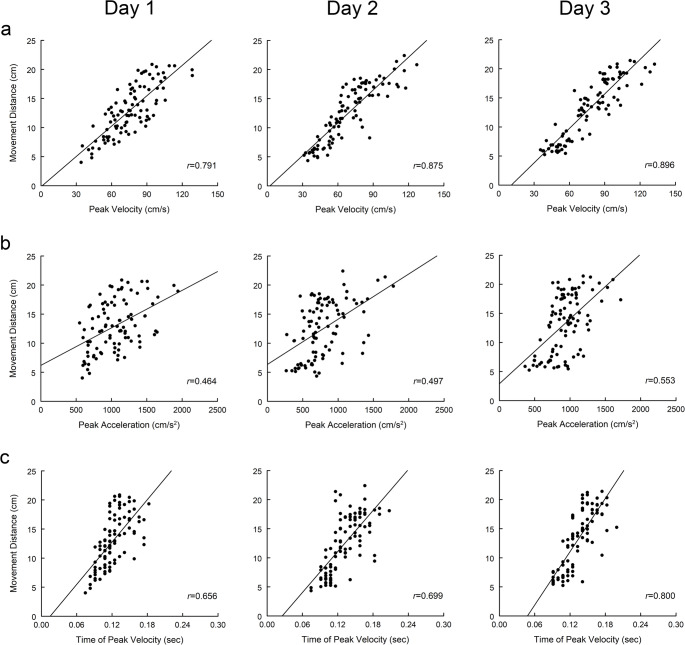 Figure 2
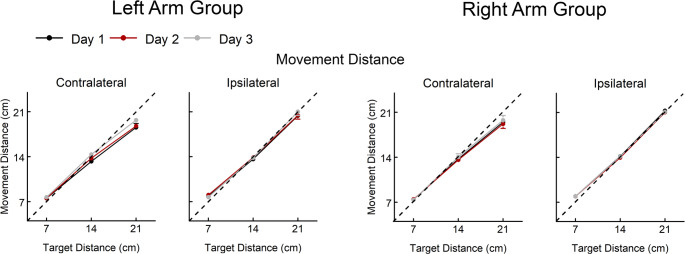 Figure 3
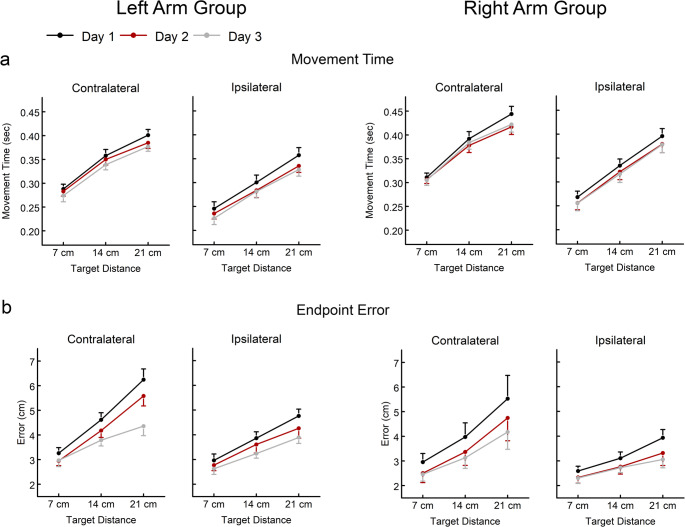 Figure 4
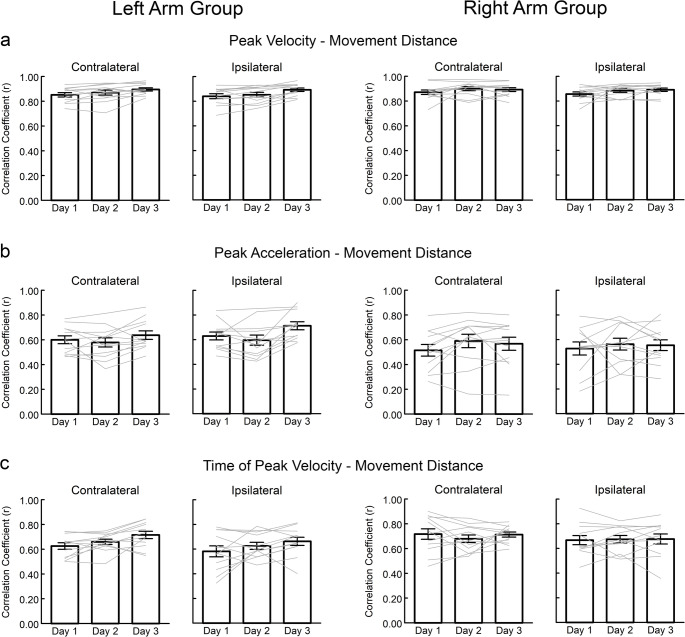 Figure 5
Peer Reviews
No public reviews on file for this paper yet. If you reviewed it on a platform where reviews are public (OpenReview, ICLR, NeurIPS, ICML), you can paste yours below so the community can read it here.
Videos
No videos yet. Explain this paper in a talk, walkthrough, or lecture? Add one.
Taxonomy
TopicsMotor Control and Adaptation · Stroke Rehabilitation and Recovery · Balance, Gait, and Falls Prevention