Permissive Hypoxemia With Partial Pressure of Oxygen in Arterial Blood (PaO2) at Less Than 50 mmHg: A Case of Successful Ventilator Weaning for COVID-19-Associated Acute Respiratory Failure
Hiroshi Adachi, Kwonil Choi, Motohiro Shimizu

TL;DR
A 70-year-old woman with severe COVID-19 lung failure was successfully weaned off a ventilator using a strategy that allowed low blood oxygen levels.
Contribution
This case report presents a rare successful outcome using permissive hypoxemia with PaO2 below 50 mmHg in an adult with severe respiratory failure.
Findings
A permissive hypoxemia strategy with PaO2 below 50 mmHg was successfully used to wean a patient from mechanical ventilation.
The patient was discharged home three weeks after admission without complications.
The case supports the use of individualized lung-protective strategies over rigid oxygenation targets in severe respiratory failure.
Abstract
Permissive hypoxemia is a ventilation strategy that intentionally tolerates mild to moderate hypoxemia to minimize lung injury. Unlike conventional management, which aims for normal oxygen levels, permissive hypoxemia maintains a partial pressure of oxygen in arterial blood (PaO2) of 55-60 mmHg and an arterial oxygen saturation (SaO2) of 88-92%. This approach ensures sufficient oxygen delivery for vital functions while reducing mechanical stress on the lungs from high oxygen concentrations and airway pressures, which can lead to lung injury. This flexible, individualized strategy prioritizes lung protection over achieving absolute oxygenation values. A woman in her 70s, with COVID-19-associated pneumonia, was admitted with severe acute respiratory failure and required mechanical ventilation. Despite a lung-protective ventilation strategy, her oxygenation remained poor. A permissive…
Genes, proteins, chemicals, diseases, species, mutations and cell lines named across the full text — each resolved to its canonical identifier and authoritative record.
Click any figure to enlarge with its caption.
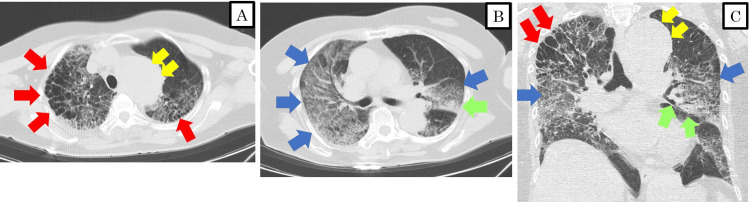 Figure 1
Peer Reviews
No public reviews on file for this paper yet. If you reviewed it on a platform where reviews are public (OpenReview, ICLR, NeurIPS, ICML), you can paste yours below so the community can read it here.
Videos
No videos yet. Explain this paper in a talk, walkthrough, or lecture? Add one.
Taxonomy
TopicsRespiratory Support and Mechanisms · Cardiac Arrest and Resuscitation · Mechanical Circulatory Support Devices