Dry Needling of LI4 and TE5 Acupuncture Points on Wrist Flexor Spasticity in Stroke: A Case Report
Najmeh Nazari, Noureddin Nakhostin Ansari, Pablo Herrero, Roshanak Honarpisheh, Zahra Mohammadi, Soofia Naghdi

TL;DR
This case report shows that dry needling at specific acupuncture points reduced wrist spasticity and improved movement in a stroke patient.
Contribution
The study demonstrates the potential effectiveness of dry needling at LI4 and TE5 acupoints for reducing spasticity in post-stroke patients.
Findings
Wrist flexor spasticity decreased from '2' to '0' after dry needling sessions.
Active wrist range of motion improved from 0° to 45° within six weeks.
Passive wrist range of motion increased from 75° to 90° after treatment.
Abstract
Spasticity is one of the most common serious complications after stroke. Dry needling (DN) has been used to improve spasticity and motor function in patients poststroke. This case report aimed to present the DN effects of LI4 and TE5 acupuncture points on wrist flexor spasticity in a patient with stroke. The patient was a 57-year-old man with a 5-year history of right hemiplegia poststroke. DN was applied on LI4 and TE5 for three sessions, every other day, and each point for 1 minute. The patient was assessed before (T0), after 3 sessions of DN (T1), and after first (T2) and sixth weeks (T3) after the last session. After DN, wrist flexor spasticity decreased from “2” to “0” according to the Modified Modified Ashworth Scale and improvement remained at T2 and T3. The wrist active range of motion (ROM) significantly improved from 0° at T0 to 10° at T1, 45° at T2, and 35° at T3 follow-up.…
Genes, proteins, chemicals, diseases, species, mutations and cell lines named across the full text — each resolved to its canonical identifier and authoritative record.
Click any figure to enlarge with its caption.
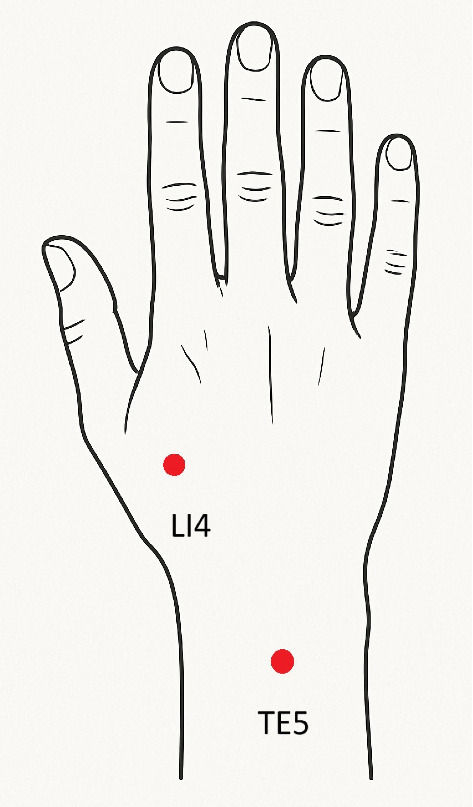 Figure 1
Peer Reviews
No public reviews on file for this paper yet. If you reviewed it on a platform where reviews are public (OpenReview, ICLR, NeurIPS, ICML), you can paste yours below so the community can read it here.
Videos
No videos yet. Explain this paper in a talk, walkthrough, or lecture? Add one.
Taxonomy
TopicsBotulinum Toxin and Related Neurological Disorders · Myofascial pain diagnosis and treatment · Hereditary Neurological Disorders