Meeting Summary for Keystone Symposia on HIV Cure: Antiretroviral Therapy (ART)-Free Control of HIV Infection in Durban, South Africa, 2025
Kiho Tanaka, Tatenda Jimmy Blessing Chikowore, Steven G. Deeks, Jacob D. Estes, Ya-Chi Ho, Sizun Jiang, Ming Jie Lee, Chang Li, Albert Machinda, Mauricio Martins, Patrick Mdletshe, Zaza M. Ndhlovu, Ujjwal Neogi, Melanie M. Ott, Thomas A. Rasmussen, Kavidha Reddy

TL;DR
Scientists met in 2025 to discuss new ways to control HIV without lifelong treatment, focusing on eliminating virus reservoirs and using advanced technologies.
Contribution
The conference highlighted novel strategies and multi-omic technologies for achieving ART-free control or eradication of HIV.
Findings
Multi-omic techniques are advancing understanding of HIV reservoirs.
New therapeutic approaches include broadly neutralizing antibodies and gene therapy.
Experts discussed strategies for durable remission without antiretroviral therapy.
Abstract
Antiretroviral therapy (ART) can effectively control human immunodeficiency virus (HIV) replication; however, lifelong treatment is required due to viral reservoirs, which fuel viral rebound. This necessitates curative interventions that can achieve either eradication of the reservoir or durable remission off ART. Advances in technology have fostered development of multi-omic techniques encompassing molecular tools, proteomic analyses, imaging, and artificial intelligence (AI)-driven data analysis to understand HIV reservoir biology and persistence. These have informed the investigation of therapeutic interventions such as broadly neutralizing antibodies, latency reversal, immune cell augmentation, antivirals, and gene therapy. From April 7–10, 2025, experts in the field convened at the Keystone Symposia conference, HIV Cure: Antiretroviral Therapy (ART)-Free Control of HIV Infection in…
Genes, proteins, chemicals, diseases, species, mutations and cell lines named across the full text — each resolved to its canonical identifier and authoritative record.
Click any figure to enlarge with its caption.
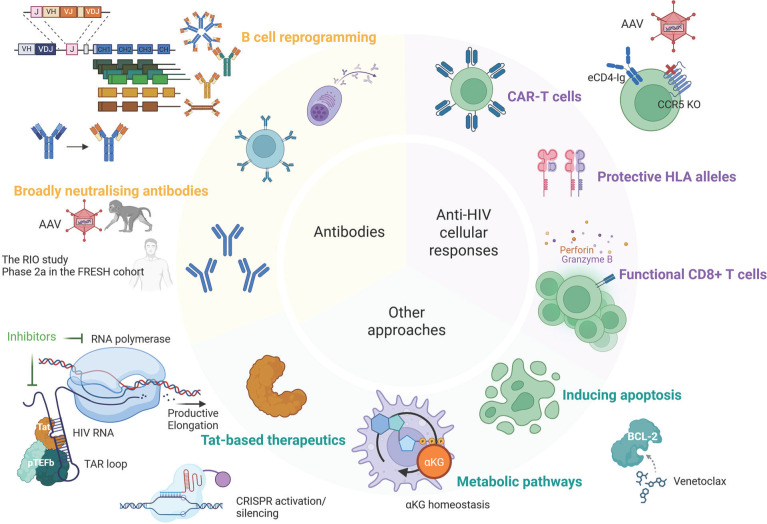 Figure 1
Peer Reviews
No public reviews on file for this paper yet. If you reviewed it on a platform where reviews are public (OpenReview, ICLR, NeurIPS, ICML), you can paste yours below so the community can read it here.
Videos
No videos yet. Explain this paper in a talk, walkthrough, or lecture? Add one.
Taxonomy
TopicsHIV Research and Treatment · HIV/AIDS Research and Interventions · Biological Research and Disease Studies