Biomechanical Assessment Tools for Injury Risk Prediction and Return-to-Sport Evaluation in Athletes: A Systematic Review
Adel A Alahaidib, Hind Y Alyousef, Murad A Sharif, Abdulaziz K Alsulaiman, Thamer S Alharthi, Hatim I Aljohani, Muteb K Almutairi, Nawwaf S Alghamdi, Khaled G Almutairi, Abdullah O Alammari, Abdulmohsin A Almehizia

TL;DR
This review examines biomechanical tools used to assess injury risk and readiness to return to sports after ACL injuries, finding that combining multiple metrics improves accuracy.
Contribution
The study systematically evaluates the predictive validity and clinical utility of biomechanical tools across diverse athletic populations.
Findings
Reduced quadriceps strength symmetry and compensatory kinematic deviations are linked to unsafe return-to-sport.
Proprietary force-plate scores like Sparta Science metrics have limited predictive value without multifactorial frameworks.
Sagittal-plane metrics show high reliability, while coronal and transverse measures are less consistent.
Abstract
Anterior cruciate ligament (ACL) injuries, particularly non-contact types, remain a major concern for athletes. Biomechanical screening tools such as 3D motion capture and force plates have advanced risk assessment and return-to-sport evaluation, yet their predictive validity and clinical applicability across diverse athletic populations remain unclear. This systematic review, conducted in accordance with PRISMA 2020 guidelines, searched four databases (PubMed, Cochrane Library, Scopus, Web of Science) up to July 25, 2025, and included original studies assessing athletes with biomechanical tools for injury risk or return-to-sport readiness. Of 4,787 records identified, eight studies met the criteria. Most utilized motion analysis or force plates to evaluate landing kinematics, limb symmetry, and postural control. Key findings showed that reduced quadriceps strength symmetry,…
Genes, proteins, chemicals, diseases, species, mutations and cell lines named across the full text — each resolved to its canonical identifier and authoritative record.
Click any figure to enlarge with its caption.
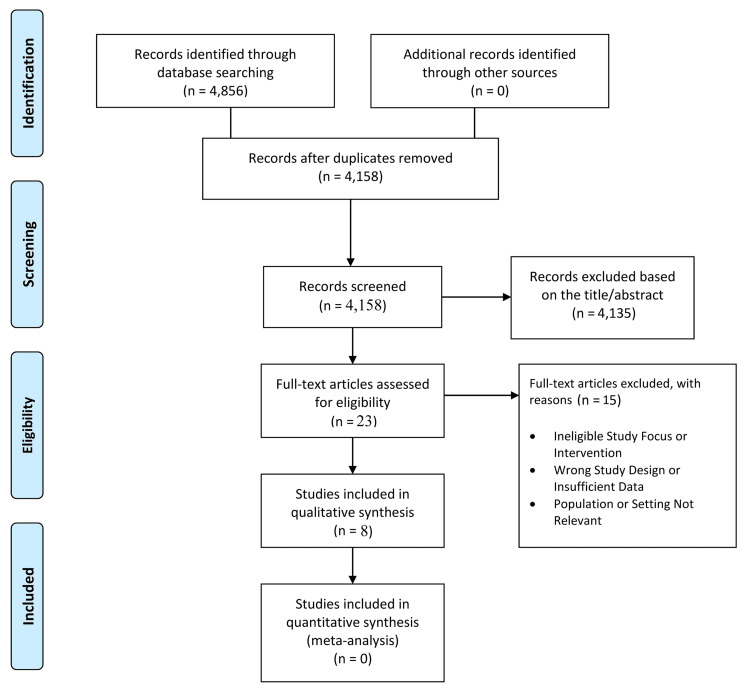 Figure 1
Peer Reviews
No public reviews on file for this paper yet. If you reviewed it on a platform where reviews are public (OpenReview, ICLR, NeurIPS, ICML), you can paste yours below so the community can read it here.
Videos
No videos yet. Explain this paper in a talk, walkthrough, or lecture? Add one.
Taxonomy
TopicsKnee injuries and reconstruction techniques · Sports injuries and prevention · Lower Extremity Biomechanics and Pathologies