Endovascular Management of Traumatic Aortic Arch Pseudoaneurysm With Concomitant Left Subclavian Artery Occlusion and Dissection: A Multidisciplinary Case Report
Sohaib Bassam Mahmoud Zoghoul, Saad Ur Rehman, Fajer Alishaq, Ahmad Zitoun, Amr Fares

TL;DR
A young man with severe aortic and subclavian artery injuries was successfully treated using a combined endovascular approach, demonstrating the effectiveness of multidisciplinary strategies in complex trauma cases.
Contribution
This case report introduces a novel multidisciplinary endovascular strategy for treating complex aortic and subclavian artery injuries in anatomically challenging scenarios.
Findings
Multidisciplinary endovascular repair successfully managed a traumatic aortic arch pseudoaneurysm and left subclavian artery dissection.
Use of the Medtronic Valiant™ Captivia™ and Fluency™ Plus stent grafts enabled effective exclusion of the pseudoaneurysm and restoration of subclavian artery flow.
Precise stent deployment and hybrid revascularization techniques proved feasible in ultra-short proximal landing zones in young trauma patients.
Abstract
Blunt thoracic aortic injury (BTAI) with concurrent subclavian artery dissection poses complex challenges. This case highlights the role of multidisciplinary endovascular strategies in managing anatomically hostile injuries. We present a case of a 22-year-old male who presented with BTAI (grade 3 aortic arch pseudoaneurysm) and left subclavian artery (LSA) dissection/occlusion after a three-meter fall. Thoracic endovascular aortic repair (TEVAR) with a Medtronic Valiant™ Captivia™ system thoracic stent graft and LSA stenting using a Fluency™ Plus endovascular stent graft was performed. Postoperative imaging confirmed pseudoaneurysm exclusion and restored LSA flow. Multidisciplinary endovascular repair effectively addresses complex aortic and subclavian injuries. Ultra-short proximal landing zones (<2 mm) require precise stent deployment and hybrid revascularization. This case…
Genes, proteins, chemicals, diseases, species, mutations and cell lines named across the full text — each resolved to its canonical identifier and authoritative record.
Click any figure to enlarge with its caption.
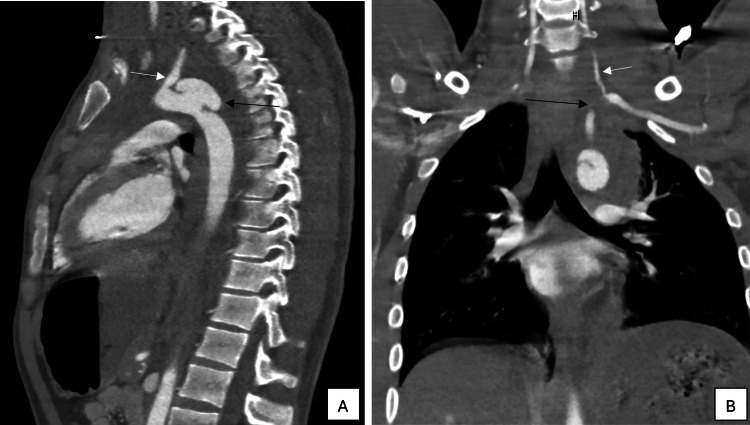 Figure 1
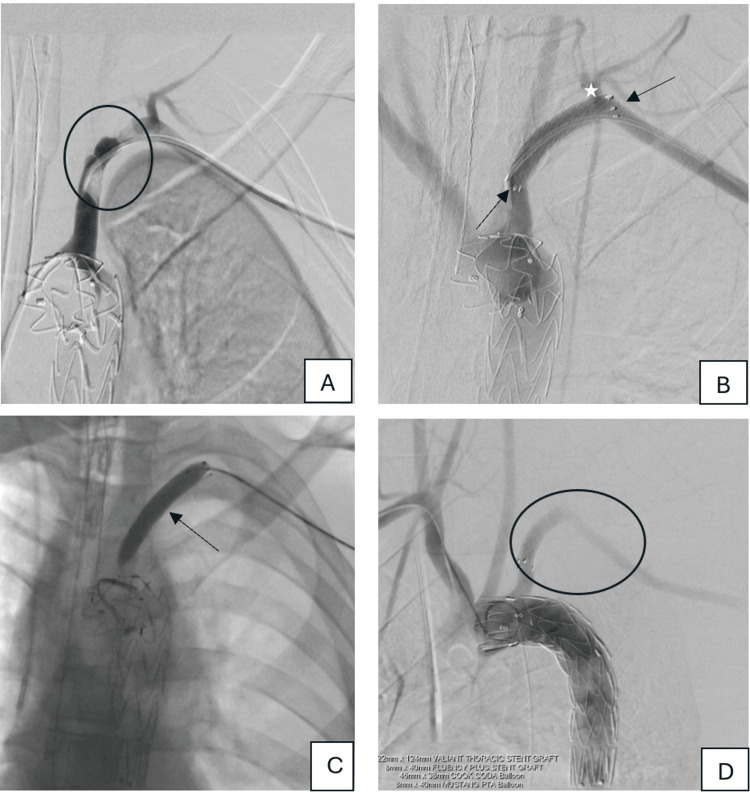 Figure 2
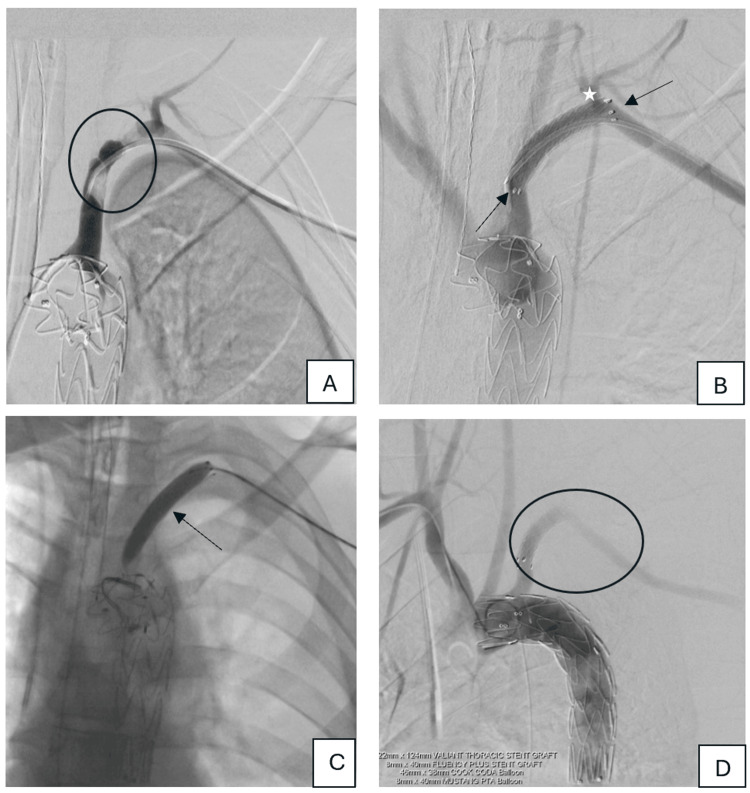 Figure 3
Peer Reviews
No public reviews on file for this paper yet. If you reviewed it on a platform where reviews are public (OpenReview, ICLR, NeurIPS, ICML), you can paste yours below so the community can read it here.
Videos
No videos yet. Explain this paper in a talk, walkthrough, or lecture? Add one.
Taxonomy
TopicsAortic Disease and Treatment Approaches · Aortic aneurysm repair treatments · Vascular Procedures and Complications