Menstrual-related symptoms and absence from school among young people in Sweden: a stratified, randomized, population-based survey
Klara Abrahamsson, Eva Åkerman, Sara Ström, Lisa Söderman, Henrik Källberg, Marie Klingberg-Allvin

TL;DR
This study finds that most young people in Sweden experience menstrual-related symptoms, which lead to school absences, especially among those from immigrant backgrounds or with lower parental education.
Contribution
The study is the first to use population-based data in Sweden to estimate the prevalence of menstrual-related symptoms and their impact on school absence.
Findings
91.43% of respondents reported menstrual-related symptoms, with 13.70% missing school due to these symptoms.
Foreign-born individuals and those with lower parental education had higher odds of school absence due to menstrual symptoms.
Headaches, tiredness, and concentration difficulties were the most common symptoms leading to school absence.
Abstract
Menstrual-related symptoms such as menstrual pain and heavy bleeding impact individuals’ health, quality of life and can limit the ability to engage in daily life activities, including school. Menstrual-related symptoms thus risk reinforcing existing gender inequalities in health among young people, making it an issue of equal rights and public health concerns. No previous study has estimated the prevalence of menstrual-related symptoms and subsequent school absences in Sweden by using population-based data. The study aimed to estimate the prevalence of menstrual-related symptoms and school absence among young people aged 16–29 in Sweden, and to examine associations between symptoms, absence, and sociodemographic factors. A sample (n = 5,483) of individuals aged 16–29 was drawn from a population-based cross-sectional study which used stratified random sampling. We used logistic…
Genes, proteins, chemicals, diseases, species, mutations and cell lines named across the full text — each resolved to its canonical identifier and authoritative record.
Click any figure to enlarge with its caption.
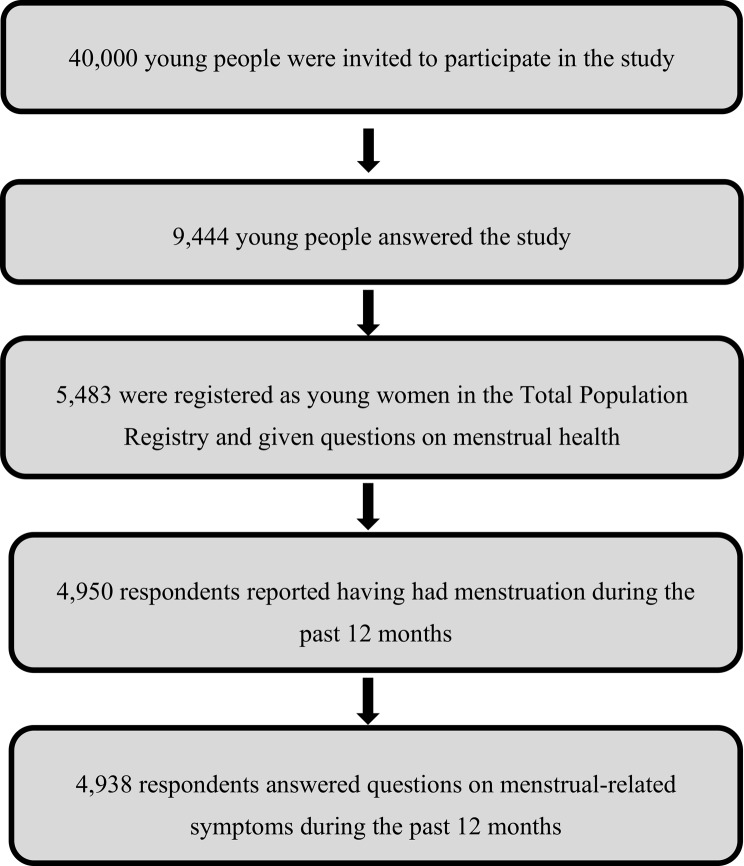 Figure 1
Peer Reviews
No public reviews on file for this paper yet. If you reviewed it on a platform where reviews are public (OpenReview, ICLR, NeurIPS, ICML), you can paste yours below so the community can read it here.
Videos
No videos yet. Explain this paper in a talk, walkthrough, or lecture? Add one.
Taxonomy
TopicsMenstrual Health and Disorders