Dual omics comparison: how Agrobacterium tumefaciens and Agrobacterium rhizogenes modulate gene expression and metabolism in Hypericum perforatum L
Rajendran K. Selvakesavan, Maria Nuc, Matam Pradeep, Paweł Krajewski, Gregory Franklin

TL;DR
This study explores how St. John's wort defends itself against Agrobacterium, revealing changes in gene activity and metabolism that hinder genetic modification.
Contribution
The study provides new insights into the molecular mechanisms of plant resistance to Agrobacterium transformation using dual omics analysis.
Findings
Transcriptomic analysis shows strong induction of defense-related genes like WRKY, MYB, and ERF in St. John's wort after Agrobacterium exposure.
Metabolomic data reveals increased production of defense-related xanthones such as 6-deoxyisojacareubin and gemixanthone A.
Flavonoid biosynthesis is suppressed, suggesting a reallocation of resources to more effective defense compounds.
Abstract
Agrobacterium -mediated transformation is a fundamental method for the genetic modification of plants. However, several important crops and medicinal plants are recalcitrant to this process, hindering the application of modern functional genomics and genetic improvement tools. Hypericum perforatum L. (St. John’s wort), a valuable medicinal plant due to its secondary metabolites, is particularly recalcitrant to transformation mediated by Agrobacterium tumefaciens, and the molecular basis for this resistance remains unclear. This study was conducted to investigate the defense responses of H. perforatum after co-cultivation with A. tumefaciens and Agrobacterium rhizogenes through an integrative transcriptomic and metabolomic approach. Transcriptome profiling revealed extensive reprogramming of gene expression in response to both Agrobacterium strains. Core genes for signal transduction,…
Genes, proteins, chemicals, diseases, species, mutations and cell lines named across the full text — each resolved to its canonical identifier and authoritative record.
Click any figure to enlarge with its caption.
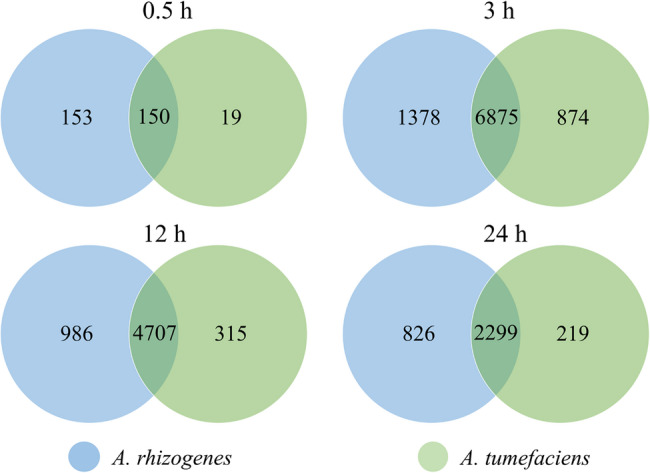 Figure 1
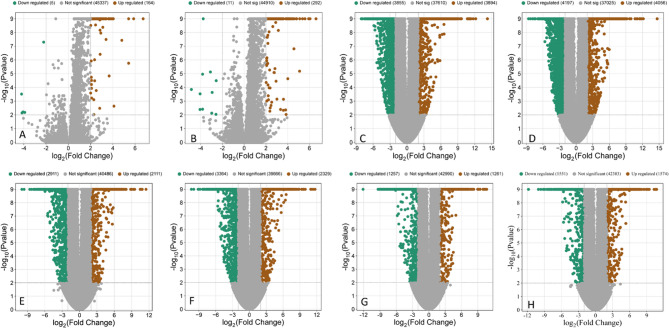 Figure 2
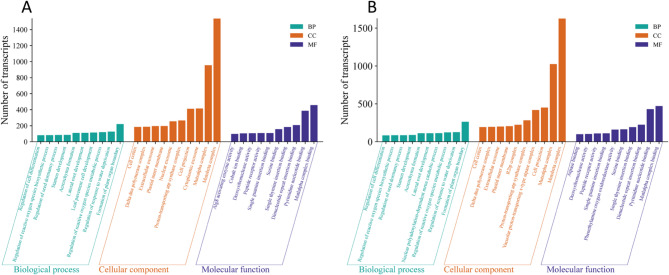 Figure 3
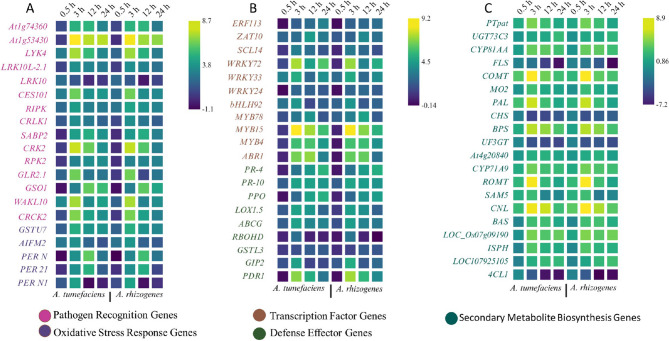 Figure 4
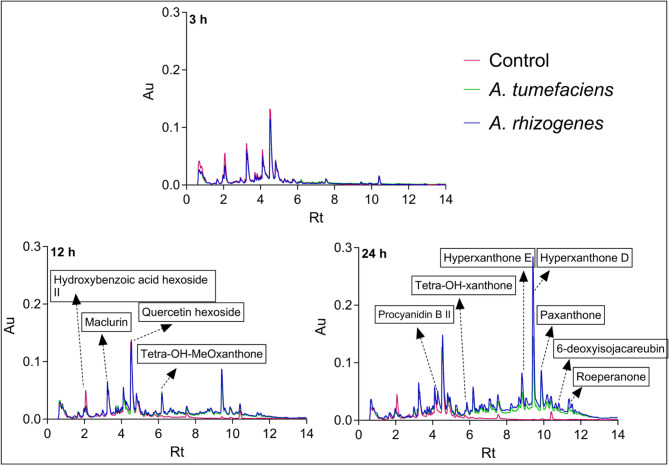 Figure 5
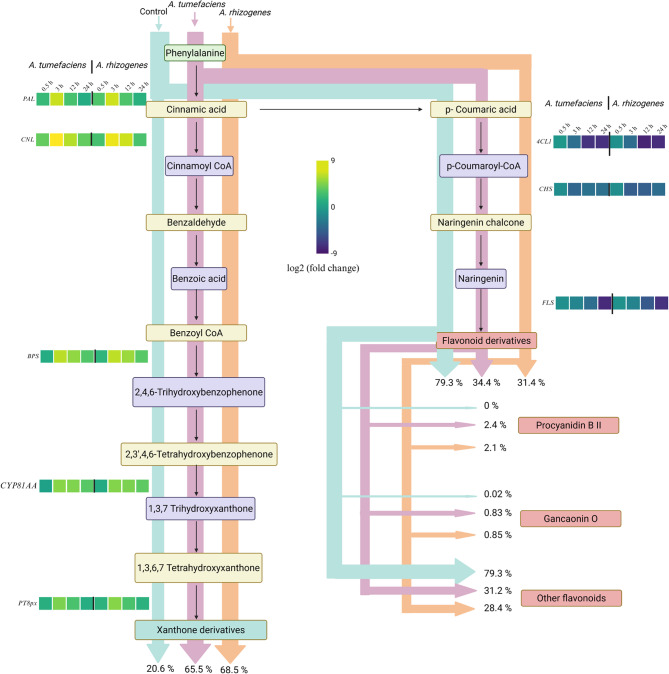 Figure 6
Peer Reviews
No public reviews on file for this paper yet. If you reviewed it on a platform where reviews are public (OpenReview, ICLR, NeurIPS, ICML), you can paste yours below so the community can read it here.
Videos
No videos yet. Explain this paper in a talk, walkthrough, or lecture? Add one.
Taxonomy
TopicsPlant tissue culture and regeneration · Plant Molecular Biology Research · Plant nutrient uptake and metabolism