Classifier-driven generative adversarial networks for enhanced antimicrobial peptide design
Michaela Areti Zervou, Effrosyni Doutsi, Yannis Pantazis, Panagiotis Tsakalides

TL;DR
This paper introduces a new AI method for designing better antimicrobial peptides by improving the training process of generative models.
Contribution
The novel cdGAN framework integrates classifier guidance directly into the loss function, enabling adaptive and diverse antimicrobial peptide generation.
Findings
cdGAN outperforms traditional guided-GAN methods in generating effective antimicrobial peptides.
cdGAN's multi-task classifier based on ESM2 improves the simultaneous optimization of antimicrobial activity and structural properties.
The framework achieves performance comparable to or better than established AMP design techniques.
Abstract
The development of antimicrobial peptides (AMPs) presents a promising approach to addressing antibiotic-resistant pathogens. Computational methods, such as Feedback Generative Adversarial Networks (FBGANs), have demonstrated strong performance in optimizing AMP design. FBGAN operates as a classifier-guided Generative Adversarial Network (GAN), refining training data by replacing them with the classifier’s most accurate predictions based on a predefined threshold. However, this method may introduce bias and constrain the diversity and quality of the generated peptides. To address these limitations, we propose a novel classifier-driven GAN (cdGAN) framework that seamlessly integrates classifier predictions into the generative model’s loss function. This enables an adaptive, end-to-end learning process that enhances AMP generation without requiring explicit data modifications. By embedding…
Genes, proteins, chemicals, diseases, species, mutations and cell lines named across the full text — each resolved to its canonical identifier and authoritative record.
Click any figure to enlarge with its caption.
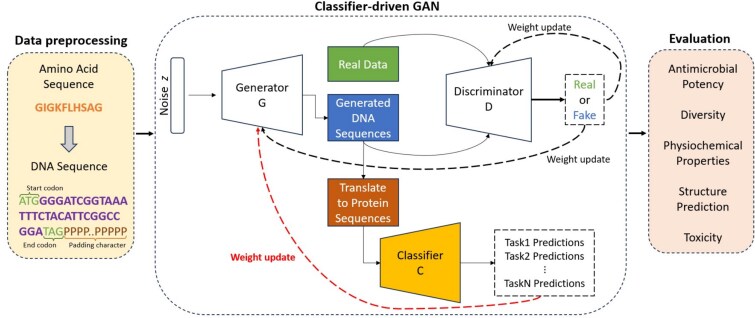 Figure 1
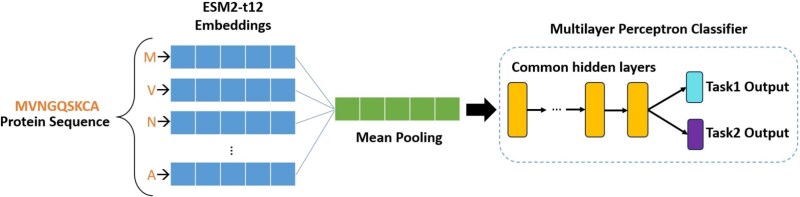 Figure 2
 Figure 3
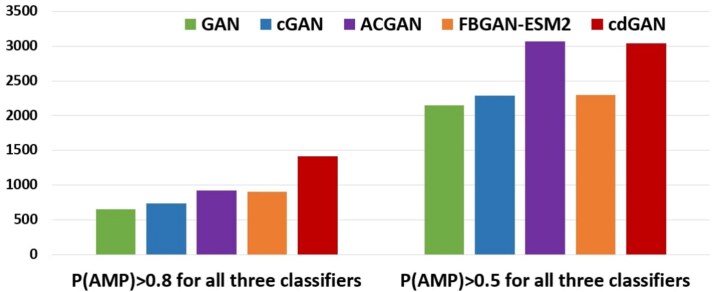 Figure 4
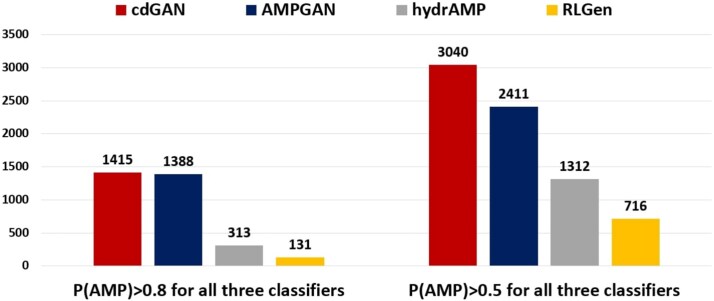 Figure 5
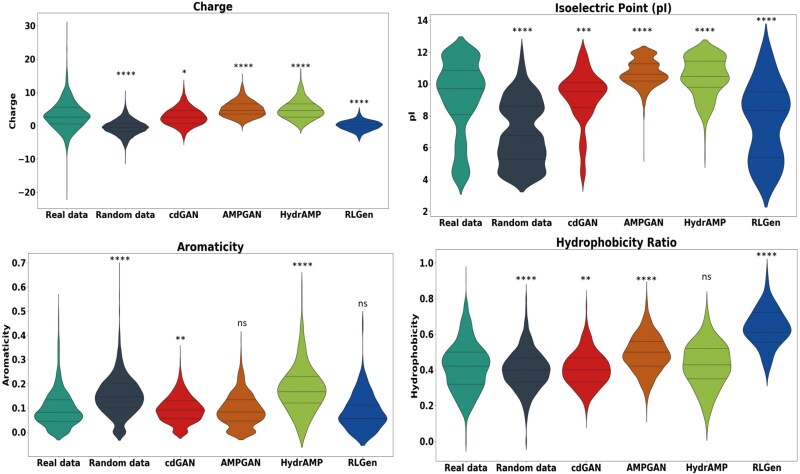 Figure 6
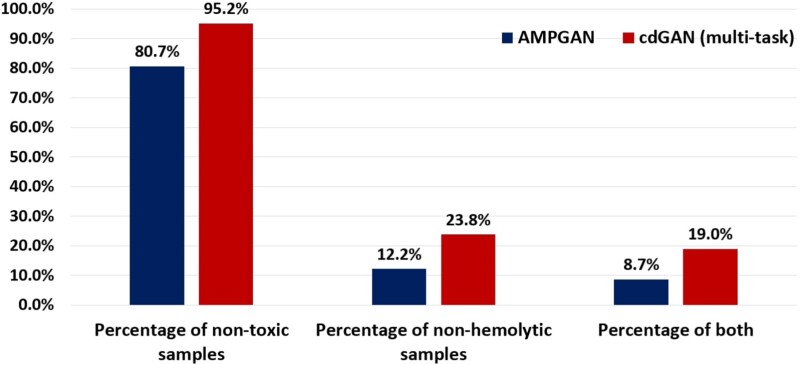 Figure 7
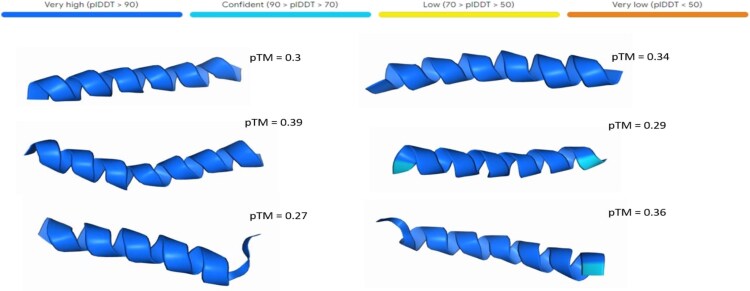 Figure 8
Peer Reviews
No public reviews on file for this paper yet. If you reviewed it on a platform where reviews are public (OpenReview, ICLR, NeurIPS, ICML), you can paste yours below so the community can read it here.
Videos
No videos yet. Explain this paper in a talk, walkthrough, or lecture? Add one.
Taxonomy
TopicsAntimicrobial Peptides and Activities · Biochemical and Structural Characterization · vaccines and immunoinformatics approaches