Triangular Neural Synchronization Patterns in Visual Impairment: A Comprehensive Case Series Exploring Multi-node Network Dynamics and the Neural Triangle Index
Akira Kimura

TL;DR
This study explores triangular brain activity patterns in visually impaired individuals, introducing a new biomarker called the Neural Triangle Index to better understand compensatory brain changes.
Contribution
The study introduces the Neural Triangle Index as a novel biomarker for multi-node neuroplasticity in visual impairment.
Findings
Congenitally blind participants showed significantly higher Neural Triangle Index values compared to acquired blind individuals and sighted controls.
Alpha-band coherence and phase-locking values were enhanced in congenitally blind participants, indicating stronger frontal synchronization.
Distinctive triangular timing patterns were observed in congenital blindness, showing tight frontal and extended fronto-parietal coordination.
Abstract
Background: Compensatory neural plasticity in visual impairment involves complex reorganization of multi-node networks that goes beyond conventional bilateral connection analysis. Triangular synchronization patterns, representing coordinated activity among three cortical sites simultaneously, remain unexplored despite their potential to reveal fundamental mechanisms underlying compensatory neuroplasticity. Objective: This study aimed to conduct a case series examining triangular neural synchronization patterns in visual impairment and introduce the Neural Triangle Index (NTI) as a proof-of-concept biomarker for multi-node neuroplasticity. Methods: We studied seven participants: four with congenital blindness, two with acquired blindness, and one sighted control. Participants performed simulated navigation tasks during EEG recording from AF3, AF4, and Pz electrodes. We computed…
Genes, proteins, chemicals, diseases, species, mutations and cell lines named across the full text — each resolved to its canonical identifier and authoritative record.
Click any figure to enlarge with its caption.
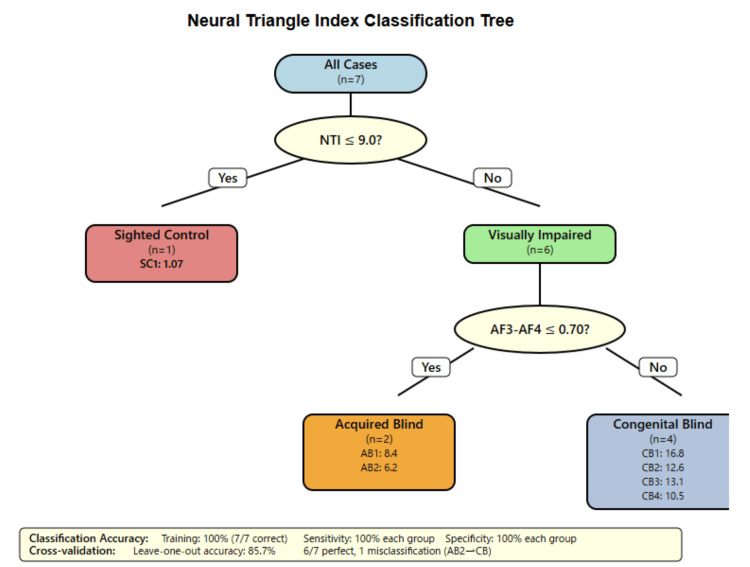 Figure 1
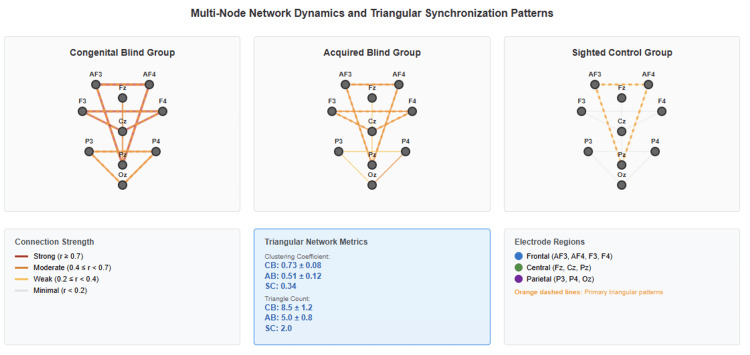 Figure 2
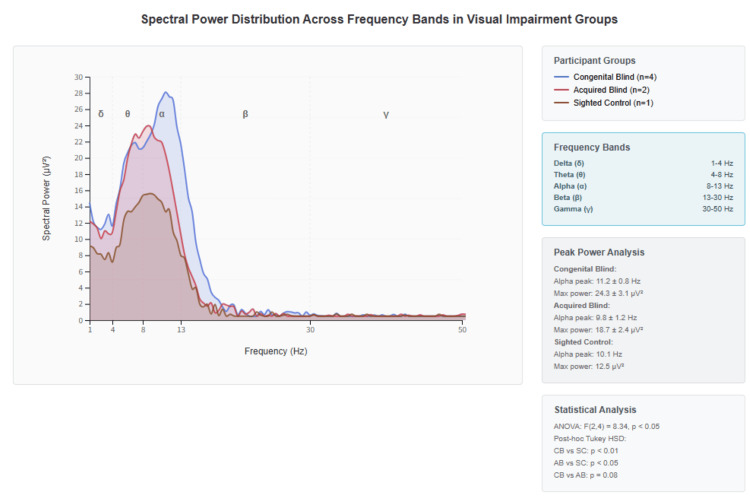 Figure 3
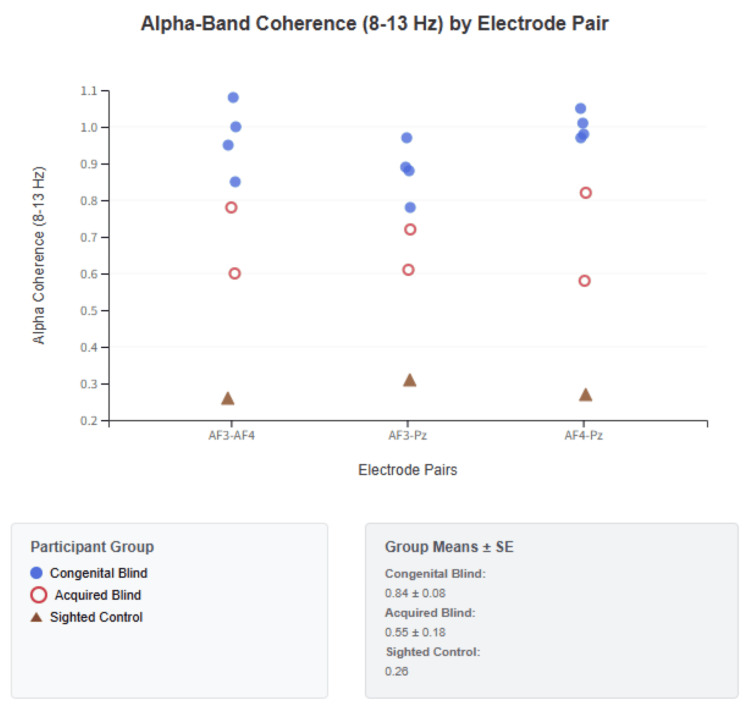 Figure 4
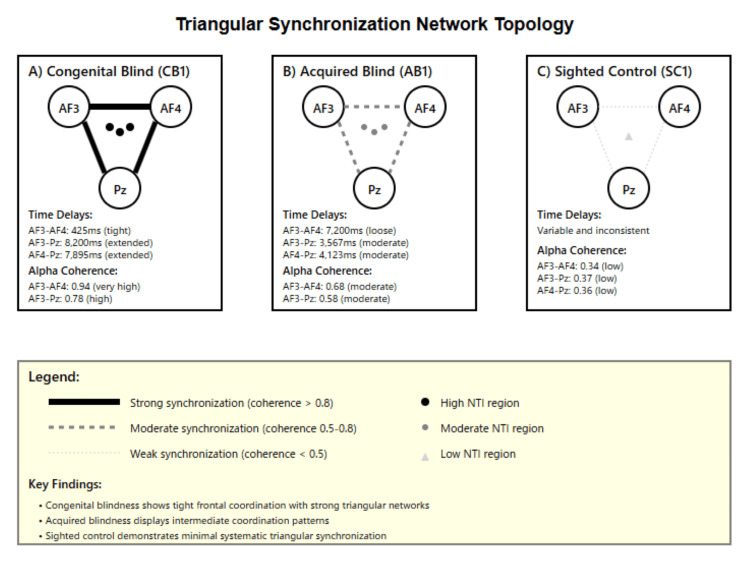 Figure 5
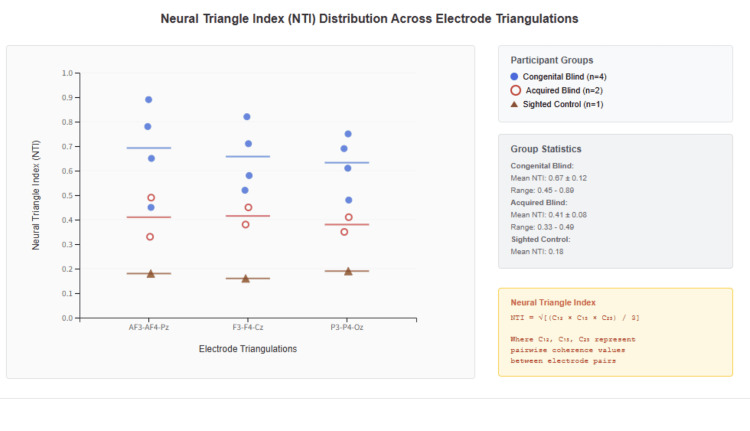 Figure 6
Peer Reviews
No public reviews on file for this paper yet. If you reviewed it on a platform where reviews are public (OpenReview, ICLR, NeurIPS, ICML), you can paste yours below so the community can read it here.
Videos
No videos yet. Explain this paper in a talk, walkthrough, or lecture? Add one.
Taxonomy
TopicsNeural dynamics and brain function · Visual perception and processing mechanisms · EEG and Brain-Computer Interfaces