Systematic intensive therapy in addition to continuous glucose monitoring in adults with type 1 diabetes: a multicentre, open-label, randomised controlled trial
Arndís F. Ólafsdóttir, Kari-Anne Sveen, Magnus Wijkman, Sara Hallström, Per-Henrik Nilsson, Sofia Sterner Isaksson, Helene Holmer, Marie Ekström, Henrik Imberg, Marcus Lind

TL;DR
A study found that weekly digital counseling based on glucose monitoring data significantly improves blood sugar control in adults with type 1 diabetes who aren't meeting treatment goals.
Contribution
This is the first trial to show that structured, individualized digital counseling with CGM data improves glycemic control in adults with suboptimally managed type 1 diabetes.
Findings
Systematic intensive therapy reduced HbA1c by 0.98% compared to conventional therapy.
No severe adverse events occurred in the intensive therapy group.
The intervention achieved a statistically significant improvement in glycemic control without safety concerns.
Abstract
Although continuous glucose monitor/intermittent scanning continuous glucose monitor (CGM/isCGM) is widely used for glucose monitoring, many adults with type 1 diabetes (T1D) still fail to achieve recommended glycaemic targets. We aimed to evaluate whether digital distance counselling based on CGM data could improve glycaemic control in adults with T1D and suboptimal control. In this multicentre, open-label, randomised controlled trial, adults with T1D and HbA1c ≥58 mmol/mol, already using CGM/isCGM with insulin therapy (multiple daily injections or pump), were enrolled across eight sites in Sweden and Norway. Participants were allocated (1:1) via a minimisation algorithm to receive either systematic intensive therapy (SIT) or conventional therapy (CT). The SIT group received weekly distance counselling, including CGM interpretation, if mean glucose was ≥8·4 mmol/L, during an 18-week…
Genes, proteins, chemicals, diseases, species, mutations and cell lines named across the full text — each resolved to its canonical identifier and authoritative record.
Click any figure to enlarge with its caption.
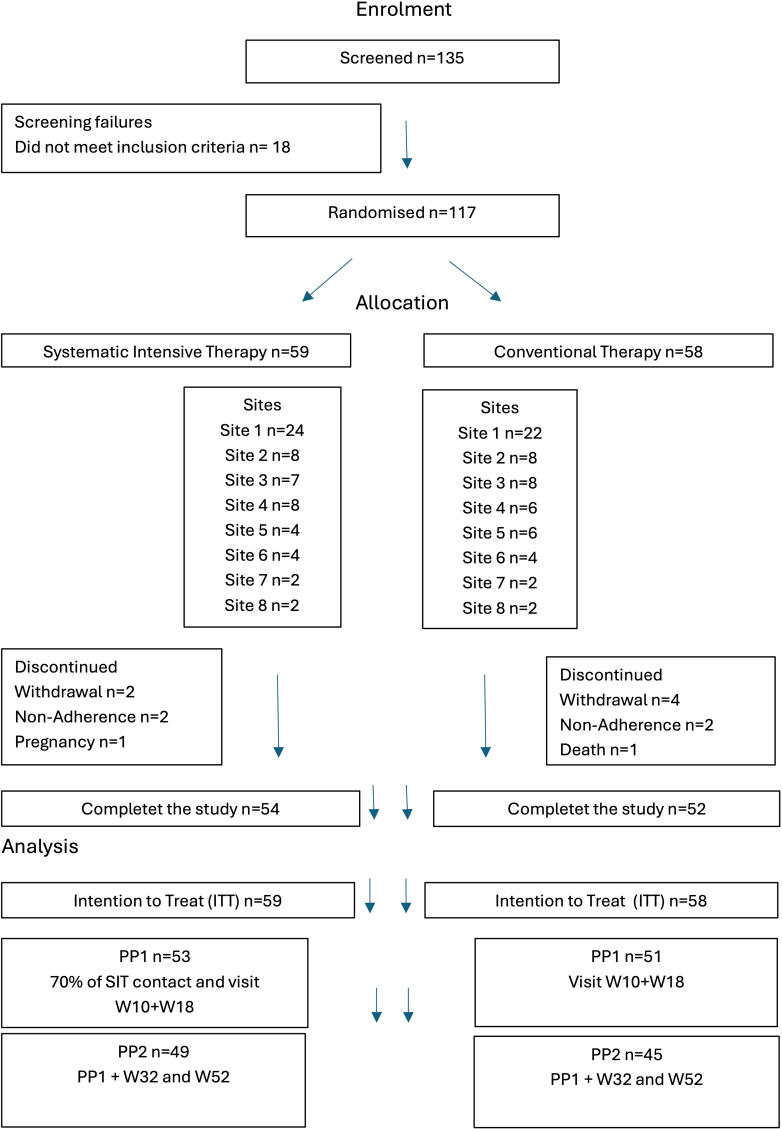 Figure 1
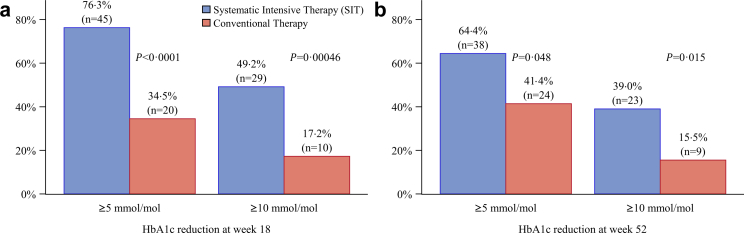 Figure 2
Peer Reviews
No public reviews on file for this paper yet. If you reviewed it on a platform where reviews are public (OpenReview, ICLR, NeurIPS, ICML), you can paste yours below so the community can read it here.
Videos
No videos yet. Explain this paper in a talk, walkthrough, or lecture? Add one.
Taxonomy
TopicsDiabetes Management and Research · Pancreatic function and diabetes · Diabetes and associated disorders