Association between rotator cuff muscle cross-sectional area and dorsal scapular artery blood flow velocity in patients with rotator cuff tears
Keita Kawabuchi, Masatoshi Nakamura

TL;DR
This study explores how rotator cuff muscle atrophy relates to blood flow in the dorsal scapular artery in patients with rotator cuff tears.
Contribution
The study identifies a novel negative association between infraspinatus muscle atrophy and increased blood flow velocity in the dorsal scapular artery.
Findings
Infraspinatus cross-sectional area at the glenoid face level negatively correlates with dorsal scapular artery peak systolic velocity.
Other rotator cuff muscles showed no significant associations with hemodynamic changes.
Findings suggest muscle atrophy may influence periscapular blood flow dynamics.
Abstract
Atrophy of the rotator cuff (RC) muscles in the context of in patient's RC tears often results in humeral instability and scapular compensation, leading to symptoms like pain. Moreover, despite reports of increased in the peak systolic velocity (PSV) of the dorsal scapular artery (DSA) as a contributing factor, the specific relationship between RC atrophy and these hemodynamic changes has not been elucidated. This study aimed to quantitatively investigate the association between the cross-sectional area (CSA) of RC muscles and the PSV of the DSA. Thirty-eight patients with RC tears were included. The CSA of the supraspinatus, infraspinatus (ISP), and subscapularis muscles were measured on T1-weighted magnetic resonance images at the glenoid face (GF) and scapular spine levels. The PSV of the DSA was assessed by Doppler ultrasonography. Statistical analyses were conducted using linear…
Genes, proteins, chemicals, diseases, species, mutations and cell lines named across the full text — each resolved to its canonical identifier and authoritative record.
Click any figure to enlarge with its caption.
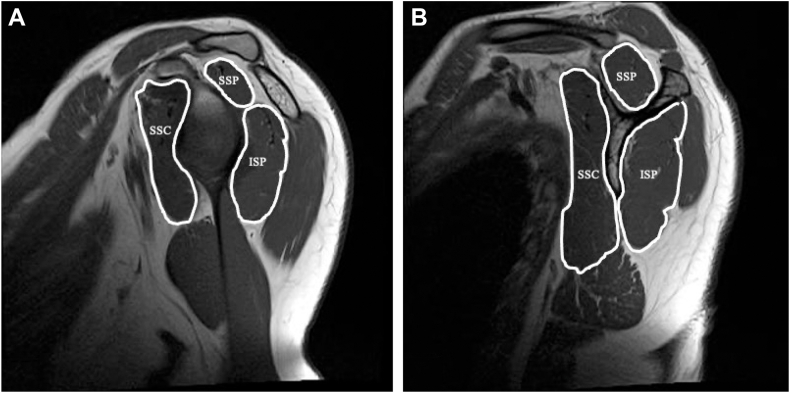 Figure 1
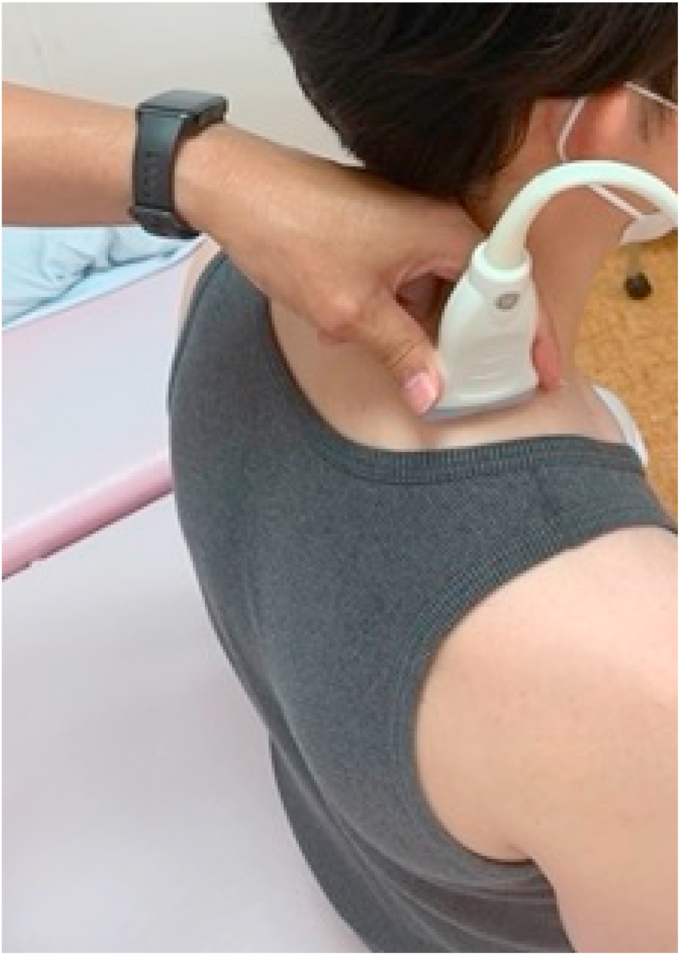 Figure 2
Peer Reviews
No public reviews on file for this paper yet. If you reviewed it on a platform where reviews are public (OpenReview, ICLR, NeurIPS, ICML), you can paste yours below so the community can read it here.
Videos
No videos yet. Explain this paper in a talk, walkthrough, or lecture? Add one.
Taxonomy
TopicsShoulder Injury and Treatment · Shoulder and Clavicle Injuries · Cardiovascular Syncope and Autonomic Disorders