Modified body mass index as a novel prognostic indicator of in-hospital mortality after off-pump coronary artery bypass grafting: A nationwide multicenter cohort study
Shipan Wang, Yilin Li, Hao Han, Tianxu Han, Zhiran Yang, Youjin Li, Haiping Yang, Hongli Li, Gang Liu, Minjia Zhu, Jian Huang, Qingwu Zhao, Jihong Liu, Haibin Li, Shuaitong Zhang, Yuan Xue, Hongjia Zhang, Haiyang Li

TL;DR
A new modified BMI measure can predict hospital death risk in heart surgery patients, especially those with poor nutrition or other health issues.
Contribution
The study introduces mBMI as a novel prognostic indicator for in-hospital mortality in OPCABG patients.
Findings
Lower mBMI is linked to higher in-hospital mortality and adverse outcomes after OPCABG.
The association is strongest in women, patients with CKD, and those with severe comorbidities.
Targeted nutritional interventions may improve outcomes for malnourished OPCABG patients.
Abstract
•Clinically accessible mBMI was used to assess preoperative nutritional status.•Lower mBMI was associated with higher in-hospital mortality risk.•The association was stronger in women, CKD, and severely comorbid patients.•Preoperative mBMI helps identify high-risk patients with malnutrition.•Targeted nutrition may improve outcomes in malnourished OPCABG patients. Clinically accessible mBMI was used to assess preoperative nutritional status. Lower mBMI was associated with higher in-hospital mortality risk. The association was stronger in women, CKD, and severely comorbid patients. Preoperative mBMI helps identify high-risk patients with malnutrition. Targeted nutrition may improve outcomes in malnourished OPCABG patients. Malnutrition is a prevalent yet underrecognized comorbidity in coronary artery bypass grafting (CABG) patients. Modified BMI (mBMI), defined as albumin × BMI, has…
Genes, proteins, chemicals, diseases, species, mutations and cell lines named across the full text — each resolved to its canonical identifier and authoritative record.
Click any figure to enlarge with its caption.
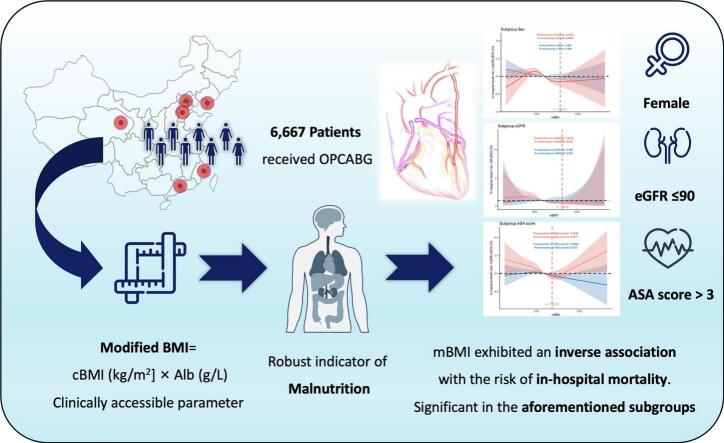 Figure 1
 Figure 2
 Figure 3
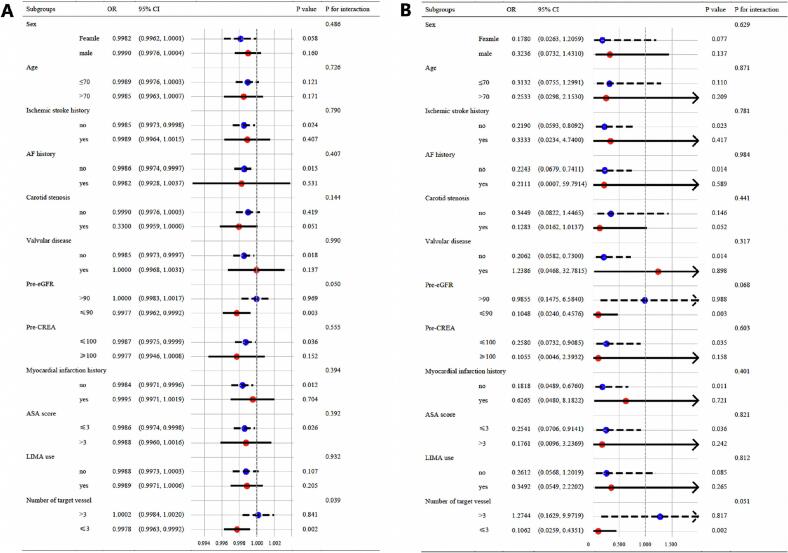 Figure 4
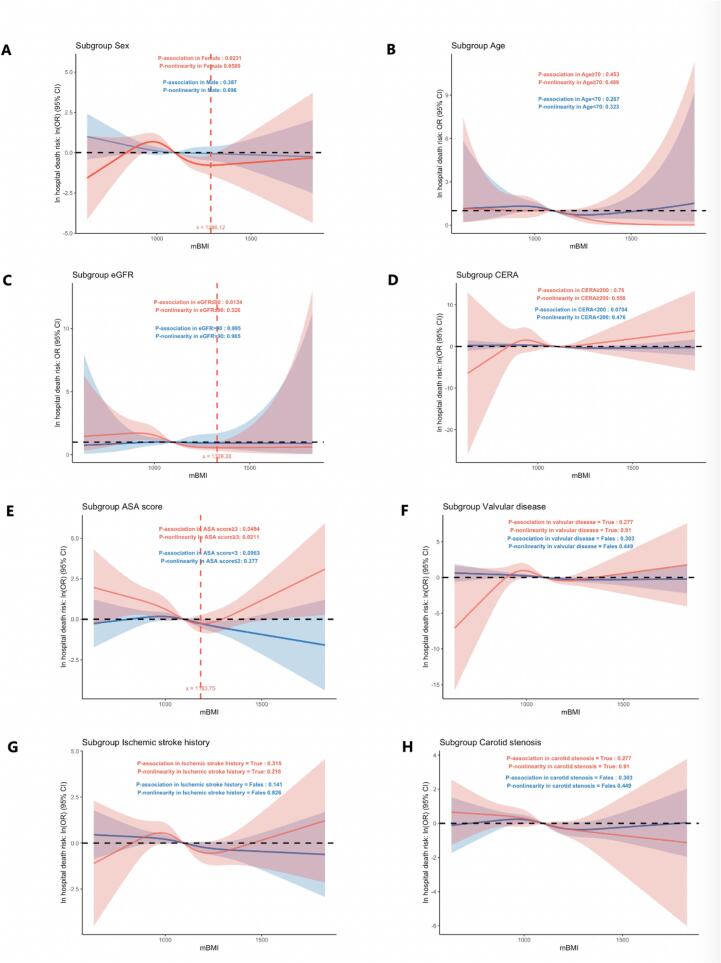 Figure 5
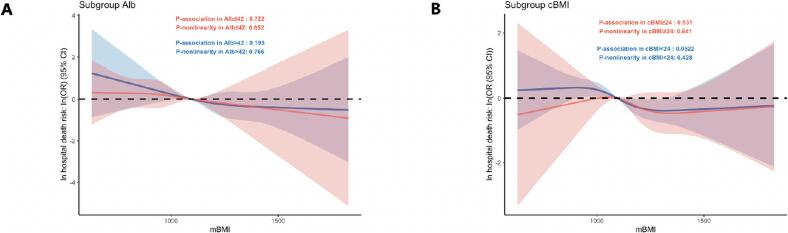 Figure 6
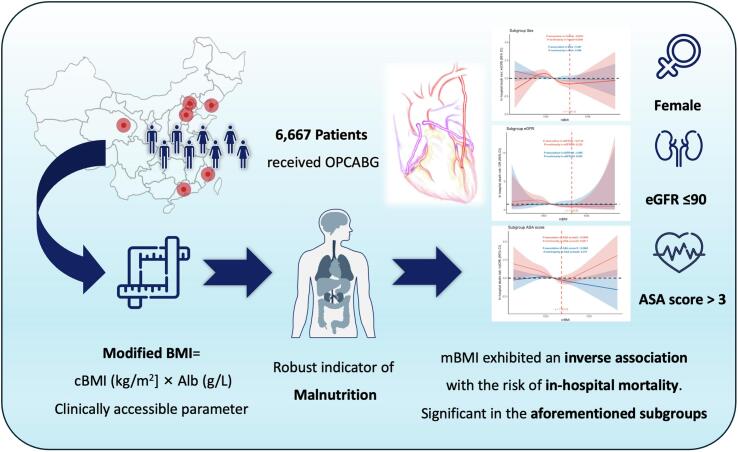 Figure 7
Peer Reviews
No public reviews on file for this paper yet. If you reviewed it on a platform where reviews are public (OpenReview, ICLR, NeurIPS, ICML), you can paste yours below so the community can read it here.
Videos
No videos yet. Explain this paper in a talk, walkthrough, or lecture? Add one.
Taxonomy
TopicsNutrition and Health in Aging · Cardiac, Anesthesia and Surgical Outcomes · Abdominal Surgery and Complications