Thoracic endovascular aortic repair for traumatic and non-traumatic rupture of the descending thoracic aorta: A 15-year single-centre experience
Ricarda Berkenheide, Rolf Alexander Jánosi, Fadi Al-Rashid, Daniel Messiha, Konstantinos Tsagakis, Christos Rammos, Sharaf-Eldin Shehada, Payam Akhyari, Thomas Schlosser, Tienush Rassaf, Julia Lortz

TL;DR
This study examines the outcomes of aortic repair surgery for traumatic and non-traumatic aortic ruptures over 15 years, finding better survival rates in traumatic cases.
Contribution
The study provides long-term outcome data for TEVAR in traumatic and non-traumatic aortic ruptures, identifying survival factors.
Findings
Traumatic rupture patients had significantly better survival rates compared to non-traumatic rupture patients.
Non-traumatic rupture patients had more long-term aortic complications and higher mortality rates.
Age, hypertension, complications, and rupture cause significantly affected survival.
Abstract
Ruptures of the descending thoracic aorta are life-threatening emergencies with traumatic and non-traumatic causes. Thoracic endovascular aortic repair (TEVAR) has become a key treatment, but long-term outcome data remain limited. This study aimed to review our experience with TEVAR in patients with traumatic or non-traumatic rupture and identify factors associated with post-TEVAR survival. Between 2001 and 2016, 56 patients (21 with traumatic rupture and 35 with non-traumatic rupture) underwent TEVAR at the West-German Heart and Vascular Center Essen, Germany. Data examined included demographics, comorbidities, biomarker levels, imaging results, intervention details, complications, and outcomes (30 days and follow-up). Patients with non-traumatic rupture were significantly older and had more cardiovascular comorbidities. Patients with traumatic rupture presented more frequently with…
Genes, proteins, chemicals, diseases, species, mutations and cell lines named across the full text — each resolved to its canonical identifier and authoritative record.
Click any figure to enlarge with its caption.
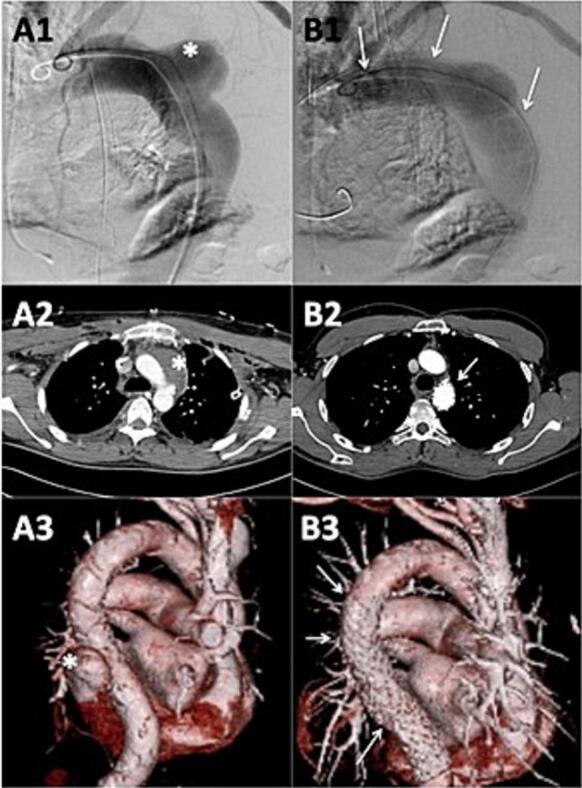 Figure 1
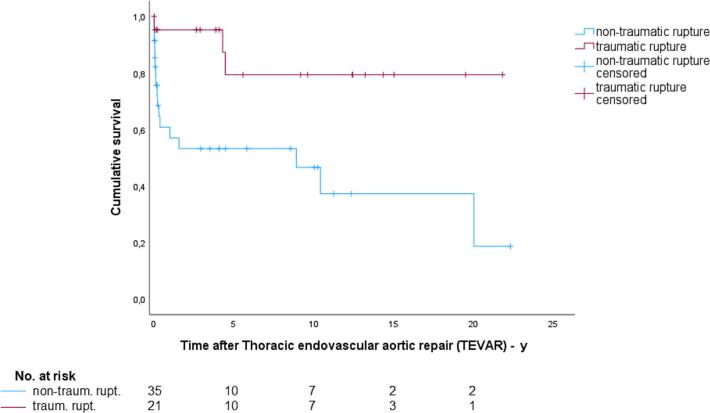 Figure 2
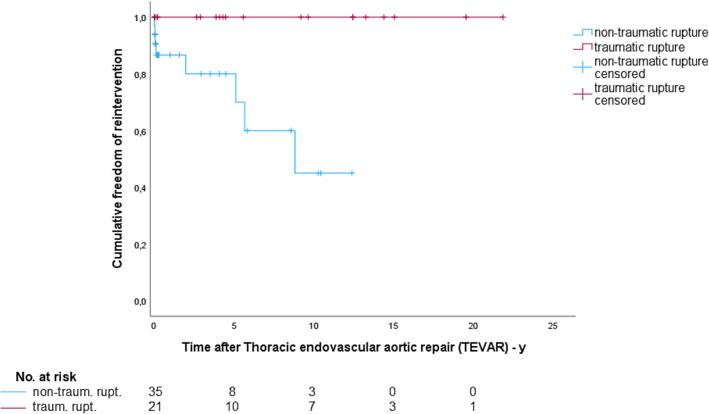 Figure 3
Peer Reviews
No public reviews on file for this paper yet. If you reviewed it on a platform where reviews are public (OpenReview, ICLR, NeurIPS, ICML), you can paste yours below so the community can read it here.
Videos
No videos yet. Explain this paper in a talk, walkthrough, or lecture? Add one.
Taxonomy
TopicsAortic Disease and Treatment Approaches · Trauma Management and Diagnosis · Aortic aneurysm repair treatments