Imaging findings in a male pediatric patient by central precocious puberty: A case report
Raisa Mahmudah, Radinda Amalia Nur Hayati, Harry Galuh Nugraha, Ahmad Fitrah, Tasiya Ocvianty

TL;DR
A 5-year-old boy with early puberty signs was diagnosed with a pituitary microadenoma through imaging and clinical evaluation.
Contribution
This case report highlights the use of neuroimaging in diagnosing pituitary microadenoma as a cause of central precocious puberty in a male pediatric patient.
Findings
The patient exhibited secondary sexual development consistent with Tanner stage 5 at age 5.
MRI revealed a pituitary microadenoma as the underlying cause of central precocious puberty.
Skeletal maturation showed a bone age advanced to that of an 11-year-old.
Abstract
Precocious puberty (PP) refers to the early onset of secondary sexual characteristics, occurring before 8 years of age in females and 9 in males. This condition commonly results from a premature activation of the hypothalamic-pituitary-gonadal (HPG) axis, a phenomenon identified as central precocious puberty (CPP). Central precocious puberty (CPP) in females is predominantly idiopathic, whereas in males, it is mostly caused by hypothalamic-pituitary lesions. Diagnosis is established through comprehensive clinical assessment, encompassing a thorough anamnesis from both the patient and their caregivers, detailed physical examination, and Tanner staging conducted by a pediatric endocrinologist. Neuroimaging, particularly brain MRI, is employed to detect intracranial anomalies or pituitary pathology, with pituitary microadenomas being a commonly observed finding. This report presents the…
Genes, proteins, chemicals, diseases, species, mutations and cell lines named across the full text — each resolved to its canonical identifier and authoritative record.
Click any figure to enlarge with its caption.
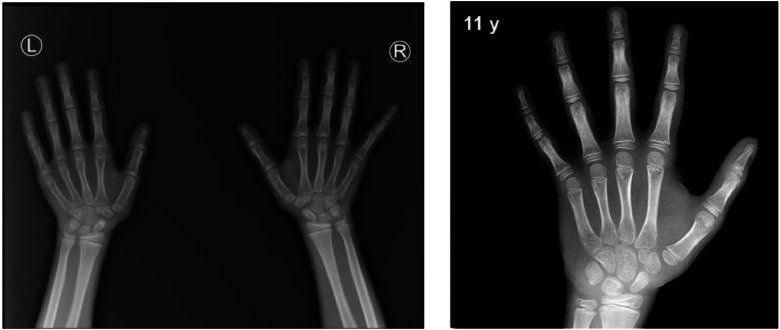 Figure 1
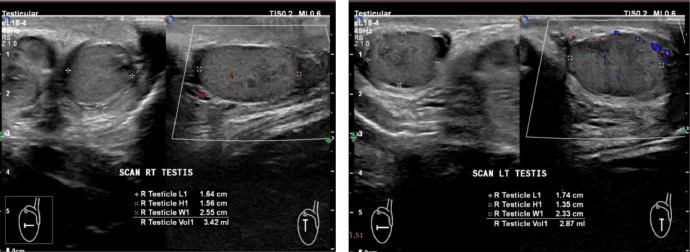 Figure 2
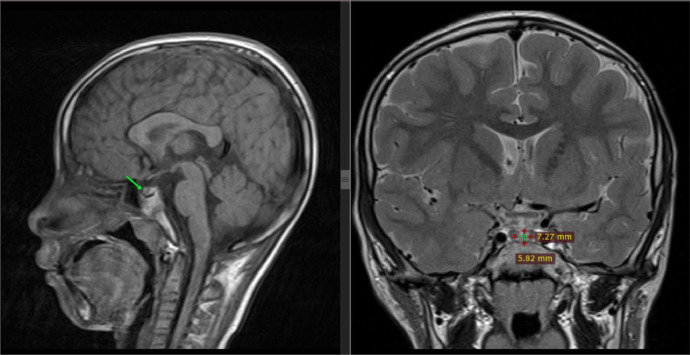 Figure 3
Peer Reviews
No public reviews on file for this paper yet. If you reviewed it on a platform where reviews are public (OpenReview, ICLR, NeurIPS, ICML), you can paste yours below so the community can read it here.
Videos
No videos yet. Explain this paper in a talk, walkthrough, or lecture? Add one.
Taxonomy
TopicsHypothalamic control of reproductive hormones · Pituitary Gland Disorders and Treatments · Growth Hormone and Insulin-like Growth Factors