Pharmacogenomics in pediatric oncology: Australian adolescent or young adult and caregiver perspectives
Claire Moore, Emma F. Magavern, Marliese Alexander, Safeera Y. Hussainy, Tracey Danaher, Rishi S. Kotecha, Kyall Homberg, Marion K. Mateos, Sophie Jessop, Tayla Stenta, Dhrita Khatri, Elizabeth Williams, Roxanne Dyas, Julian Stolper, David A. Elliott, Rachel Conyers

TL;DR
This study explores Australian adolescents and caregivers' views on using pharmacogenomic testing in pediatric oncology, highlighting support but also concerns like insurance discrimination and data security.
Contribution
The study uniquely includes adolescent and young adult perspectives on PGx testing in pediatric oncology, identifying barriers and autonomy issues.
Findings
98% of participants supported PGx testing for themselves or their children.
Insurance discrimination and data security were primary concerns among participants.
AYA patients wanted to be directly involved in PGx decisions but reported low autonomy scores.
Abstract
Preemptive pharmacogenomic (PGx) testing in pediatric oncology patients could reduce toxicity and improve efficacy of medications yet remains underutilized. Consumer identified implementation barriers have not been extensively explored nor included adolescent or young adult (AYA) patient perspectives. This study describes Australian pediatric oncology consumer perspectives on PGx testing, elucidating barriers to implementation. A theory-informed, quantitative survey was used to assess knowledge and attitudes toward PGx in 38 AYA patients and 66 caregivers. Additionally, AYAs were assessed for autonomy using a validated scale. Participants viewed PGx testing positively, and 98% at least “somewhat agreed” that they would want to be tested/want their child to be tested. Concerns were identified in both AYA patient and caregiver groups, primarily the possibility of insurance…
Genes, proteins, chemicals, diseases, species, mutations and cell lines named across the full text — each resolved to its canonical identifier and authoritative record.
Click any figure to enlarge with its caption.
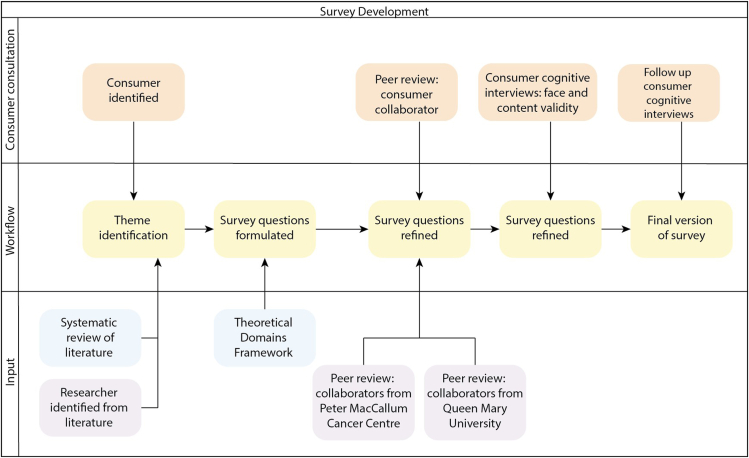 Figure 1
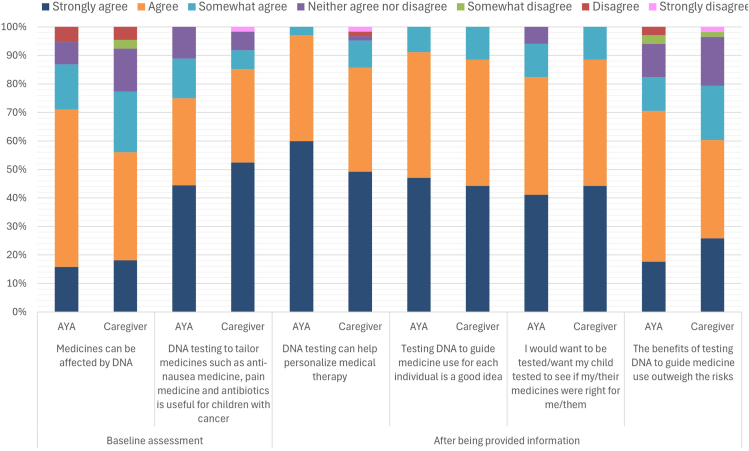 Figure 2
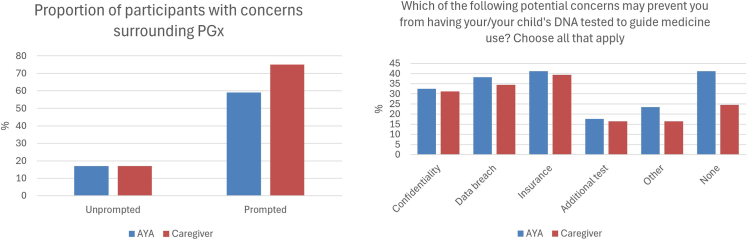 Figure 3
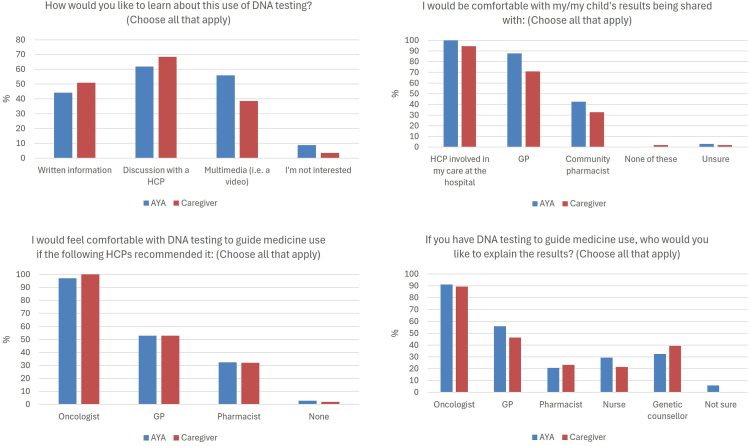 Figure 4
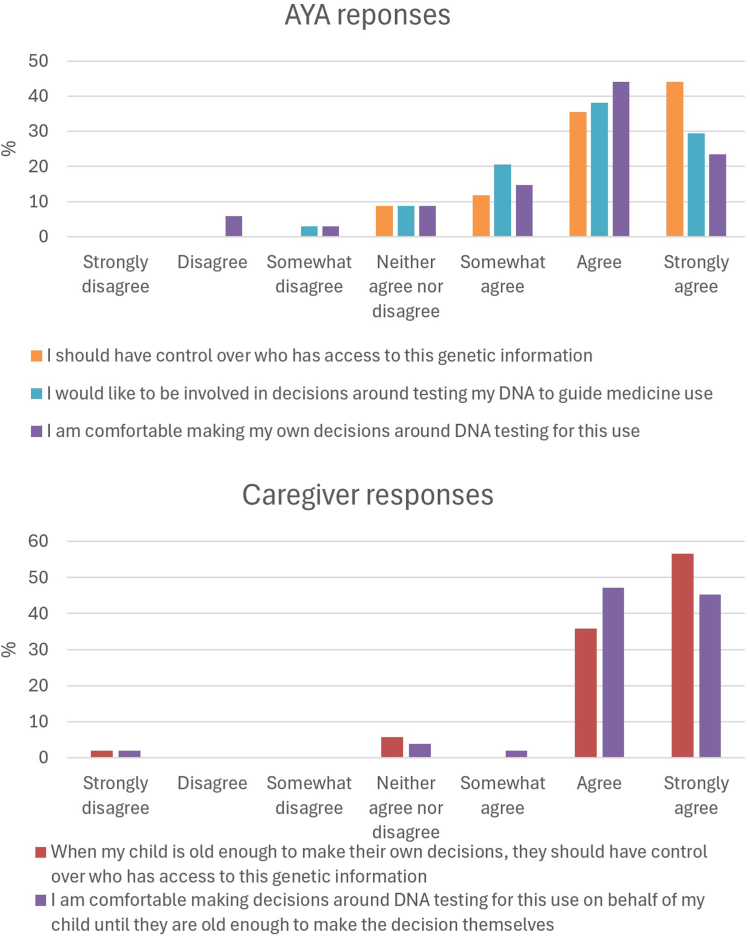 Figure 5
Peer Reviews
No public reviews on file for this paper yet. If you reviewed it on a platform where reviews are public (OpenReview, ICLR, NeurIPS, ICML), you can paste yours below so the community can read it here.
Videos
No videos yet. Explain this paper in a talk, walkthrough, or lecture? Add one.
Taxonomy
TopicsChildhood Cancer Survivors' Quality of Life · Pharmaceutical studies and practices · Pharmacogenetics and Drug Metabolism