Synthetic mechanoreceptor engineering: From genetic encoding to DNA nanotechnology-based reprogramming
Sihui Yang, Zhou Nie

TL;DR
This paper reviews how synthetic mechanoreceptors can be engineered using genetic and DNA nanotechnology methods to control cell signaling and fate.
Contribution
The paper introduces DNA-functionalized artificial mechanoreceptors that enable force-responsiveness in non-mechanosensitive receptors without genetic modification.
Findings
Genetic encoding and site-directed mutagenesis reprogram natural mechanoreceptors' force-response functions.
DNA nanotechnology enables precise control over receptor spatial organization and signal transduction.
DNA-based artificial mechanoreceptors offer a non-genetic approach for customized mechanotransduction applications.
Abstract
Precise modulation of mechanoreceptor-mediated signal transduction is crucial for decoding cellular mechanotransduction mechanisms and programming cell fate. This review provides a comprehensive summary of recent advances in engineering synthetic mechanoreceptors, spanning from protein-centric genetic encoding to DNA nanotechnology-based non-genetic reprogramming strategies. Genetic engineering strategies employ protein structure encoding and site-directed mutagenesis to reprogram force-response functions in natural mechanoreceptors. As a complementary non-genetic approach, DNA nanotechnology leverages its programmability, modularity, and predictable mechanical properties to achieve precise control over receptor functionalities. The flourishing development of DNA mechanosensitive nanodevices has provided a promising synthetic toolkit for manipulating mechanoreceptors, enabling precise…
Genes, proteins, chemicals, diseases, species, mutations and cell lines named across the full text — each resolved to its canonical identifier and authoritative record.
Click any figure to enlarge with its caption.
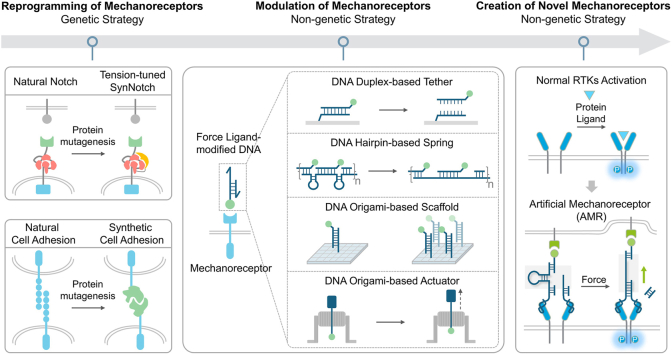 Figure 1
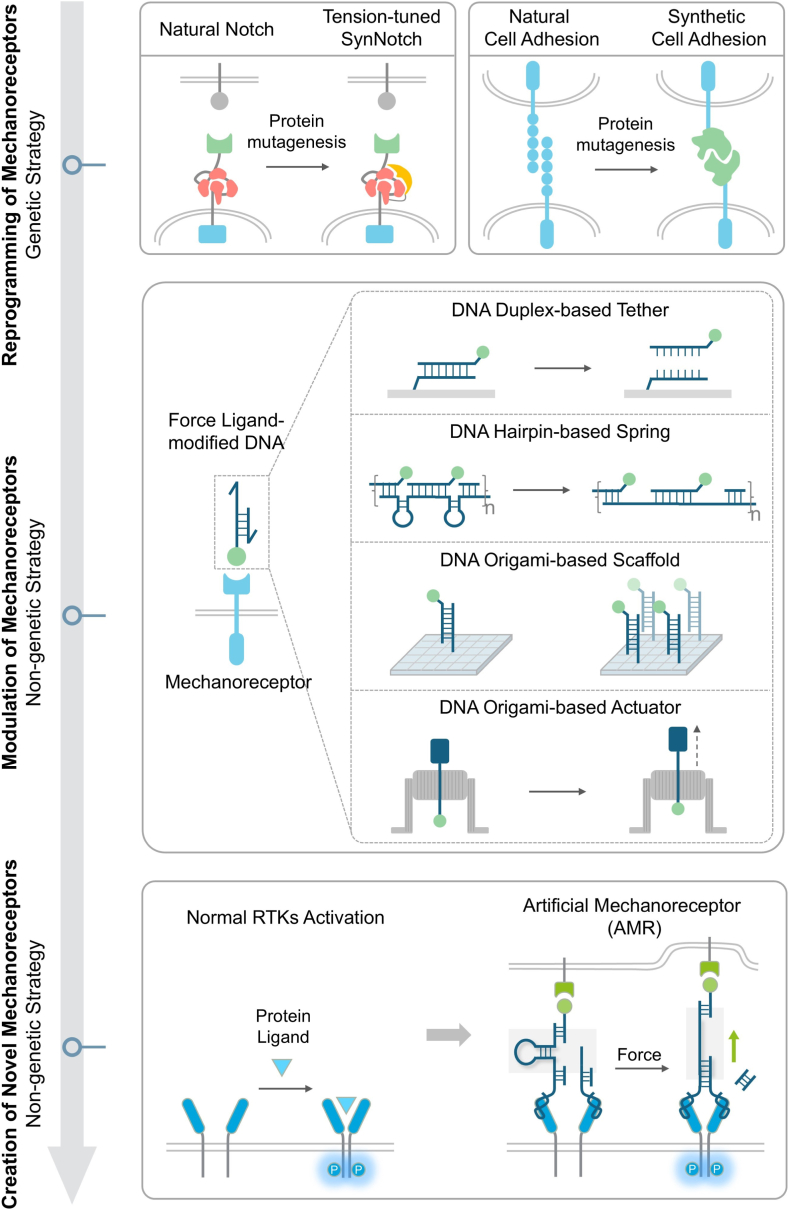 Figure 2
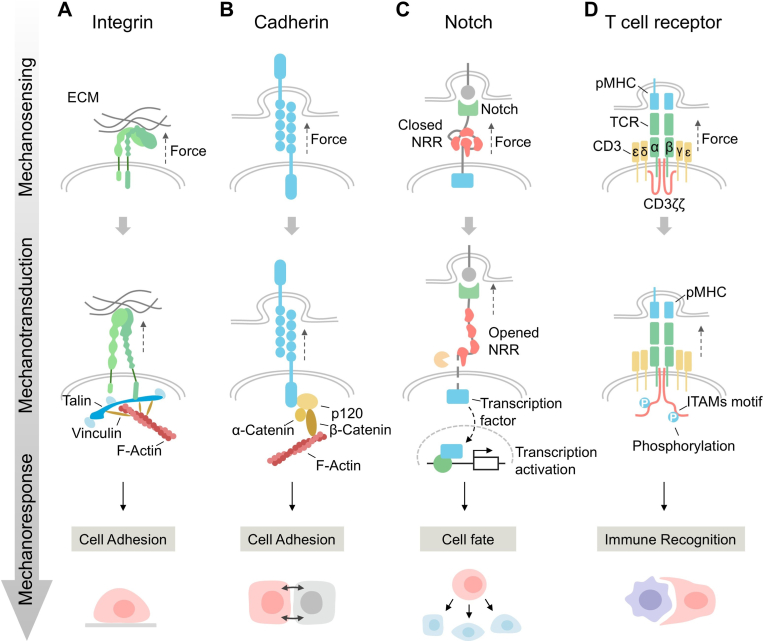 Figure 3
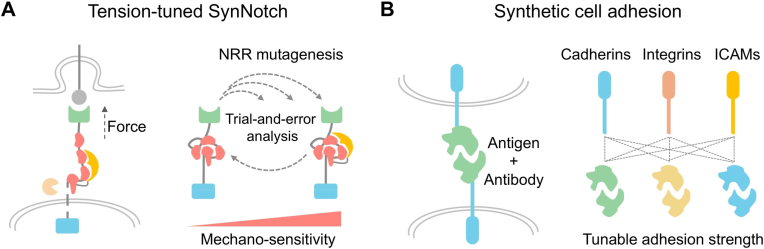 Figure 4
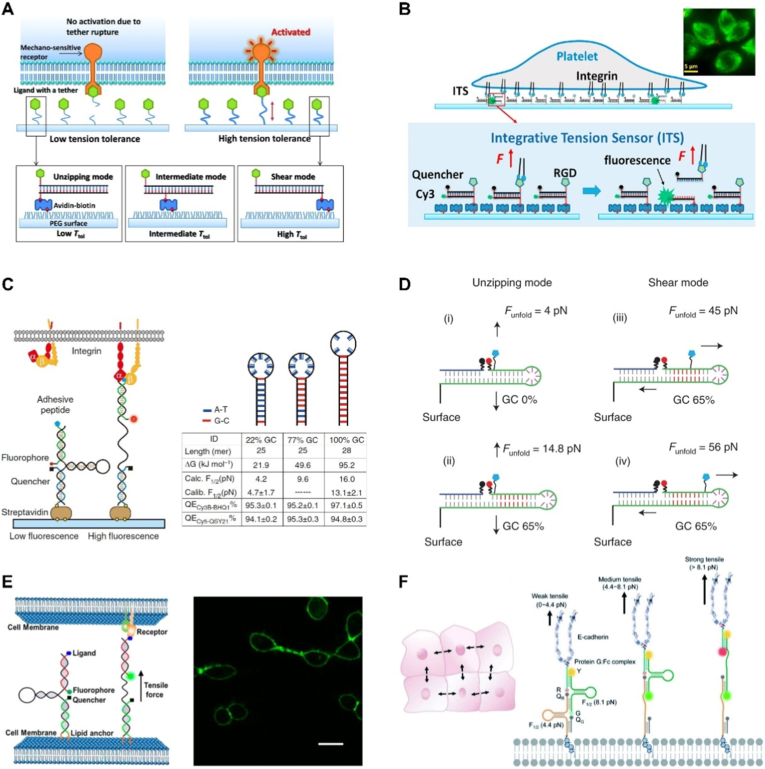 Figure 5
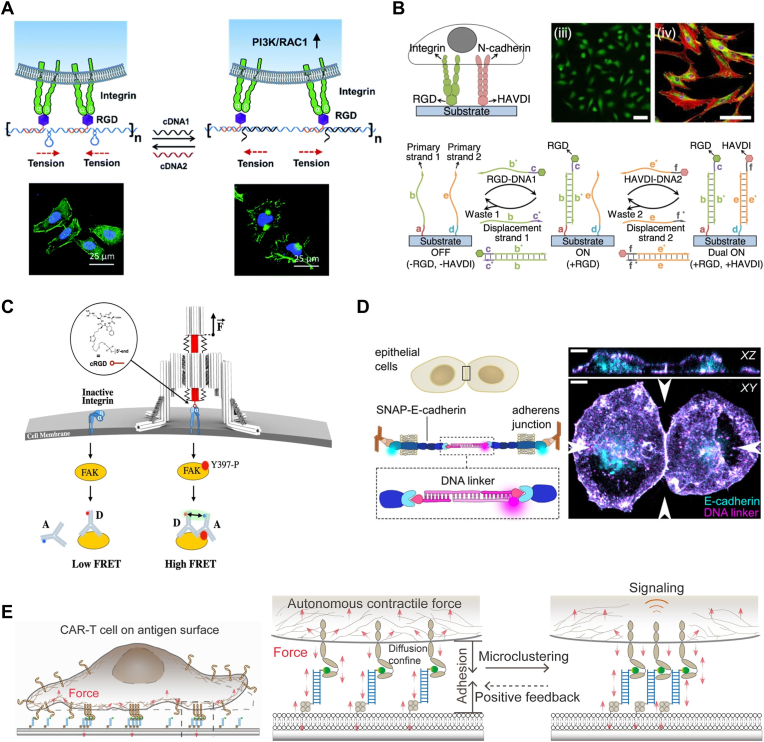 Figure 6
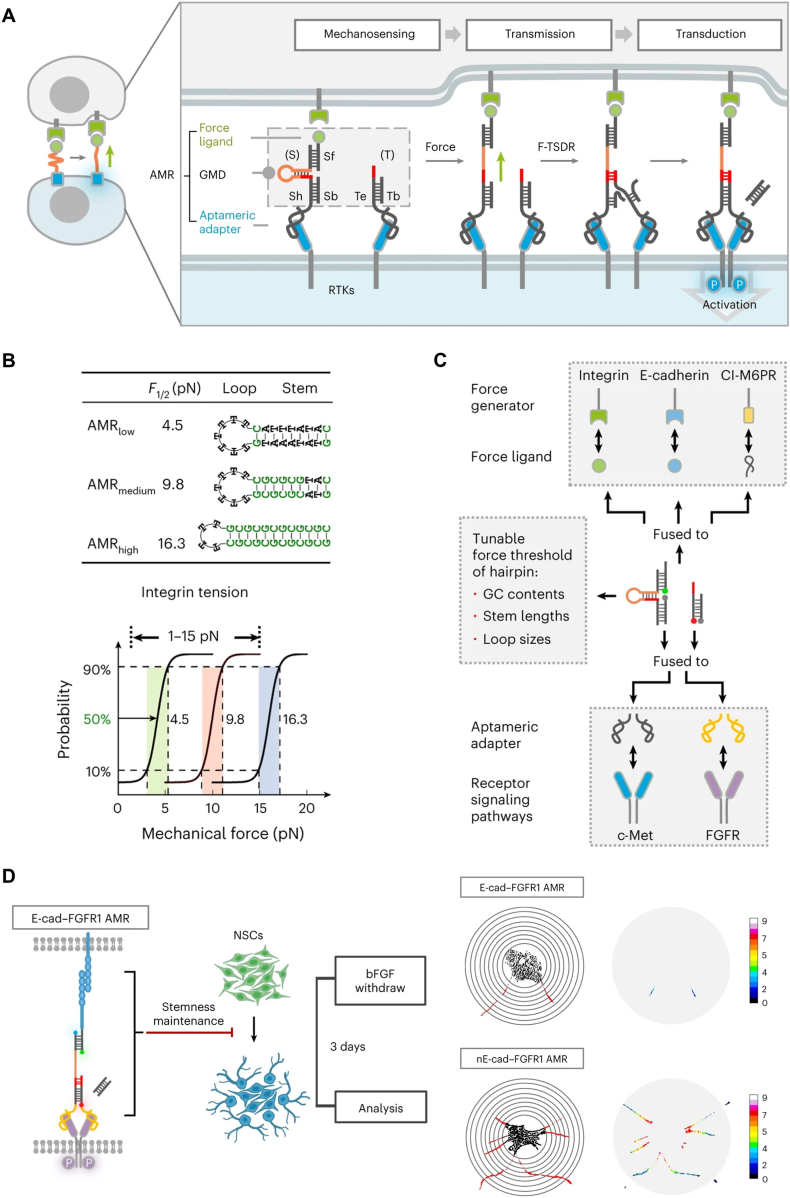 Figure 7
Peer Reviews
No public reviews on file for this paper yet. If you reviewed it on a platform where reviews are public (OpenReview, ICLR, NeurIPS, ICML), you can paste yours below so the community can read it here.
Videos
No videos yet. Explain this paper in a talk, walkthrough, or lecture? Add one.
Taxonomy
TopicsCellular Mechanics and Interactions · RNA Interference and Gene Delivery · Advanced biosensing and bioanalysis techniques