From flowers to function: Structural and biomedical exploration of iron oxide nanoparticles synthesized from Rhododendron arboreum extract
Iram Saba, Vivek K. Dhiman, Susmitha Kalaichelvan, Rajasekaran Subbarayan, Ankush Chauhan, Ritesh Verma, Khalid Mujasam Batoo, Saif Hameed, Ahmed A. Ibrahim

TL;DR
This paper describes a green method to make iron oxide nanoparticles from Rhododendron arboreum flowers and shows they have antibacterial, anti-inflammatory, and anticancer potential.
Contribution
A novel green synthesis method for α-Fe2O3 nanoparticles using Rhododendron arboreum extract and their biomedical efficacy evaluation.
Findings
Synthesized α-Fe2O3 NPs showed antibacterial activity against multiple pathogens with lower MIC/MBC values than the flower extract.
Nanoparticles exhibited anti-inflammatory effects and significant cytotoxicity against MCF-7 breast cancer cells with an IC50 of 22 μg/mL.
XRD confirmed crystalline α-Fe2O3 formation with an average crystallite size of 32.03 nm.
Abstract
This study was aimed at developing a green, ecologically friendly method for synthesizing iron oxide nanoparticles (α-Fe2O3 NPs) by using Rhododendron arboreum flower extract, as well as evaluating their potential biomedical applications. X-ray diffraction, scanning electron microscopy, energy dispersive X-ray spectroscopy, ultraviolet-visible spectroscopy, and Fourier-transform infrared spectroscopy were used to characterize the α-Fe2O3 NPs synthesized from the Rhododendron arboreum flower extract. Comprehensive characterization of the synthesized α-Fe2O3 NPs revealed a hydrodynamic diameter of 274.7 nm and a zeta potential of −18.6 mV. X-ray diffraction analysis confirmed the formation of crystalline α-Fe2O3 with an average crystallite size of 32.03 nm. The nanoparticles exhibited potent antibacterial activity against Bacillus subtilis, Staphylococcus aureus, Pseudomonas aeruginosa,…
Genes, proteins, chemicals, diseases, species, mutations and cell lines named across the full text — each resolved to its canonical identifier and authoritative record.
Click any figure to enlarge with its caption.
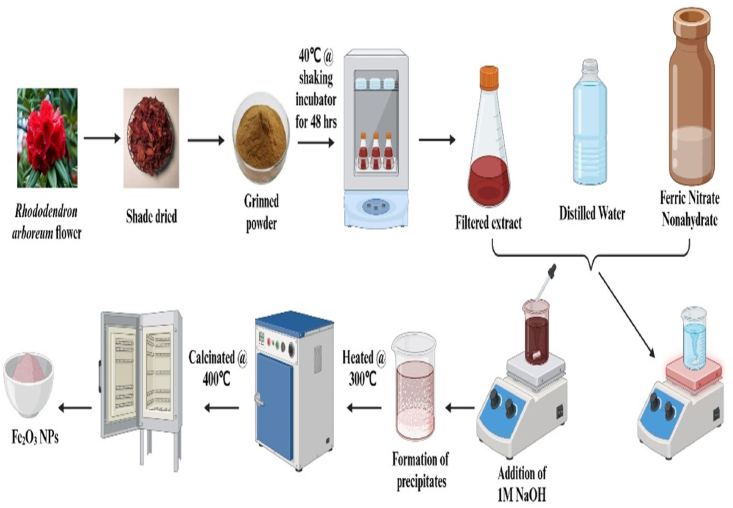 Figure 1
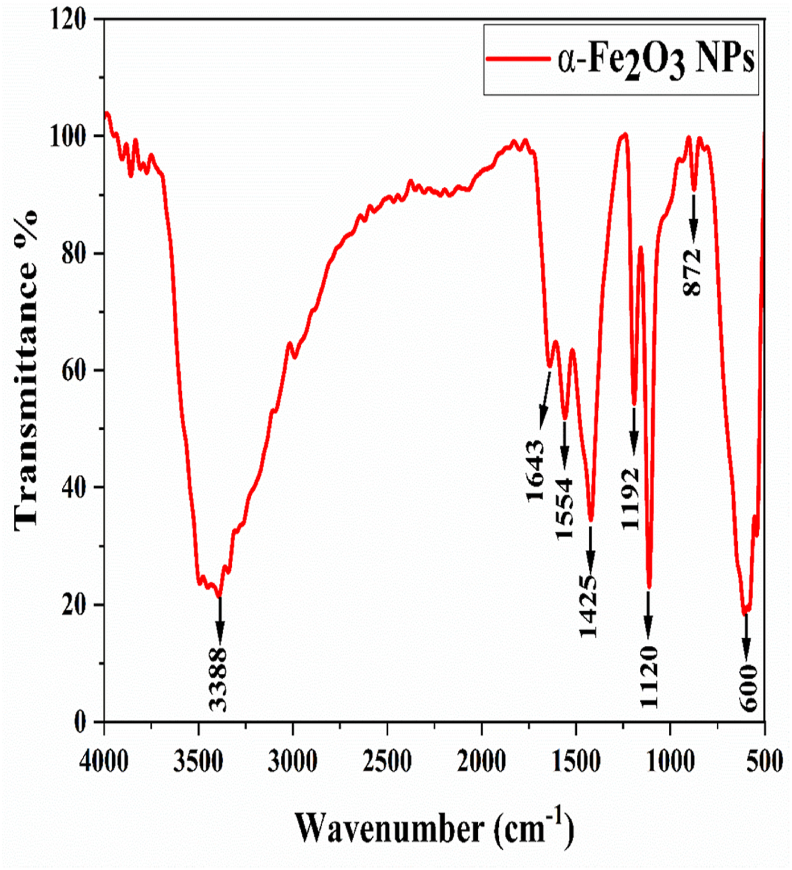 Figure 2
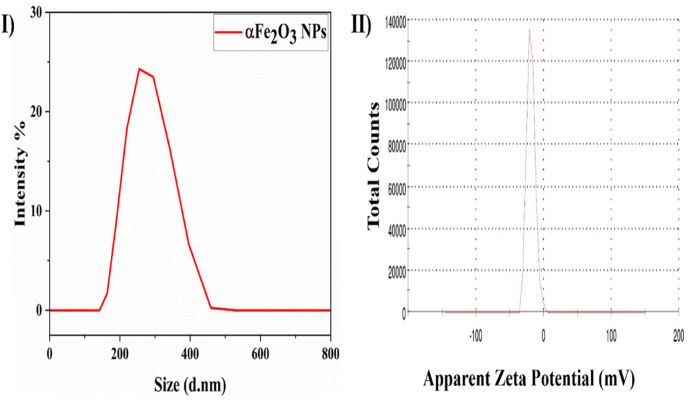 Figure 3
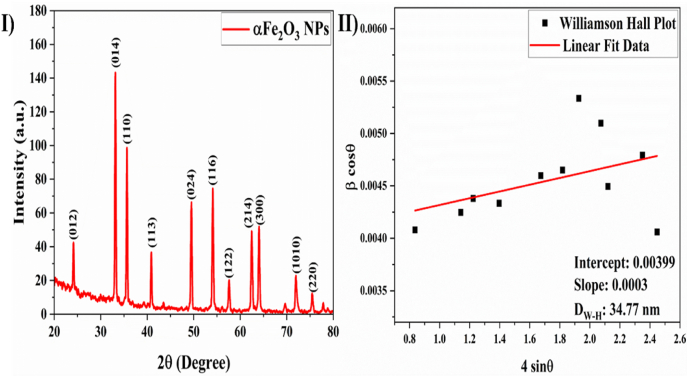 Figure 4
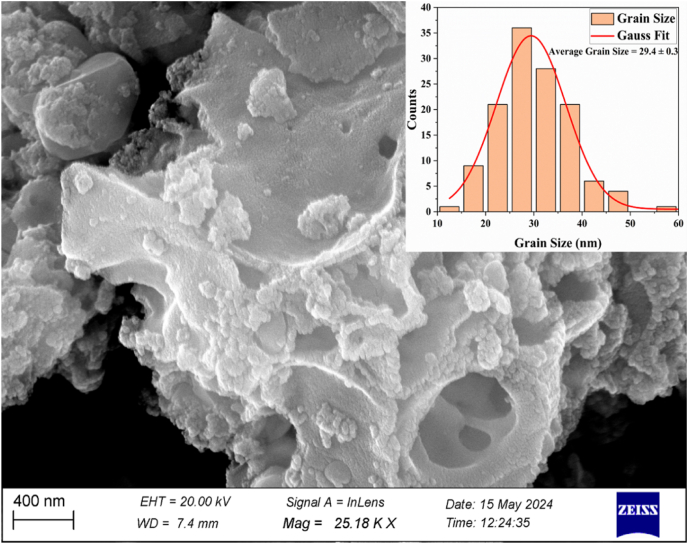 Figure 5
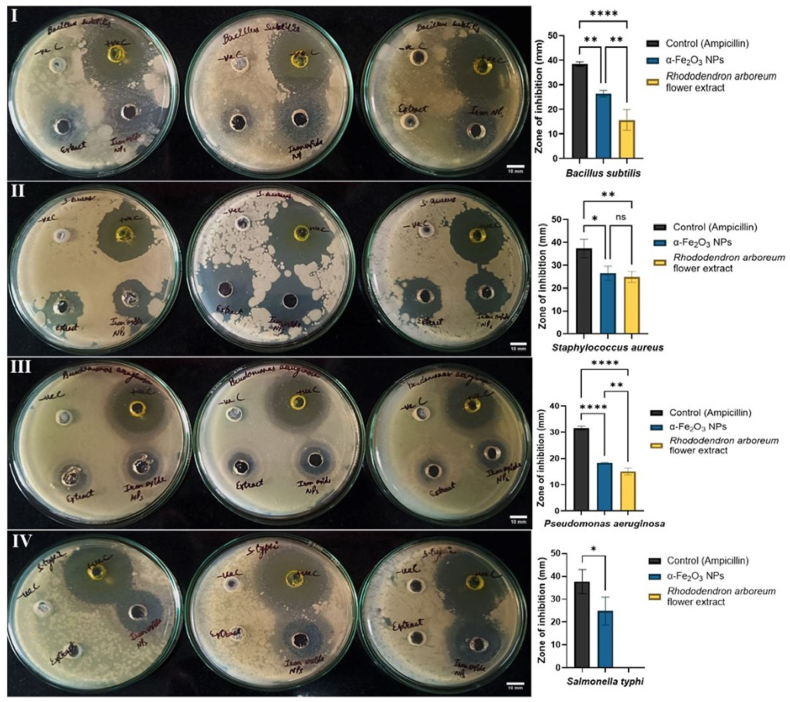 Figure 6
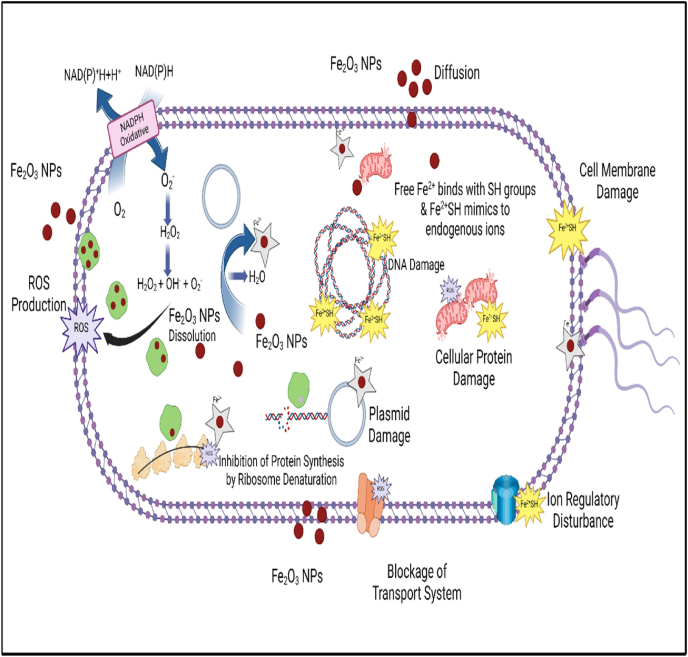 Figure 7
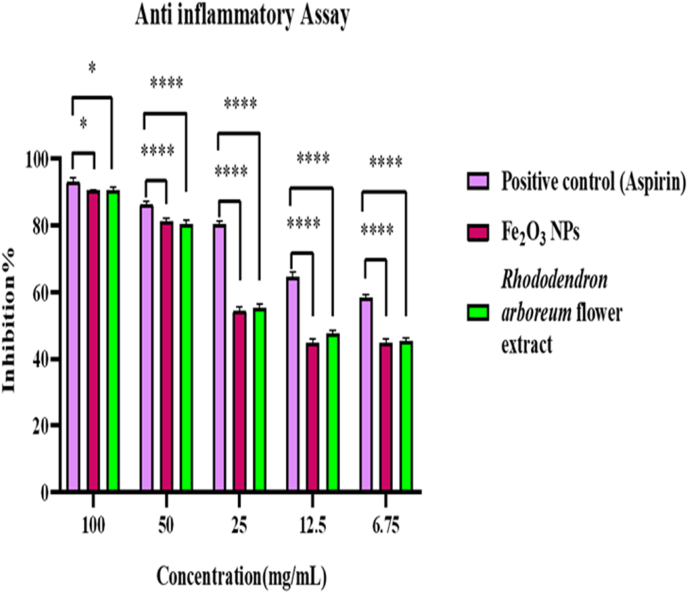 Figure 8
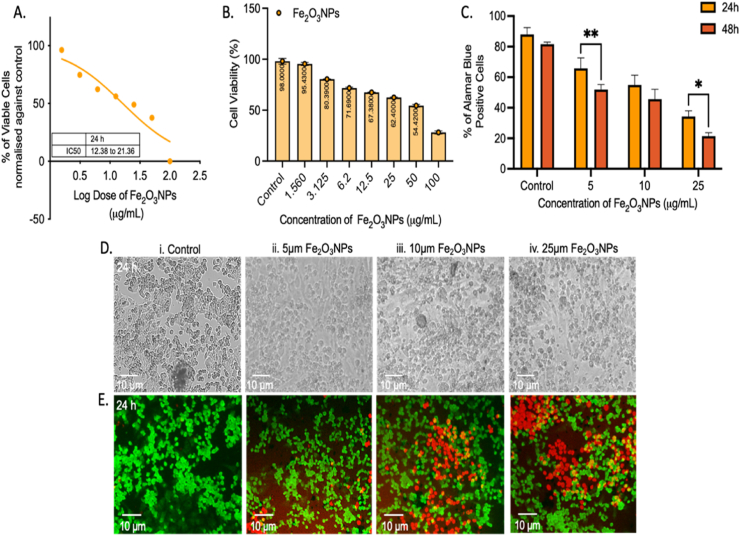 Figure 9
Peer Reviews
No public reviews on file for this paper yet. If you reviewed it on a platform where reviews are public (OpenReview, ICLR, NeurIPS, ICML), you can paste yours below so the community can read it here.
Videos
No videos yet. Explain this paper in a talk, walkthrough, or lecture? Add one.
Taxonomy
TopicsNanoparticles: synthesis and applications · Ginkgo biloba and Cashew Applications