Kinetic mechanisms of electron bifurcation with electron transfer flavoprotein, NADH, butyryl-CoA dehydrogenase, and ferredoxin reveal a semiquinone cycle
Jeerus Sucharitakul, Montisa Mangkalee, Pattarawan Intasian, Soraya Pornsuwan, Ulrich Ermler, Wolfgang Buckel, Pimchai Chaiyen

TL;DR
This study reveals how electron bifurcation works in a bacterial enzyme system, using a cycle involving flavins and temperature-dependent reactions.
Contribution
The paper introduces a semiquinone cycle mechanism for electron bifurcation and shows how temperature affects the reaction rate.
Findings
Bcd releases the inhibition of α-FAD•−, enabling fast β-FAD reduction.
Two simultaneous one-electron transfers from EtfAHQB reduce Bcd and form EtfASQB.
The reaction rate increases 14-fold at 30 °C, the optimal growth temperature of A. fermentans.
Abstract
Electron transfer flavoprotein (EtfAB, with α-FAD and β-FAD) and tetrameric butyryl-CoA dehydrogenase (Bcd, with δ-FAD in each subunit) from Acidaminococcus fermentans catalyze electron bifurcation which reduces low potential ferredoxin (Fd) and high potential crotonyl-CoA using NADH as an electron donor. Our previous rapid kinetic studies have demonstrated “pseudo-electron bifurcation” where NADH and two EtfAB molecules generate EtfASQB (ASQ contains α-FAD•−) and the charge-transfer complex of EtfASQBHQ:NAD+ (BHQ contains β-FADH−). Since the radical in EtfASQB inhibits the further reduction of β-FAD with NADH, the question arises as to how the five components of the complete system interact to mediate the whole flavin-based electron bifurcation. This study shows that Bcd releases the inhibition effect of α-FAD•−, allowing fast β-FAD reduction for turnover. In the presence of both Bcd…
Genes, proteins, chemicals, diseases, species, mutations and cell lines named across the full text — each resolved to its canonical identifier and authoritative record.
Click any figure to enlarge with its caption.
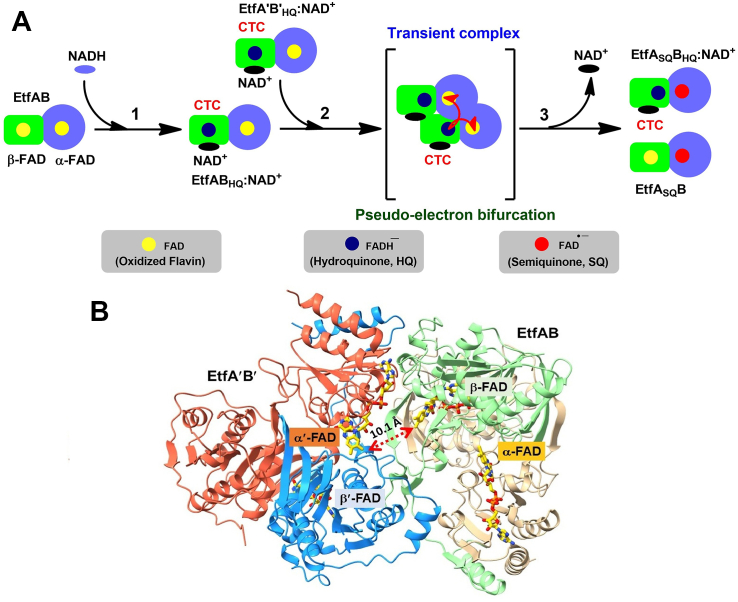 Figure 1
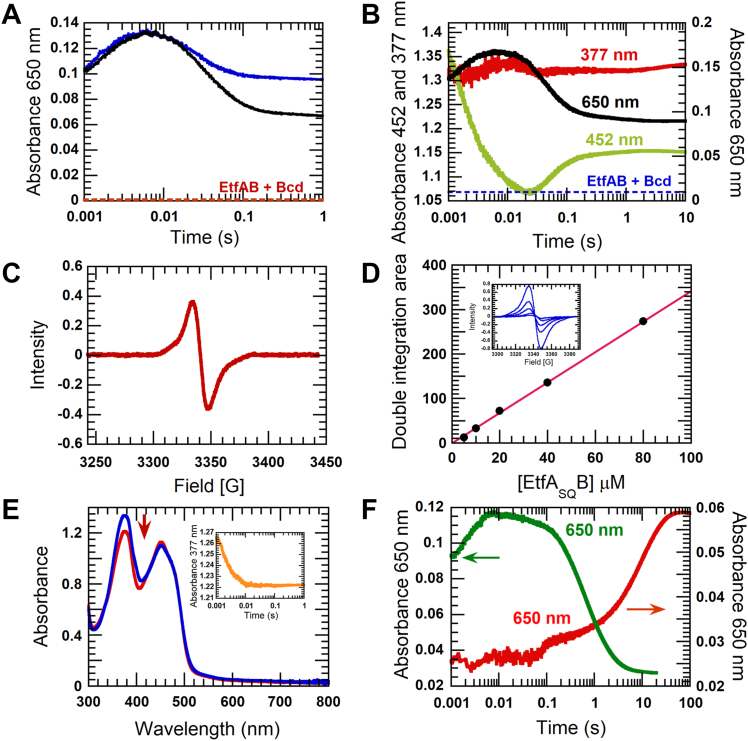 Figure 2
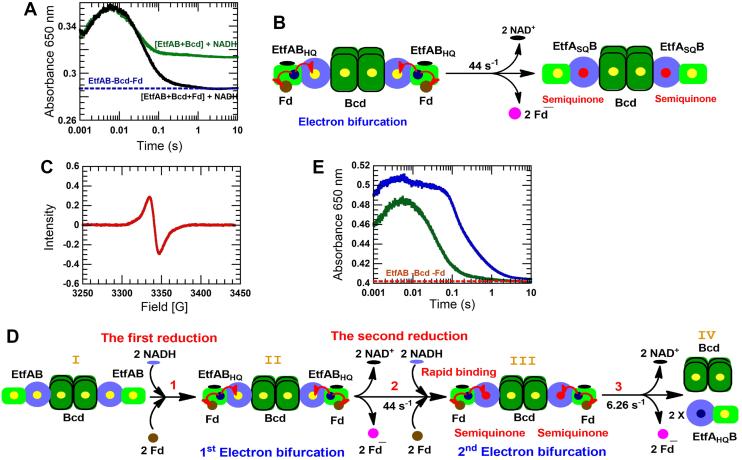 Figure 3
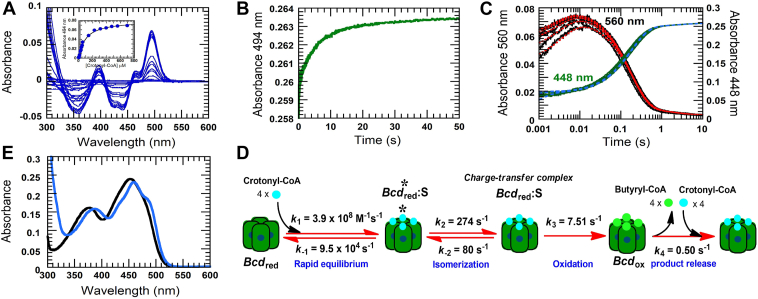 Figure 4
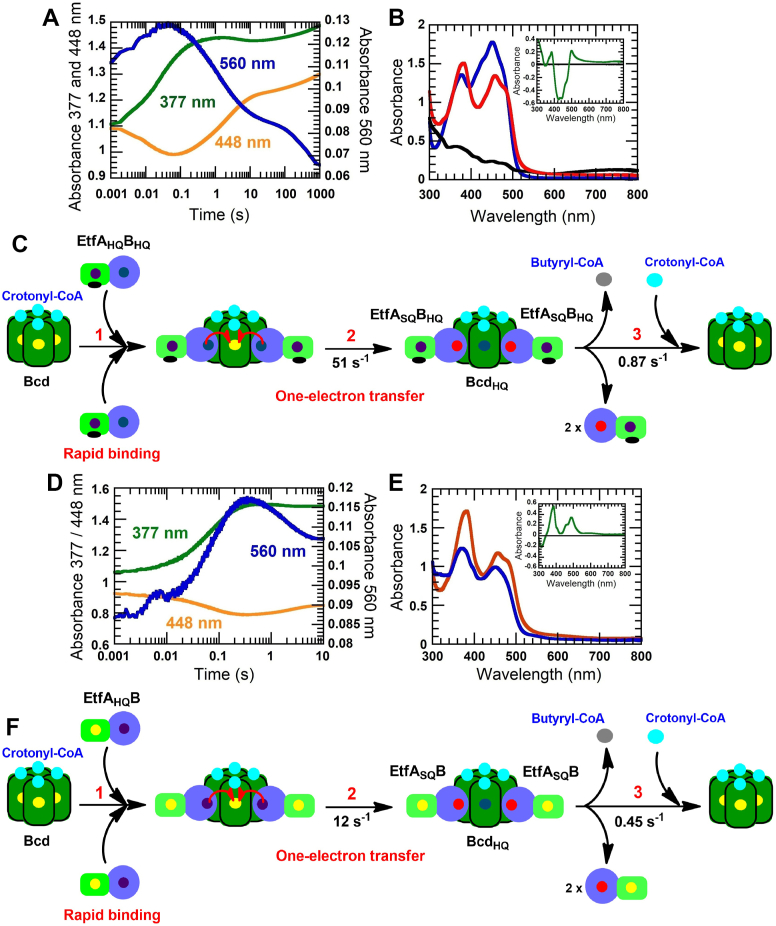 Figure 5
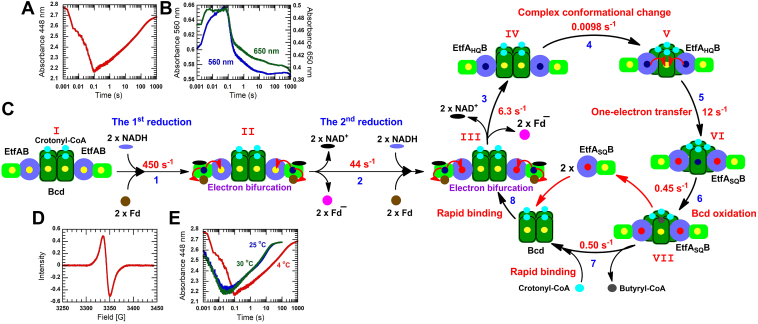 Figure 6
Peer Reviews
No public reviews on file for this paper yet. If you reviewed it on a platform where reviews are public (OpenReview, ICLR, NeurIPS, ICML), you can paste yours below so the community can read it here.
Videos
No videos yet. Explain this paper in a talk, walkthrough, or lecture? Add one.
Taxonomy
TopicsPhotosynthetic Processes and Mechanisms · Plant biochemistry and biosynthesis · Free Radicals and Antioxidants