Inequities in Neuropsychiatric Outcomes After Brain Trauma in the All of Us Database
Tadeusz H. Wroblewski, Favour C. Ononogbu-Uche, Pemla Jagtiani, Rose M. E. Calixte, Marie-Claire Roberts, Peter B. Barr, Tim B. Bigdeli, Ernest J. Barthélemy

TL;DR
Black individuals are more likely than White individuals to be diagnosed with certain neuropsychiatric conditions after traumatic brain injury, highlighting racial disparities in outcomes.
Contribution
The study reveals racial disparities in neuropsychiatric diagnoses after TBI and emphasizes the role of social determinants in these differences.
Findings
White participants had lower risks of psychotic, PTSD, substance use, and headache disorders compared to Black participants.
Higher social deprivation was linked to lower likelihoods of mood and anxiety disorders but higher likelihoods of sleep disorders.
Accounting for selection bias confirmed lower probabilities of psychotic and headache disorders in White participants.
Abstract
What is the association of neuropsychiatric diagnosis incidence following traumatic brain injury (TBI) with racial disparities? In a cohort study of 8714 participants with a history of TBI in the National Institutes of Health All of Us database, White participants were less likely than Black or African American participants to be diagnosed with psychotic, posttraumatic stress, substance use, or headache disorders. Accounting for sample selection bias, White participants had a lower probability of being diagnosed with psychotic or headache disorders. These findings suggest that there are substantial racial disparities in neuropsychiatric outcomes following TBI, underscoring the importance of accounting for psychosocial and environmental modifiers that may alter TBI outcome trajectories. This cohort study examines the incidence of neuropsychiatric diagnoses following traumatic brain…
Genes, proteins, chemicals, diseases, species, mutations and cell lines named across the full text — each resolved to its canonical identifier and authoritative record.
Click any figure to enlarge with its caption.
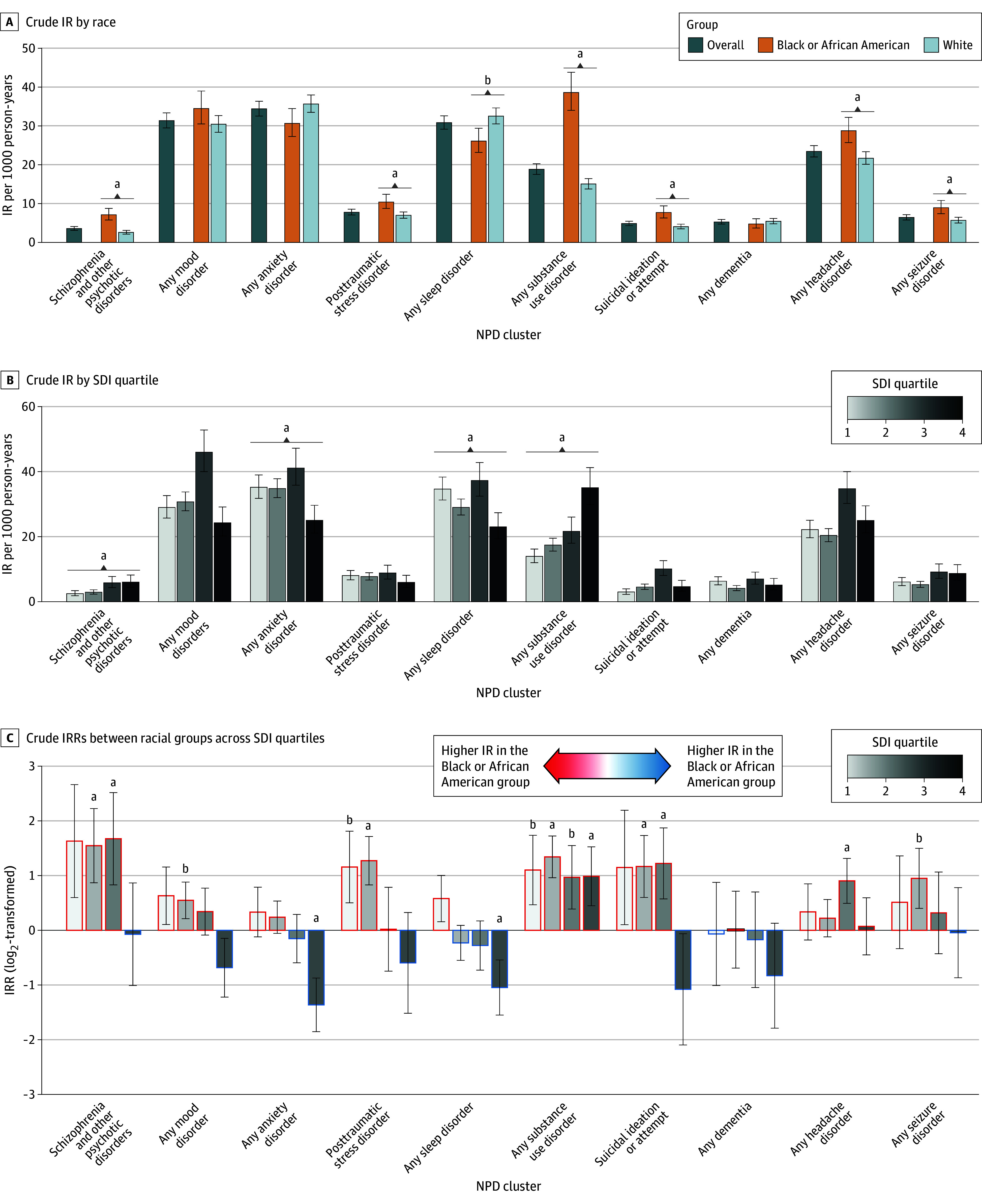 Figure 1
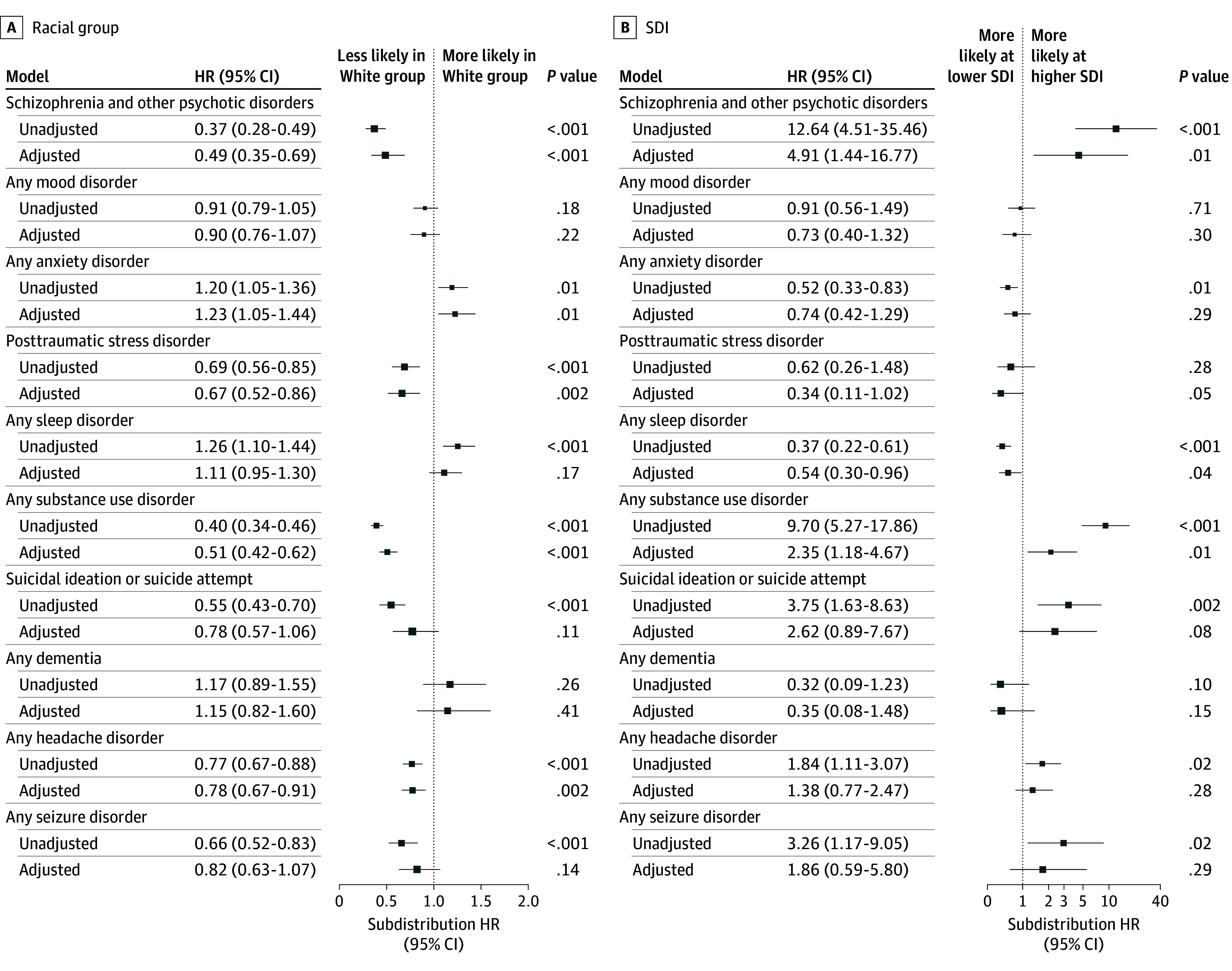 Figure 2
Peer Reviews
No public reviews on file for this paper yet. If you reviewed it on a platform where reviews are public (OpenReview, ICLR, NeurIPS, ICML), you can paste yours below so the community can read it here.
Videos
No videos yet. Explain this paper in a talk, walkthrough, or lecture? Add one.
Taxonomy
TopicsTraumatic Brain Injury Research · Migration, Health and Trauma · Suicide and Self-Harm Studies